Best overall for daily commuters in 2026: a vehicle-specified OEM replacement oil filter. Best for routine changes: a compatible standard aftermarket filter. Best for a longer oil-change interval approved in your owner’s manual: a compatible synthetic-media filter. The right filter starts with your vehicle’s fitment requirements, not a claim on the box.
- The best oil filters for daily commuters start with an OEM replacement that matches the vehicle.
- A standard aftermarket filter suits routine changes when its application listing confirms fitment.
- Consider a synthetic-media filter for a longer interval only when the vehicle maker permits that interval.
- Elite Auto Repair & Service Inc is a Kissimmee oil-change option for commuters who want help checking fitment.
Why this matters
A commuter depends on the same vehicle day after day. An oil filter must fit its mounting point or housing, seal correctly and work with the oil-change interval specified for that vehicle. A familiar brand name does not establish any of those things.
If you would rather have a shop check the application, Elite Auto Repair & Service Inc offers oil changes in Kissimmee, FL. Bring your vehicle details and the maintenance information you have; the filter choice still needs to match the specific vehicle.
This 2026 guide ranks types of filter choices, not individual part numbers. A part number that fits one engine does not automatically fit another vehicle of the same make. Use the owner’s manual and an application listing for your exact vehicle before buying or installing anything.
What makes the best oil filter for a daily commuter?
- Confirmed application: Match the filter to the vehicle’s year, make, model and engine. Check the filter maker’s application listing rather than relying on a similar-looking box.
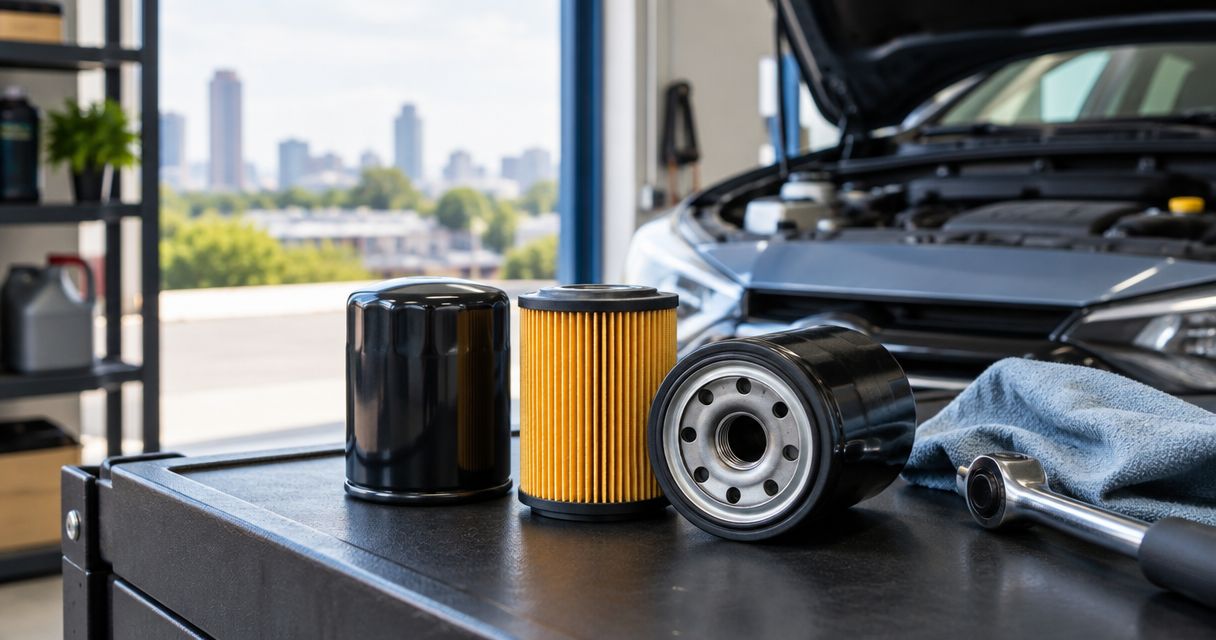
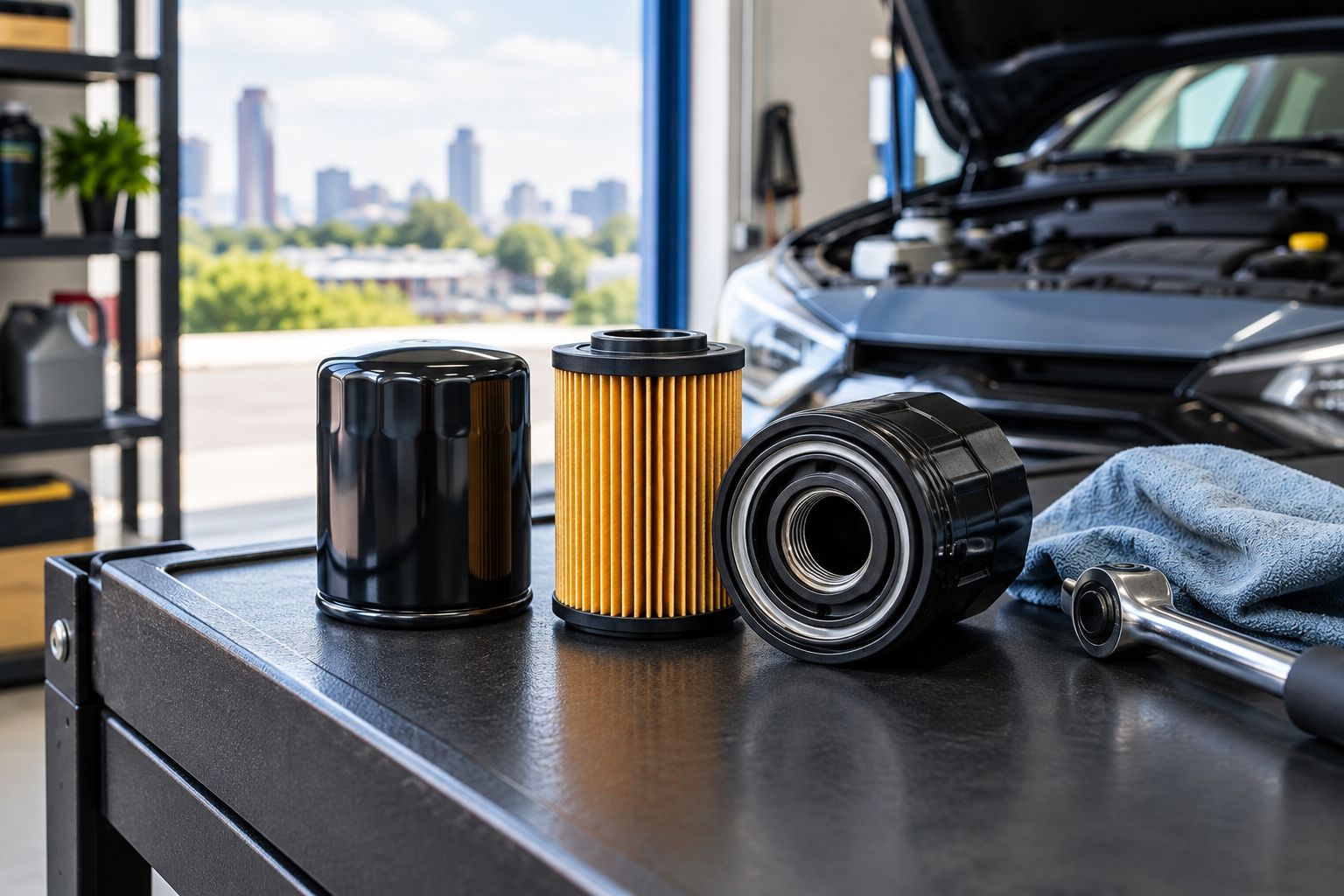
- Correct filter format: Some vehicles use a metal spin-on filter; others use a replaceable cartridge inside a housing. These formats are not interchangeable.
- Specified service interval: Choose a filter suited to the oil-change schedule in the owner’s manual. A filter marketed for extended service does not authorize a longer interval for the vehicle.
- Required fit and sealing parts: Check the specified dimensions, gasket or O-ring arrangement, and any other application requirements. A filter that threads on or sits inside a housing is not necessarily the correct part.
- Installation requirements: Follow the vehicle and filter instructions for sealing, tightening and checking for leaks. Overtightening is not a substitute for correct fitment.
Fitment outranks filter-media claims. If a listing does not confirm your exact application, stop there. The remaining criteria matter only after you have a confirmed match.
Best oil filters for daily commuters at a glance
| Filter choice | Best for | Standout feature | Key limitation |
|---|---|---|---|
| Vehicle-specified OEM replacement | Fitment-first commuters | Identified for the vehicle application | Does not replace an installation or interval check |
| Compatible standard aftermarket filter | Routine oil changes | Another application-listed choice | Similar-looking filters can have different requirements |
| Compatible synthetic-media filter | A longer interval the vehicle maker permits | Media construction offered for the application | Media alone does not approve an extended interval |
The table is a decision path, not permission to substitute one filter for another. For any row, you still need the correct part for your engine and the service instructions that apply to it.
A spin-on filter and a cartridge filter can both be correct choices within this ranking—but only for vehicles designed to use them. The format is determined by the vehicle, not by a preference for one design.
A note on the ranking
The order favors a straightforward fitment decision for an everyday driver. It does not claim that every OEM filter outperforms every aftermarket filter, or that synthetic media makes a filter suitable for every vehicle. Without a confirmed part number and vehicle application, a performance comparison would not answer the buying question.
1. Vehicle-specified OEM replacement: best for fitment-first commuters
An OEM replacement is the default when you want to start with the filter specified for your vehicle rather than compare aftermarket catalog entries. You still need the correct part for the exact engine and model application. A filter associated with the vehicle maker is not a universal fit across that maker’s range.
This choice works particularly well when the goal is a routine oil change without changing the service plan. Keep the vehicle maker’s interval as your reference. The filter choice does not extend it.
Vehicle-specified OEM replacement pros:
- Starts from a vehicle-specific replacement rather than appearance or package claims.
- Gives you a clear part reference to check against the vehicle information.
- Keeps the decision focused on fitment and the existing maintenance schedule.
Vehicle-specified OEM replacement cons:
- You must still confirm the exact engine application and part number.
- It does not prevent leaks caused by incorrect installation or a missed gasket.
- An OEM designation alone does not establish a longer service interval.
Best for: A commuter who wants the most direct fitment-first starting point. Verdict: Buy when the part is confirmed for your vehicle; skip any part that is merely listed for the same make.
2. Compatible standard aftermarket filter: best for routine changes
A standard aftermarket filter is a practical alternative when its maker lists your exact vehicle application and your oil changes follow the vehicle maker’s schedule. Treat the application listing as the deciding document. Matching the filter’s general shape is not enough.
Check whether your vehicle requires a spin-on assembly or a cartridge element. For a cartridge application, confirm which seals and replacement components the installation calls for. A standard aftermarket option earns its place here through confirmed compatibility, not a broad claim that it is better than an OEM replacement.
Compatible standard aftermarket filter pros:
- Provides an application-listed alternative to an OEM replacement.
- Fits a routine-change decision without depending on an extended-interval claim.
- Lets you compare the listed application and installation requirements before selecting a part.
Compatible standard aftermarket filter cons:
- Catalog entries still need to match the exact engine, not just the vehicle name.
- Different part numbers can look alike while having different fitment requirements.
- A routine-use label cannot override the interval in the owner’s manual.
Best for: A commuter following the vehicle maker’s routine maintenance schedule who has verified an aftermarket application. Verdict: Buy after the fitment and installation requirements check out; otherwise, hold.
3. Compatible synthetic-media filter: best for an approved longer interval
Synthetic media describes filter construction. It is not a maintenance schedule. Choose this category when you want to consider a filter offered for your exact application and your vehicle maker permits the oil-change interval you plan to follow.
This is a narrower recommendation than an extended-service label suggests. The owner’s manual can set different schedules according to use. Follow the schedule that applies to your driving and check that the filter is appropriate for it; do not choose an interval because a filter package advertises one.
Compatible synthetic-media filter pros:
- Offers another application-listed filter choice where synthetic media is specified in the product description.
- Gives drivers considering a permitted longer interval a clear reason to check filter suitability.
- Keeps construction and vehicle compatibility as separate questions.
Compatible synthetic-media filter cons:
- Synthetic media does not make an incorrectly sized filter compatible.
- An extended-service claim does not change the vehicle maker’s maintenance schedule.
- The media description alone does not establish how a particular filter performs in your engine.
Best for: A commuter whose vehicle maker permits the planned interval and whose selected filter is listed for that application. Verdict: Buy only after both checks; otherwise, hold and follow the vehicle’s existing schedule.
How to choose the correct filter for your car
Start with the exact vehicle, not a general search for the best filter brand. Find the model year, make, model and engine before checking a parts listing. If your vehicle has more than one engine option, the model name by itself leaves a critical gap.
Next, find the oil-change guidance in the owner’s manual. The correct interval depends on the vehicle maker’s instructions and the applicable driving conditions. A daily commute does not, by itself, establish that you qualify for a longer interval or that you need one.
Then check the selected filter’s application listing and installation instructions. Make sure the filter format matches the vehicle. For a cartridge filter, check the housing procedure and specified seals; for a spin-on filter, check the stated mounting and sealing requirements. Do not reuse a removed seal just because it appears intact unless the instructions explicitly call for reuse.
Finally, check for leaks after installation according to the service procedure. An oil change is unfinished if the filter is incorrectly seated or the required sealing component is missing. If you are unsure which part or procedure applies, have a service shop identify the application before the old filter comes off.
These checks separate 3 questions that often get mixed together: Does it fit? Does it suit the specified interval? Was it installed correctly? A filter needs all 3 answers, not just a favorable description of its media.
How we ranked these oil-filter choices
Fitment comes first, followed by suitability for the vehicle’s maintenance interval and the clarity of the installation requirements. That is why the vehicle-specified OEM replacement leads this 2026 list: it provides the simplest starting point for identifying a replacement, not proof of superior filtration in every engine.
A confirmed standard aftermarket filter ranks next for routine changes. A synthetic-media option sits in a distinct slot for drivers evaluating a longer interval their vehicle maker allows. The ranking does not compare laboratory filtration results or name a winning part number, because those claims require specific filters, applications and test results.
Which oil filter should you choose in 2026?
Choose the vehicle-specified OEM replacement by default if you want a direct fitment-first decision. Choose a standard aftermarket filter when its application listing confirms the exact vehicle and you are keeping to the specified routine schedule. Consider a synthetic-media filter when both the application and the vehicle maker’s permitted interval support that choice.
Do not buy any of the 3 solely because the package calls it premium, long-life or suitable for commuters. Those descriptions do not identify your engine or authorize a change to its maintenance schedule. The best oil filters for daily commuters are the ones correctly specified, installed and changed for the vehicle they serve.
For a commuter in Kissimmee, Elite Auto Repair & Service Inc is an oil-change option when you want a shop to check the vehicle application rather than select a filter from appearance alone. The useful question to bring to that visit is simple: which filter matches this engine and its maintenance schedule?
Plan your next oil change
Check oil-change service with a Kissimmee auto repair shop.
FAQ
What are the best oil filters for daily commuters in 2026?
A vehicle-specified OEM replacement is the best default for a daily commuter in 2026. A confirmed standard aftermarket filter suits routine changes, while a compatible synthetic-media filter is an option when the vehicle maker permits the planned interval.
Is an OEM oil filter better than an aftermarket filter?
An OEM filter is the simpler fitment-first starting point, but OEM status alone does not prove better filtration. Compare exact vehicle applications and follow the maintenance schedule before choosing either option.
Does a synthetic-media oil filter let me change oil less often?
No, synthetic media does not authorize a longer oil-change interval. Use the schedule that applies to your vehicle and confirm the filter is listed for the application.
Can I use a spin-on filter instead of a cartridge filter?
No, use the filter format specified for your vehicle. A cartridge element fits its designated housing, while a spin-on filter is a different assembly.
How do I find the right oil filter for my car?
Identify the vehicle’s year, make, model and engine, then confirm the filter in an application listing. Check the owner’s manual and installation instructions before fitting it.
Should I choose an extended-service filter for a short commute?
Not based on trip length alone. Follow the maintenance schedule applicable to your vehicle and choose a compatible filter for that schedule.
Can Elite Auto Repair & Service Inc help with an oil change in Kissimmee?
Yes. Elite Auto Repair & Service Inc offers oil changes in Kissimmee, FL; bring your vehicle details so the filter application can be checked.
One last thing
The most useful filter question in 2026 is not which media sounds best. Ask whether the exact part fits your engine, suits its specified interval and has the right sealing components. A confirmed standard filter beats an unverified premium filter for your vehicle.