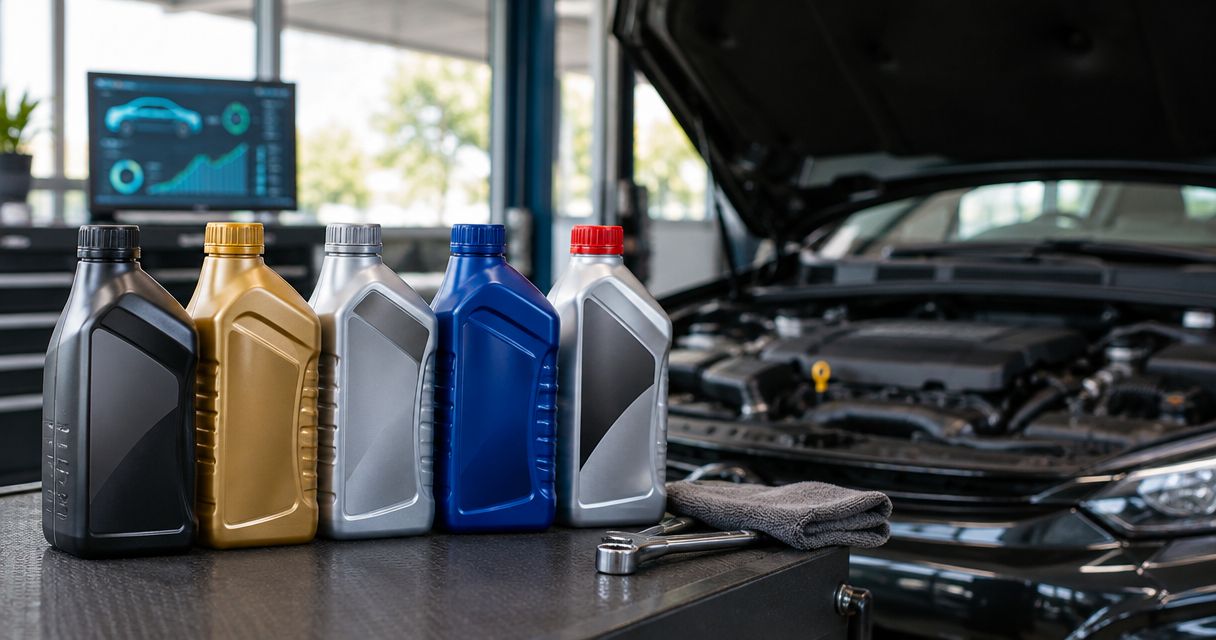

Best overall: the full synthetic oil that meets your vehicle manufacturer’s required viscosity and specification. Best for older vehicles: an approved high-mileage synthetic. Best for turbocharged vehicles: a full synthetic that meets the turbo engine’s stated requirements. For the best synthetic motor oil for florida heat, start with the owner’s manual, not the outdoor temperature; Elite Auto Repair & Service Inc offers oil changes in Kissimmee, FL when you want help with that choice.
- The best synthetic motor oil for florida heat is the full synthetic that meets your vehicle’s required specification.
- Choose high-mileage synthetic for an older engine only when it also meets the required grade and approval.
- Turbocharged and diesel engines have their own oil requirements; a general full synthetic label is not enough.
- Elite Auto Repair & Service Inc offers oil changes in Kissimmee, FL for drivers reviewing their oil choice.
Why this matters in Florida
Hot weather makes oil choice feel like a contest to find the thickest bottle on the shelf. It is not. Your engine was designed around a specified viscosity grade and performance requirements, and those requirements remain the starting point in 2026. A different grade is not an automatic upgrade because the car spends its days in Kissimmee.
That distinction matters when two bottles both say full synthetic. One can carry the grade and approvals your vehicle calls for; the other can miss them. Choose by the vehicle specification first, then compare oils within the approved choices. If the manual offers different grades for different conditions, follow its instructions rather than a general rule about Florida heat.
Elite Auto Repair & Service Inc provides oil changes in Kissimmee, FL. Bring your vehicle details or owner’s manual when you want to check the oil choice against the requirements for your engine.
What makes the best synthetic motor oil for Florida heat?
Use these checks before comparing labels in 2026. They separate a suitable oil from one that merely sounds suited to hot weather.
- Factory approval: Look for the performance standard or manufacturer approval your owner’s manual specifies. A bottle marked full synthetic still needs to meet it.
- Viscosity grade: Match the specified grade, such as SAE 0W-20 or SAE 5W-30. Do not change grades solely because you live in Florida.
- Engine type: Check for requirements specific to a turbocharged engine or diesel engine. Those needs take priority over a general-purpose recommendation.
- Driving pattern: Consider the maintenance schedule that applies to how you drive. Repeated short trips and other conditions can affect which schedule your manual assigns.
- Change interval: Follow the vehicle manufacturer’s applicable interval. An oil marketed for extended use does not, by itself, change that interval.
The numbers on a viscosity grade describe how the oil meets a defined test standard, not the outdoor temperature at which the engine should run. SAE J300 uses measurements at 100 °C for operating-temperature viscosity and at 150 °C for a separate high-temperature test. Those laboratory temperatures explain why a Florida forecast is not a sound reason to replace a specified SAE 0W-20 oil with SAE 5W-30. Your manual, including any permitted alternatives, decides.
Best synthetic motor oils for Florida heat at a glance
| Oil choice | Best for | Standout feature | Key limitation |
|---|---|---|---|
| Manufacturer-specified full synthetic | Routine oil changes | Matches the vehicle’s stated grade and requirements | The correct choice varies by vehicle |
| Approved high-mileage full synthetic | Older vehicles with high mileage | Offers a category designed for aging engines | The high-mileage label does not establish factory approval |
| Turbo-compatible full synthetic | Turbocharged gasoline engines | Can meet engine-specific performance requirements | Full synthetic alone does not confirm compatibility |
| Diesel-approved full synthetic | Diesel vehicles | Addresses diesel-specific oil requirements | Gasoline-engine approvals are not a substitute |
These are types of oil, not interchangeable products. The ranking tells you which category to investigate first for your vehicle; the owner’s manual settles the final choice. In 2026, that is more useful than a universal brand ranking that ignores the engine the oil will enter.
1. Manufacturer-specified full synthetic: best for routine oil changes
Best for: A driver who wants the straightforward default for a vehicle that calls for synthetic oil.
Start with the viscosity grade and performance requirements in the owner’s manual. Then select a full synthetic oil whose label confirms both. This approach works whether you drive across Kissimmee every day or spend more time on longer trips, because it begins with your engine’s requirements rather than a guess about the weather.
If the manual lists more than one acceptable grade, read the conditions attached to each one. Do not treat the second option as permission to choose by climate alone. If the label does not clearly show the required approval, keep looking.
Manufacturer-specified full synthetic pros:
- Puts the vehicle’s stated requirements ahead of claims on the front label.
- Gives you a clear way to compare oils from different brands.
- Avoids an unsupported switch to a thicker grade for Florida heat.
Manufacturer-specified full synthetic cons:
- Requires the correct manual or vehicle-specific oil information.
- Does not give every car the same answer; specifications vary by engine.
Verdict: Buy a full synthetic that meets your vehicle’s required grade and specification. For most readers comparing the best synthetic motor oil for florida heat in 2026, this is the decision rule to use before considering a specialized formulation.
2. Approved high-mileage full synthetic: best for older vehicles
Best for: A higher-mileage vehicle when its owner wants to consider a formulation marketed for aging engines.
High-mileage oil is a product category, not a separate factory approval. Formulations vary, so check the label against your vehicle’s viscosity and performance requirements just as you would for a standard full synthetic. If those do not match, the high-mileage wording does not make the oil suitable.
Do not use an oil change to diagnose a leak, oil consumption or a new engine noise. Those concerns deserve an inspection. An oil labeled high-mileage is not a substitute for finding a mechanical problem, even if the car has been on the road for years.
Approved high-mileage full synthetic pros:
- Gives owners of older vehicles another formulation to consider.
- Can be compared using the same grade and approval checks as other oils.
- Keeps the vehicle’s requirements central to the decision.
Approved high-mileage full synthetic cons:
- A high-mileage label alone does not confirm the oil meets your manual’s requirements.
- It does not identify or repair the cause of a leak or oil-consumption concern.
Verdict: Hold until you confirm the grade and approval. If your vehicle has a symptom you hope the oil will fix, address that symptom separately before treating the bottle as an answer.
3. Turbo-compatible full synthetic: best for turbocharged engines
Best for: A turbocharged gasoline vehicle whose manual calls for particular oil performance requirements.
A turbocharged engine can have an oil specification that a generic full synthetic does not meet. Read the vehicle requirement and the oil label together. The word synthetic describes the oil category; it does not prove the bottle carries every approval a particular engine needs.
This is also why the best-looking viscosity grade is only part of the answer. An oil can display the grade your manual lists and still lack a required manufacturer approval. In 2026, check both before choosing an oil for a turbocharged vehicle in Florida.
Turbo-compatible full synthetic pros:
- Focuses the choice on the turbo engine’s stated requirements.
- Makes manufacturer approval a check alongside viscosity.
- Avoids assuming every full synthetic serves the same engines.
Turbo-compatible full synthetic cons:
- A general turbo claim on packaging is not a substitute for the specified approval.
- You need vehicle-specific information to verify the choice.
Verdict: Buy only when the full synthetic meets the turbocharged vehicle’s specified grade and performance requirements. Otherwise, skip that bottle even if its front label emphasizes heat protection.
4. Diesel-approved full synthetic: best for diesel vehicles
Best for: A diesel vehicle whose manufacturer permits or calls for a qualifying full synthetic oil.
Diesel vehicles belong in a separate decision lane. Start with the diesel engine’s manual, then check the oil’s viscosity and required performance designation. Do not assume that an oil suitable for a gasoline vehicle becomes suitable for a diesel because both bottles say full synthetic.
Some vehicle requirements also depend on equipment fitted to the engine. The vehicle information identifies what applies; a broad diesel claim on a bottle does not replace it. If you cannot confirm the designation, wait until you can verify it rather than choosing by shelf placement.
Diesel-approved full synthetic pros:
- Directs the decision to diesel-specific vehicle requirements.
- Helps separate diesel approval from a general synthetic label.
- Gives you a clear reason to check the full specification, not just the grade.
Diesel-approved full synthetic cons:
- Not relevant to drivers of gasoline-only vehicles.
- The word diesel on a bottle does not confirm a match for every diesel engine.
Verdict: Buy only after the oil meets your diesel vehicle’s stated requirements. Skip gasoline-oil recommendations that do not address those requirements, regardless of how well they are rated for Florida weather.
How to confirm the right oil before a change
Use the same sequence for any of the ranked options. It takes the guesswork out of a 2026 oil change without asking you to become an oil specialist.
- Identify the engine. Use your vehicle’s year, make, model and engine information. Similar-looking vehicles can have different requirements.
- Find the oil requirement. Check the owner’s manual or the manufacturer’s vehicle-specific maintenance information for the grade and required approvals.
- Check the complete label. Confirm that the oil lists the required viscosity and performance designation. Do not stop at full synthetic, high-mileage or turbo wording.
- Check the maintenance schedule. Use the interval that applies to your vehicle and driving conditions. Record the oil change so the next decision does not depend on memory.
- Ask about a mismatch. If the oil previously used, the manual and a proposed replacement disagree, settle the specification before the oil goes into the engine.
A practical example: if your manual specifies SAE 0W-20 with a particular performance requirement, a bottle marked SAE 5W-30 is not the safer Florida choice simply because its second number is higher. Match what the manufacturer permits. Elite Auto Repair & Service Inc offers oil changes in Kissimmee when you would rather have a service shop review the choice with your vehicle information.
Signs the oil decision is not the whole problem
The right oil protects against a poor oil choice; it does not explain every change in how an engine behaves. If you notice an oil warning light, a visible leak, unusual engine noise or oil consumption, do not rely on a new formulation to settle the cause. Check the vehicle information for the appropriate immediate action and arrange a diagnosis.
An oil level that is low also needs a different response from an oil specification that is wrong. Check the level using the procedure in your owner’s manual, because the vehicle determines how and when to read it. If you are unsure what you found, get the level and any suspected leak checked rather than adding a different grade on instinct.
This matters when shopping for high-mileage oil in particular. A product category can guide what to consider at an oil change, but it cannot tell you why oil is disappearing. Keep the maintenance choice and the repair question separate.
How we ranked these oil choices
The order reflects the checks above: factory approval first, then viscosity grade, engine type, driving pattern and change interval. Manufacturer-specified full synthetic ranks first because it gives drivers the correct starting point without assuming every Florida vehicle needs a special product. High-mileage, turbo-compatible and diesel-approved oils follow as choices for distinct vehicle situations, not substitutes for the manual.
No named bottle wins across all vehicles. A full synthetic that is right for one engine can be wrong for another, even when both vehicles spend their lives in Kissimmee. That is the limitation of any single-product answer to this question in 2026.
Which synthetic motor oil should you choose?
Choose a full synthetic that meets your vehicle manufacturer’s required grade and performance specification. That is the default if you are undecided. Move to a high-mileage formulation only if it still meets those requirements; for turbocharged or diesel engines, verify the requirements specific to that engine before selecting a bottle.
Elite Auto Repair & Service Inc is an oil-change option for Kissimmee drivers who want to review the choice alongside their vehicle’s maintenance needs. The service decision is separate from the product ranking: the correct oil remains the one your vehicle requires, not an oil chosen solely for Florida heat.
FAQ
What is the best synthetic motor oil for Florida heat in 2026?
The best synthetic motor oil for Florida heat is a full synthetic that meets your vehicle’s specified viscosity grade and performance requirements. Hot weather alone is not a reason to change the grade in the owner’s manual.
Should I use thicker motor oil in Florida?
Use a thicker grade only when your vehicle manufacturer permits or specifies it for your conditions. Florida temperatures do not override the vehicle’s oil requirements.
Is high-mileage synthetic oil better for an older car?
High-mileage synthetic is an option for an older car when it meets the car’s required grade and approvals. The label does not diagnose or repair leaks or oil consumption.
Does a turbocharged car need a special synthetic oil?
A turbocharged car needs oil that meets the requirements stated for its engine. Check the required viscosity and performance designation; a full synthetic label alone does not confirm the match.
Can I use gasoline-engine synthetic oil in a diesel vehicle?
Use an oil that meets your diesel vehicle’s stated requirements. Do not assume a full synthetic approved for a gasoline engine also meets the diesel engine’s requirements.
Can extended-use synthetic oil lengthen my change interval?
Follow the maintenance interval that applies to your vehicle and driving conditions. An extended-use claim on an oil bottle does not replace the vehicle manufacturer’s schedule.
Where can I get an oil change in Kissimmee, FL?
Elite Auto Repair & Service Inc offers oil changes in Kissimmee, FL. Have your vehicle information available so the oil choice can be checked against its requirements.
One last thing
The most useful number on the bottle is not necessarily the larger one. SAE 0W-20 and SAE 5W-30 are different viscosity grades, but neither is a universal winner for a Florida summer. Before your next oil change, confirm the grade and approval in your vehicle information, then choose among oils that actually match.