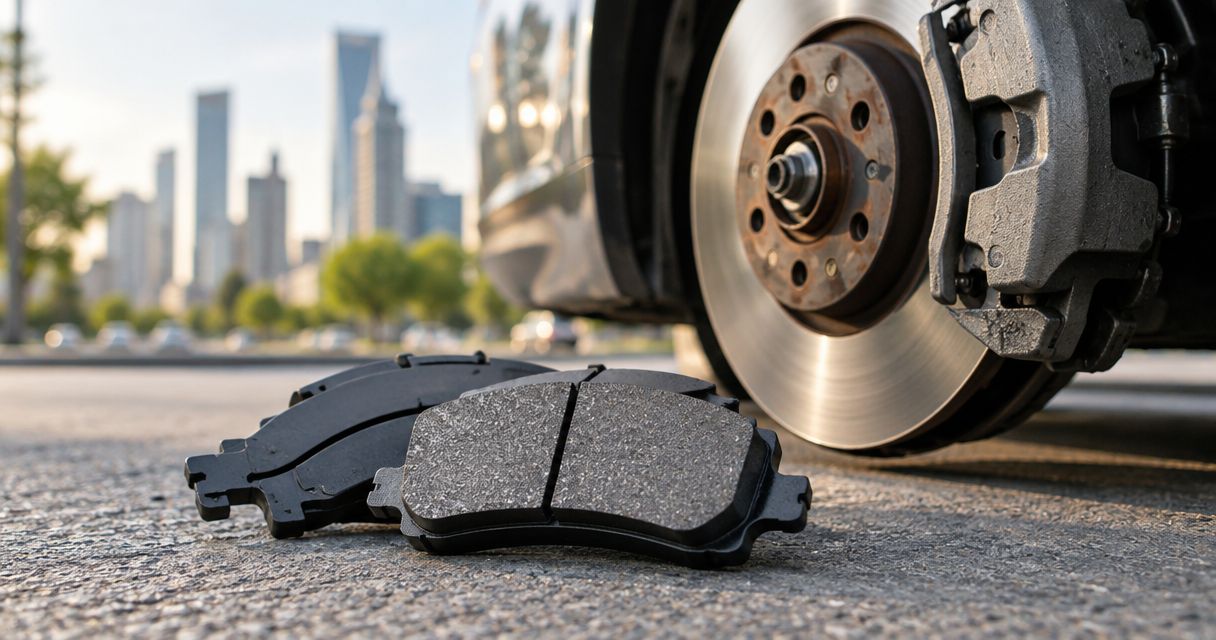
Best overall for everyday city driving: vehicle-approved ceramic pads. Best for heavier-duty braking: vehicle-approved semi-metallic pads. Best for gentle, light-duty use: non-asbestos organic pads where specified. This 2026 guide compares brake-pad materials, explains their trade-offs, and helps you choose the right replacement without treating every car alike.
- The best brake pads for city driving are usually vehicle-approved ceramic pads when quiet operation and low visible dust matter.
- Semi-metallic brake pads suit heavier-duty braking, but noise and visible wheel dust are trade-offs.
- Non-asbestos organic pads suit gentle use where specified; frequent demanding stops favor another approved material.
- Elite Auto Repair & Service Inc offers brake service in Kissimmee, FL; inspect the brakes before selecting replacement pads.
Why this matters
City driving means repeated braking at intersections, in parking lots, and in slow traffic. Your brake pads need to work predictably during ordinary stops, not just under the conditions highlighted on a package.
The right fit and the vehicle manufacturer's requirements come before material preference. A ceramic pad is not automatically an upgrade over the semi-metallic pad your vehicle requires. Pad shape, friction formulation, rotor condition, and installation all affect the result.
Elite Auto Repair & Service Inc is best for Kissimmee drivers who need brake service rather than a parts-only recommendation. You can start with Elite Auto Repair & Service Inc when you need an inspection before choosing replacement pads.
What makes the best brake pads for city driving?
Use these 5 selection checks before comparing brake-pad labels in 2026:
- Vehicle compatibility: Match the exact vehicle and brake configuration. A shared model name does not establish fit across every trim or brake package.
- Ordinary-stop response: Prioritize predictable braking in routine traffic. A pad intended for competition is not a default choice for a commuter.
- Noise control: Check the complete pad design, including the specified shims and hardware. Material alone does not guarantee silence.
- Dust and rotor interaction: Consider visible wheel dust and the condition of the rotors. Low dust does not mean no wear.
- Driving demands: Account for towing, vehicle loading, hills, and repeated demanding stops. Choose within the vehicle's approved options.
For a normal commuter, comfort and clean wheels are useful priorities. For a vehicle used under heavier loads, those priorities must sit behind the braking requirements of the vehicle and its use.
Brake-pad materials at a glance
These 3 pad categories describe broad material families, not identical products. Formulations differ within each family, so this comparison guides selection rather than promising a particular stopping distance or service life.
| Rank and material | Best for | Standout characteristic | Key limitation |
|---|---|---|---|
| 1. Ceramic brake pads | Everyday commuting where approved | Generally quiet operation with less visible wheel dust | Not the default for every heavy-duty application |
| 2. Semi-metallic brake pads | Heavier-duty braking where approved | Metal-containing formulation suited to heat-intensive braking | Often more audible and visibly dusty |
| 3. Non-asbestos organic brake pads | Gentle, light-duty driving where specified | Generally quiet operation with a softer friction formulation | Wear and demanding-stop performance are important trade-offs |
Do not rank brake pads by material alone. A correctly specified semi-metallic replacement is a better choice than an incompatible ceramic pad, regardless of where the material appears in this table.
1. Ceramic brake pads: best for everyday city commuting
Ceramic brake pads use a ceramic-based friction mixture with other ingredients that vary by manufacturer. They are a practical starting point for city drivers who want quiet everyday braking and less noticeable dust on their wheels.
For a commuter choosing pads in 2026, ceramic is the default recommendation when the specific pad is approved for the vehicle and its use. That qualification matters. The material name does not prove fit, friction performance, or suitability for towing.
Ceramic brake pads pros
- Generally quiet during ordinary street use.
- Typically produce less visible wheel dust than semi-metallic alternatives.
- Fit the priorities of routine commuting and everyday errands.
- Available as vehicle-specific replacement designs rather than requiring a change to the braking system.
Ceramic brake pads cons
- Not automatically appropriate for towing or other heavier-duty use.
- Formulations differ; the ceramic label is not a performance certification.
- Cannot correct a sticking caliper, damaged rotor, or installation problem.
Best for: Drivers whose approved replacement options include ceramic pads and whose main use is ordinary city commuting.
What to check before choosing ceramic
Confirm the exact brake application first. Then ask whether the replacement matches the vehicle's requirements, includes the specified hardware, and suits how you actually drive.
Do not choose ceramic solely because your current brakes squeal. Noise can come from worn parts, hardware problems, contamination, or rotor condition. Replacing the friction material without finding the cause leaves the underlying problem unresolved.
A ceramic pad also does not make the braking system maintenance-free. You still need sound rotors, freely moving caliper components, and installation that follows the applicable instructions.
Verdict: Buy vehicle-approved ceramic pads for ordinary city commuting when quiet operation and low visible dust are your priorities.
2. Semi-metallic brake pads: best for heavier-duty braking
Semi-metallic brake pads contain metal mixed with other friction ingredients. Their ability to handle and transfer heat makes them a relevant choice for vehicles and applications with more demanding braking requirements.
Choose semi-metallic pads because the vehicle and driving conditions call for them, not because the name sounds stronger. A loaded vehicle or towing application requires an application-specific decision; the material category alone is not approval for that use.
Semi-metallic brake pads pros
- Relevant to braking applications that place greater demands on heat handling.
- Commonly specified for vehicles with heavier-duty braking needs.
- A suitable replacement direction when the vehicle requires this type of formulation.
- Lets you prioritize braking demands over keeping wheels visibly clean.
Semi-metallic brake pads cons
- Often produce more visible wheel dust than ceramic pads.
- Can be more audible during normal braking.
- Rotor wear is a consideration and depends on the particular formulation and application.
Best for: Drivers whose vehicle requirements or approved heavy-use replacement options favor semi-metallic pads.
When semi-metallic is the better decision
If your vehicle requires a semi-metallic replacement, stay with the specified type unless an approved alternative is identified. A low-dust preference does not justify changing to an unsuitable formulation.
Separate routine traffic from demanding operation. Stopping at city intersections is not the same requirement as repeatedly slowing a loaded vehicle on a descent. Describe both uses when asking for a pad recommendation.
For your 2026 replacement, ask whether the proposed pad suits the vehicle's actual duty. You need an answer about the application, not a broad promise that one material always stops better.
Keep expectations realistic about comfort. A suitable semi-metallic pad can still be the right choice even when another material produces less visible dust.
Verdict: Buy approved semi-metallic pads when the vehicle's braking requirements take priority over noise and wheel cleanliness.
3. Non-asbestos organic pads: best for gentle, light-duty use
Non-asbestos organic pads use a mixture of non-asbestos friction ingredients held together with a binder. They are generally associated with quiet operation and softer formulations, but those qualities come with wear and heat-related trade-offs.
Treat organic pads as an application-specific option, not a universal commuter recommendation. Quiet operation is useful, but it does not outweigh the need for a pad that handles your vehicle's repeated braking demands.
Non-asbestos organic pads pros
- Generally quiet in ordinary use.
- Softer formulations can be less aggressive toward rotors.
- A relevant option where the vehicle specifies this pad type.
Non-asbestos organic pads cons
- Softer formulations can wear faster than other approved alternatives.
- Demanding repeated stops make heat performance an important limitation.
- Organic does not mean dust-free or automatically suitable for every commuter.
Best for: Gentle, light-duty driving in vehicles for which the specific organic pad is approved.
When to choose another material
If your use includes heavier loading, towing, or repeated demanding braking, do not select an organic pad simply for quietness. Check the vehicle requirements and compare approved alternatives.
Also separate material selection from brake condition. An organic pad cannot solve vibration from a rotor problem or uneven wear caused by a caliper fault.
The right decision is sometimes to retain the specified organic replacement. The wrong decision is assuming all organic pads are interchangeable because they belong to the same broad category.
Verdict: Hold until compatibility and driving demands are confirmed; buy organic pads only when they suit the application.
Before you replace the pads, inspect the whole brake assembly
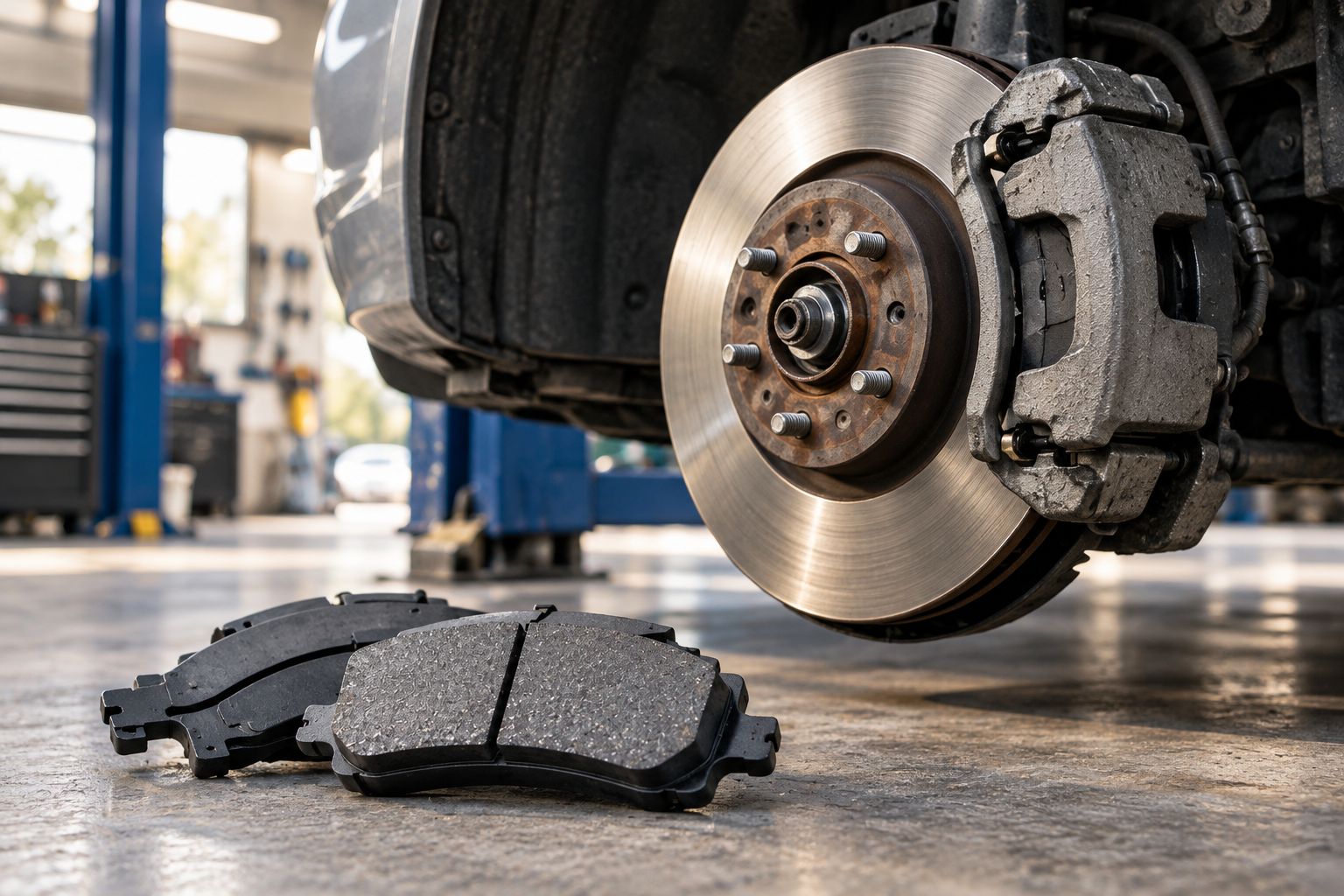
Brake pads are only part of the system. A conventional disc-brake caliper typically uses 2 friction pads, with one working against each side of the rotor; both need inspection because uneven wear can reveal a problem beyond pad choice.
Ask Elite Auto Repair & Service Inc about brake inspection, pad and rotor service in Kissimmee. Brake service should address the condition of the assembly, not just substitute a different pad material.
A useful inspection separates these issues:
- Pad wear: Check the friction material and look for uneven wear.
- Rotor condition: Check surface condition and thickness against the vehicle's service limits.
- Caliper movement: Check for sticking components that prevent normal application or release.
- Hardware condition: Inspect the specified clips, shims, and related installation parts.
A material comparison cannot diagnose grinding, vibration, pulling, or a change in pedal feel. Report those symptoms before authorizing a pad-only replacement.
How these brake-pad categories are ranked
This ranking prioritizes vehicle compatibility, ordinary-stop response, noise, visible dust, and driving demands. It recommends material families for distinct uses; it is not a product test or a measured stopping-distance comparison.
Ceramic leads for ordinary commuter comfort where approved. Semi-metallic leads when the application calls for greater heat handling, while organic remains a narrower choice for suitable light-duty applications.
Manufacturer requirements override the ranking. No material earns a recommendation when the specific replacement is wrong for the vehicle.
Which brake pads should you choose in 2026?
Choose vehicle-approved ceramic pads as the starting point for ordinary city commuting. Move to semi-metallic when the vehicle requirements or approved heavy-use options call for it. Choose organic only when the application supports that choice.
Before you approve the work, ask these questions:
- Does this exact pad fit my vehicle and brake package?
- Why does this formulation suit my driving?
- Are the rotors, calipers, and hardware ready for the replacement?
Tell the shop about towing, hills, loading, and any brake symptoms. That information is more useful than asking for the hardest pad or the cleanest wheels.
For brake service in Kissimmee, Elite Auto Repair & Service Inc offers inspections and pad and rotor service. Have the cause of your symptoms checked before choosing parts.
Get your brakes checked
Discuss brake inspection and pad and rotor service in Kissimmee, FL.
FAQ
What are the best brake pads for city driving in 2026?
Vehicle-approved ceramic pads are the default recommendation for ordinary city commuting when quiet operation and low visible dust matter. Choose semi-metallic or organic pads instead when the vehicle's requirements and driving demands support them.
Are ceramic brake pads better than semi-metallic pads?
Ceramic pads generally suit commuter priorities such as quiet operation and less visible wheel dust; semi-metallic pads suit applications with greater heat-handling demands. Neither material is better for every vehicle, and the exact replacement must meet the vehicle's requirements.
Should I buy racing brake pads for stop-and-go traffic?
Do not choose racing pads as the default for city driving. Competition-oriented formulations can have operating requirements that do not match ordinary street use; select a replacement intended and approved for your vehicle's road use.
Will ceramic pads stop my brakes from squealing?
Ceramic pads do not guarantee silent brakes. Hardware, rotor condition, contamination, wear, and installation can contribute to noise, so diagnose the cause before changing pad material.
Do I need new rotors whenever I replace brake pads?
Rotor replacement depends on condition and the vehicle's service limits, not simply on fitting new pads. Check thickness, surface condition, and other required measurements before deciding whether the rotors can remain in service.
Can I switch from semi-metallic to ceramic brake pads?
Switch only when the exact ceramic replacement is suitable for your vehicle and its use. Matching the pad's shape is not enough; confirm the braking requirements and application before changing formulations.
Where can I get brake service in Kissimmee, FL?
Elite Auto Repair & Service Inc offers brake service in Kissimmee, FL, including inspections and pad and rotor service. Describe any noise, vibration, pulling, or pedal changes so the inspection addresses the symptom as well as pad wear.
One last thing
Keep the part number for the pads installed on your vehicle. A note that only says ceramic or semi-metallic does not identify the actual replacement, and different formulations within the same category are not interchangeable recommendations.
For your 2026 service records, keep the pad details with the repair invoice. That gives your next inspection a specific reference instead of a material label.