
Best overall: a manufacturer-backed scheduled-maintenance plan that matches your vehicle’s service schedule. Best for frequent local visits: a dealership service subscription. Best non-subscription alternative: pay-as-you-go maintenance with a local repair shop. This 2026 guide ranks plan types by coverage, service access, and contract restrictions—not by the promise of fewer repair bills.
- The best car maintenance subscription plans match your vehicle’s scheduled services, not just your preferred monthly payment.
- Manufacturer-backed maintenance plans are the default choice when covered services match work your vehicle actually needs.
- Dealership and independent-shop subscriptions suit drivers who intend to keep using the participating shop.
- Elite Auto Repair & Service Inc provides maintenance services in Kissimmee; compare individual services against any subscription contract.
- Maintenance plans, extended warranties, and roadside assistance cover different needs.
Why this matters
A maintenance subscription is an agreement to pay for specified routine services. It is not automatically protection against a failed transmission, a broken AC compressor, or every brake repair. The contract decides what you receive.
For Kissimmee drivers, Elite Auto Repair & Service Inc offers oil changes, brakes, diagnostics, AC repair, engine and transmission repair, suspension work, and tune-ups. Elite Auto Repair & Service Inc is a maintenance option for Kissimmee drivers who want service without choosing a subscription first. Treat those individual services as a comparison point, not as evidence of a subscription offering.
The best decision in 2026 starts with your vehicle’s maintenance schedule. A plan full of services you will not use is the wrong plan, regardless of how convenient the payment arrangement sounds.
What makes the best car maintenance subscription plans
Judge every contract against these criteria before comparing providers:
- Useful coverage: Look for the scheduled services your vehicle needs, with the correct fluids, filters, and procedures.
- Service access: Confirm the locations where you can redeem the plan and whether those locations fit your routine.
- Clear limits: Read the expiration date, mileage limit, visit allowance, and rules for unused services.
- Vehicle fit: Check eligibility by vehicle, powertrain, age, and mileage rather than assuming every car qualifies.
- Exit terms: Establish what happens when you cancel, sell the vehicle, move, or stop using the participating shop.
- Repair separation: Identify what counts as maintenance, what counts as repair, and which inspections do not include corrective work.
An oil change and an inspection are different deliverables. Likewise, a brake inspection does not mean replacement pads or rotors are included. Ask for the covered-service list before signing.
Car maintenance options at a glance
These rankings compare purchasing models. A specific contract earns its place only when its written terms match the use case below.
| Rank and option | Best for | Standout feature to look for | Key limitation |
|---|---|---|---|
| 1. Manufacturer-backed scheduled-maintenance plan | Keeping routine service aligned with one vehicle’s schedule | Coverage tied to specified scheduled maintenance | Covered services and participating locations depend on the contract |
| 2. Dealership service subscription | Drivers who consistently use one dealership | Repeat service visits through a familiar location | A local service bundle can be narrower than full scheduled maintenance |
| 3. Independent-shop maintenance subscription | Drivers committed to one neighborhood repair shop | A written routine-service agreement with that shop | Portability and vehicle eligibility require careful checking |
| 4. Multi-vehicle maintenance agreement | Households or businesses coordinating several vehicles | Clearly documented terms for each enrolled vehicle | Shared administration does not establish shared coverage |
| 5. Pay-as-you-go maintenance | Drivers who want flexibility without a recurring agreement | Approval of each service as it becomes due | You must track appointments and budget for each visit |
1. Manufacturer-backed plan: best for scheduled-service alignment
A manufacturer-backed scheduled-maintenance plan is the strongest starting point when you want coverage organized around your vehicle’s required routine work. Check the actual agreement against the owner’s manual. The manufacturer’s name alone does not establish which services are included.
Distinguish an included maintenance program from an optional prepaid agreement. Neither should be confused with a repair warranty, and neither justifies ignoring time-based service requirements.
Manufacturer-backed plan pros:
- Gives you a defined service list to compare with the vehicle’s maintenance schedule.
- Keeps the decision focused on required maintenance rather than unrelated benefits.
- Suits drivers who intend to use the participating service network.
Manufacturer-backed plan cons:
- Location restrictions reduce flexibility when you move or travel.
- Expiration rules can leave covered services unused.
- Routine-service coverage does not establish protection against mechanical failures.
For a 2026 purchase, list the scheduled work due during the contract term. Then mark which tasks the agreement covers and which remain your responsibility. Include mileage-based and calendar-based requirements.
Best for: Owners who expect to keep the vehicle and use the permitted service locations throughout the agreement.
Verdict: Buy only when the covered schedule matches your vehicle’s upcoming maintenance. Hold if the agreement leaves major scheduled tasks unclear.
2. Dealership subscription: best for repeat visits to one location
A dealership service subscription is a recurring service agreement sold through a dealer. Its usefulness depends on the actual bundle: read the contract rather than assuming the subscription covers everything recommended at each appointment.
This model fits drivers whose normal routine already includes that dealership. It is a poor fit when redeeming an ordinary service requires an inconvenient trip.
Dealership subscription pros:
- Provides a defined arrangement for returning to the same service location.
- Lets you assess the included work against your existing dealership service habits.
- Gives you one agreement to consult before approving additional maintenance.
Dealership subscription cons:
- A service bundle is not necessarily the vehicle’s complete maintenance schedule.
- Dealer-specific redemption rules can restrict where you receive service.
- Suggested work outside the bundle still requires a separate decision.
Ask whether the agreement belongs to that dealership or a wider participating network. Also check whether an inspection is included without the repair it identifies. That distinction matters when a visit finds worn brake components or a fluid leak.
Your 2026 comparison should separate included tasks from recommendations made during the appointment. Do not count an inspection as replacement work or assume a subscription removes the need to approve additional repairs.
Best for: Drivers who consistently return to one dealership and can use the included services before expiration.
Verdict: Buy for a good location fit and useful written coverage; skip for the dealership name alone.
3. Independent-shop subscription: best for local service continuity
An independent-shop maintenance subscription is a routine-service agreement with a participating repair shop. Evaluate it as a contract with that business, not as an industry-wide package with standard benefits.
Confirm that the agreement identifies your vehicle, the covered services, and the redemption rules. A shop offering oil changes and repairs does not automatically offer subscriptions.
Independent-shop subscription pros:
- Fits drivers who want routine maintenance at a particular local shop.
- Lets you compare the proposed bundle with that shop’s individual services.
- Creates a defined scope for recurring maintenance when the terms are explicit.
Independent-shop subscription cons:
- Coverage outside the participating shop requires written confirmation.
- Different vehicles can require different fluids, parts, and service procedures.
- Repair services advertised by the shop are not necessarily subscription benefits.
Elite Auto Repair & Service Inc provides car maintenance and repair services in Kissimmee. Use your vehicle’s service needs to decide which work to request; do not treat the shop’s service menu as a prepaid contract.
Before choosing any independent-shop agreement, ask how the shop handles a change of vehicle, unused visits, and services that exceed the package’s scope. Get the answers in writing. A verbal description is not a substitute for contract terms.
Best for: Drivers who plan to keep using one local shop and have a clearly documented routine-service agreement.
Verdict: Buy only after reviewing the service list and exit terms; hold when the agreement relies on verbal promises.
4. Multi-vehicle agreement: best for coordinated maintenance
A multi-vehicle maintenance agreement organizes routine service for more than one vehicle. Its main use case is coordination, but each enrolled vehicle still needs coverage that matches its own schedule.
For a household with 2 vehicles, create a separate maintenance checklist for each car. Do not assume one bundle suits both simply because the same owner pays for them.
Multi-vehicle agreement pros:
- Gives you a common agreement to review when coordinating vehicle maintenance.
- Encourages vehicle-by-vehicle documentation of covered work.
- Fits households or businesses that want a consistent service process.
Multi-vehicle agreement cons:
- Enrollment does not establish that benefits transfer between vehicles.
- One vehicle’s unused services are not automatically usable on another.
- Different mileage patterns can make the same contract term a poor fit.
Confirm how the agreement identifies each vehicle and what happens when you replace one. Also establish who can authorize work and whether extra maintenance requires separate approval.
For your 2026 review, compare the cars independently before evaluating the combined arrangement. A commuter vehicle and a lightly driven second car should not receive identical assumptions about service timing.
Best for: Households or businesses coordinating multiple vehicles with clearly stated coverage for each.
Verdict: Buy for documented vehicle-by-vehicle fit; skip if the agreement blurs enrollment, benefits, or authorization.
5. Pay-as-you-go maintenance: best for flexibility
Pay-as-you-go maintenance is not a subscription. It belongs in this comparison because it is the baseline every subscription must beat on usefulness and convenience.
You arrange maintenance when it is due and approve the work for that visit. This approach suits drivers who want to choose their shop, change vehicles, or avoid a recurring agreement.
Pay-as-you-go maintenance pros:
- Keeps service decisions separate from a subscription term.
- Lets you choose a shop for each maintenance or repair need.
- Avoids unused subscription benefits and subscription cancellation rules.
Pay-as-you-go maintenance cons:
- Requires you to track the maintenance schedule yourself.
- Does not bundle future services into one agreement.
- Requires planning for individual visits rather than relying on recurring payments.
Elite Auto Repair & Service Inc offers car maintenance services such as oil changes and tune-ups, alongside diagnostics and repairs. Ask for the work your vehicle needs and distinguish scheduled maintenance from a problem that requires diagnosis.
Use a 12-month planning window to list upcoming routine tasks. Extend that review to 24 months when comparing a longer agreement. Those are comparison windows, not recommended service intervals; follow your vehicle’s schedule.
Best for: Drivers who value service flexibility and will keep their own maintenance reminders.
Verdict: Buy the required service when due; skip the subscription when its restrictions outweigh its practical benefits.
How to check a plan before signing
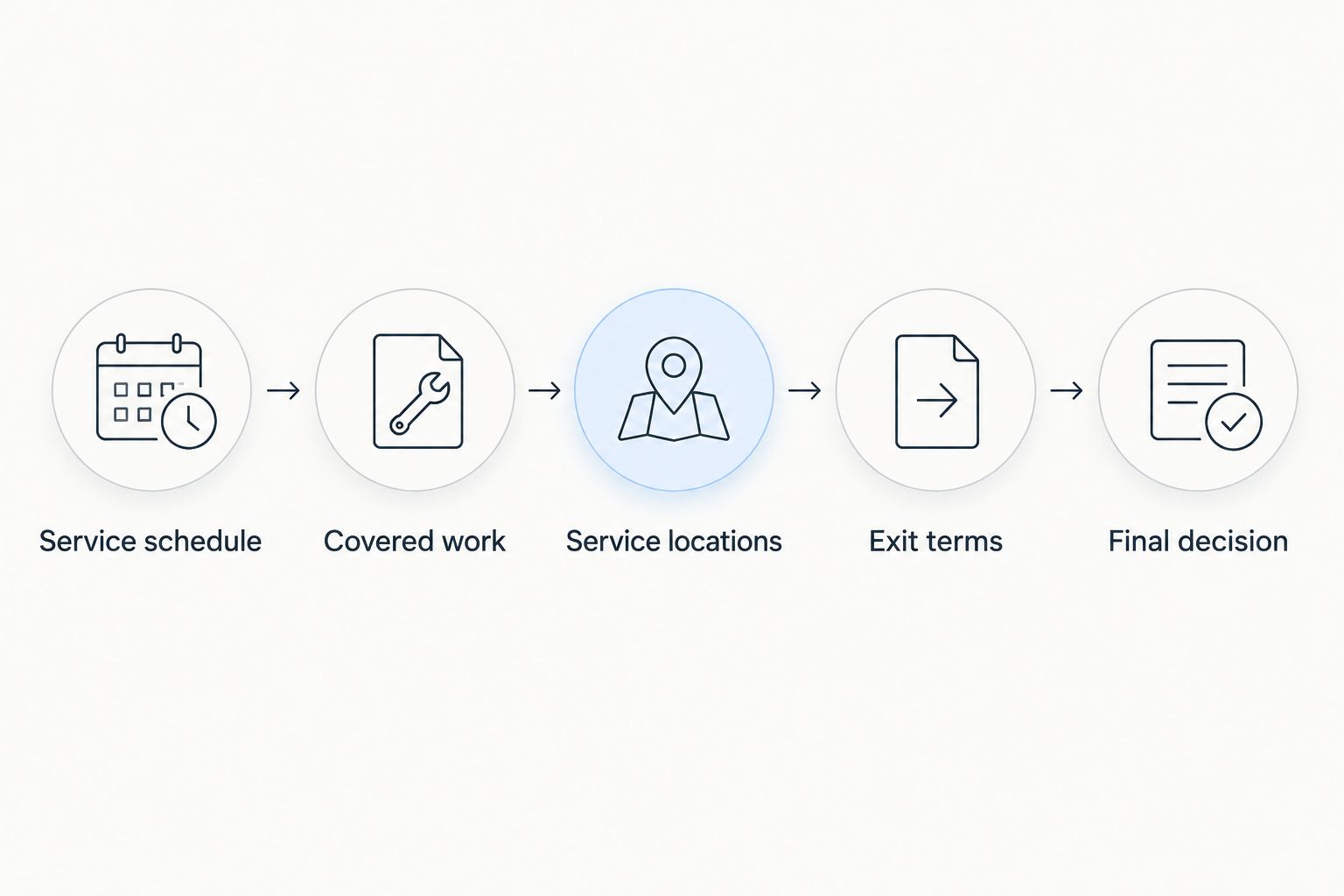
Use this sequence to turn a subscription pitch into a decision:
- Service schedule: List the maintenance your vehicle needs during the proposed term.
- Covered work: Match every included task to that list and identify omissions.
- Service locations: Check where you can redeem the agreement.
- Exit terms: Read cancellation, transfer, expiration, and unused-service provisions.
- Final decision: Compare the agreement with arranging the same required work individually.
The order matters. Start with the car’s needs, not the payment arrangement, so convenience does not distract you from incomplete coverage.
Keep a copy of the agreement with your maintenance records. Record completed work so you can distinguish services already used from those still due.
How the options are ranked
The ranking prioritizes scheduled-service fit, useful coverage, and clear restrictions. Manufacturer-backed plans take the default slot because their stated purpose aligns with scheduled maintenance; dealership and independent-shop agreements suit specific service-location preferences.
Multi-vehicle agreements address coordination. Pay-as-you-go maintenance remains the flexibility choice. A lower-ranked option is the better choice when it fits your vehicle and routine more closely.
Which maintenance option should you choose?
For 2026, start with a manufacturer-backed plan only if its written coverage matches your upcoming scheduled work. Choose a dealership or independent-shop agreement when you genuinely want to keep using that location.
Choose pay-as-you-go maintenance when you cannot clearly identify the subscription’s useful covered services. Paying on a recurring schedule does not make an unsuitable bundle necessary.
Plan your next maintenance visit
Review maintenance and repair services for your vehicle in Kissimmee, FL.
FAQ
What are the best car maintenance subscription plans in 2026?
The best car maintenance subscription plans cover the scheduled services your vehicle actually needs at locations you intend to use. Start with manufacturer-backed scheduled-maintenance coverage, then compare dealership and independent-shop agreements against the same service list.
Is a maintenance subscription the same as an extended warranty?
No. A maintenance subscription covers the routine services listed in its agreement, while an extended warranty or vehicle service contract addresses specified repair coverage. Read both contracts separately rather than assuming one replaces the other.
Does a maintenance plan cover brake pads and rotors?
Brake pads and rotors are covered only when the agreement explicitly includes their replacement. A brake inspection alone does not establish coverage for parts or repair labor.
Is a dealership maintenance subscription better than using a local shop?
A dealership subscription is better only when its covered work and service location fit your needs more closely. A local shop is the stronger choice when you want individual service decisions without a dealership-specific agreement.
Should I buy a maintenance subscription for an electric vehicle?
Choose an electric-vehicle maintenance agreement only when its covered tasks match that vehicle’s schedule. A bundle built around engine oil changes does not fit a battery-electric vehicle.
What happens to my maintenance plan if I sell my car?
The agreement’s transfer and cancellation provisions determine what happens when you sell the car. Check whether benefits follow the vehicle, end at sale, or require a specific transfer process before signing.
Does Elite Auto Repair & Service Inc provide vehicle maintenance in Kissimmee?
Elite Auto Repair & Service Inc provides oil changes, tune-ups, diagnostics, brakes, and other repair services in Kissimmee, FL. Choose services according to your vehicle’s maintenance schedule and any symptoms that need diagnosis.
One last thing
An inspection tells you what needs attention; it does not mean the corrective work is included. Highlight every use of the word inspection in the agreement and check what happens when that inspection finds a problem. This small distinction separates a useful maintenance benefit from an unexpected additional service decision.