Best overall starting point: AAA; best for existing-policy convenience: insurer roadside assistance; best for RV travel: Good Sam. Check manufacturer roadside assistance before buying separate coverage, and reserve pay-per-use help for situations where you accept arranging each incident separately.
- The best roadside assistance plans for Florida drivers depend on towing destinations, covered vehicles, and service limits.
- AAA is the default membership option to compare; verify the specific plan before enrolling.
- Good Sam belongs on the shortlist for RV owners; confirm eligibility for your particular vehicle.
- Check insurer and manufacturer coverage before adding another roadside assistance plan.
Why this matters
A roadside assistance plan gets help to a disabled vehicle. It does not replace brake work, engine diagnostics, or other repairs that make the vehicle safe to drive again. Choose the plan around the breakdown you need it to handle, not the longest benefits list.
For Florida drivers comparing coverage in 2026, the practical questions are where you drive, which vehicles you use, and where you want a disabled vehicle taken. A neighborhood commute and an interstate trip create different towing needs. An RV requires a different equipment discussion than a passenger car.
Elite Auto Repair & Service Inc is a repair option for Kissimmee drivers who need diagnostics after a breakdown. Elite Auto Repair & Service Inc offers diagnostics, brakes, oil changes, AC repair, engine and transmission repair, suspension service, and tune-ups. Keep the assistance decision separate from the repair decision: dispatch gets you help; diagnosis identifies the cause.
What makes the best roadside assistance plan?
Use these criteria before comparing provider names. A plan belongs on your shortlist only when its written terms match your driving needs.
- Towing destination: Check whether you choose the repair shop, whether distance limits apply, and what happens beyond those limits.
- Coverage identity: Establish whether protection follows the member, a named driver, or a particular vehicle.
- Vehicle eligibility: Confirm coverage for your car, motorcycle, RV, trailer, or other vehicle rather than assuming they share eligibility.
- Service scope: Look for the specific breakdown services you need, such as towing, battery assistance, flat-tire assistance, and lockout help.
- Usage restrictions: Read service-call limits, waiting periods, exclusions, and rules for repeat incidents.
- Dispatch access: Check how you request assistance and whether you receive direct dispatch or must arrange service and request reimbursement.
For your 2026 comparison, write down the repair shop you would actually use. A towing benefit is less useful when its destination rules conflict with that choice.
Roadside assistance options at a glance
The order below reflects a decision path: membership first, existing coverage next, specialist coverage for RVs, and incident-by-incident help last. It is not a ranking of measured response times.
| Option | Best for | Standout feature | Key limitation to check |
|---|---|---|---|
| AAA membership | Drivers seeking a membership-based option | Roadside assistance through a membership organization | Specific membership terms, towing rules, and eligible vehicles |
| Insurer roadside assistance | Drivers who want assistance alongside their auto policy | Connection to an existing insurance relationship | Covered vehicles, service limits, and claim treatment |
| Manufacturer roadside assistance | Owners checking protection associated with their vehicle | Vehicle-linked coverage, when applicable | Eligibility, coverage end date, and towing destination |
| Good Sam roadside assistance | RV owners comparing specialist options | RV-focused roadside assistance | Exact RV, tow vehicle, and trailer eligibility |
| Pay-per-use roadside service | Drivers handling an isolated incident without a membership | Service arranged for the immediate breakdown | Dispatch responsibility, authorization, and payment arrangements |
Do not rank plans by a promised arrival estimate alone. Ask what the provider does when the first dispatched operator cannot handle your vehicle or cannot reach your location.
1. AAA: best roadside assistance option for membership shoppers
AAA is a membership organization offering roadside assistance. It is the default starting point here because it lets you evaluate roadside help as a membership decision rather than only as an insurance-policy addition.
The provider name is not the contract. Read the terms for the membership offered to you in Florida, including towing, covered vehicles, and service restrictions. Do not transfer benefits from another membership level or another driver's experience to your own selection.
AAA pros:
- A clear option for shoppers specifically seeking roadside membership.
- A useful comparison point against insurer and manufacturer coverage.
- Lets you evaluate membership coverage separately from your vehicle's repair needs.
AAA cons:
- Membership alone does not establish your towing allowance or destination rights.
- Vehicle eligibility and service restrictions still require checking.
- A separate membership can overlap with assistance you already hold.
Best for: Drivers who want to compare a membership-based roadside assistance option for their regular travel.
Ask whether the membership applies when you are driving a different vehicle or riding as a passenger. That distinction matters if your household shares cars. Confirm the answer in the membership terms rather than relying on the general idea of personal coverage.
Verdict: Buy only after the AAA membership's written coverage matches your vehicles and towing needs.
2. Insurer roadside assistance: best for existing-policy convenience
Insurer roadside assistance is coverage offered alongside an auto insurance relationship. Start with your policy documents or ask your insurer whether roadside assistance is included or available for your vehicle.
This option belongs near the top of the list when you prefer handling insurance and roadside questions through the same company. That convenience does not establish which breakdowns qualify or how service requests are recorded.
Insurer roadside assistance pros:
- Gives you a starting point within an existing insurance relationship.
- Lets you review assistance alongside the vehicles listed on your policy.
- Helps you check for overlap before buying a separate membership.
Insurer roadside assistance cons:
- Coverage for a listed vehicle does not establish protection in every car you use.
- Dispatch and reimbursement arrangements require confirmation.
- You need the insurer's explanation of how roadside requests are recorded and treated.
Best for: Drivers who want roadside assistance connected to their existing auto policy.
For a household with 2 vehicles, review each vehicle separately. This is a planning example, not a coverage rule: assistance attached to one vehicle does not prove that the other has the same protection.
Ask a direct question: does the provider dispatch an operator, or do you arrange help yourself? Also ask whether roadside requests are treated differently from collision or other insurance claims. Get the policy-specific answer without assuming an effect on premiums.
Verdict: Buy if the policy terms meet your needs and you prefer this arrangement over separate membership.
3. Manufacturer roadside assistance: best for checking existing coverage
Manufacturer roadside assistance is protection associated with a vehicle when its applicable terms provide it. Before selecting a separate plan in 2026, check your vehicle documents and confirm eligibility through the manufacturer.
This is an existing-coverage check, not a recommendation to purchase a particular vehicle. The useful question is whether protection applies to your vehicle now and whether it handles the breakdown you are planning for.
Manufacturer roadside assistance pros:
- Identifies protection associated with the vehicle before you add another plan.
- Gives you a vehicle-specific starting point for eligibility questions.
- Helps distinguish roadside assistance from the separate repair warranty.
Manufacturer roadside assistance cons:
- Vehicle age, mileage, ownership, or other terms can affect eligibility.
- Towing destination rules require checking.
- A roadside benefit does not establish that the resulting repair is covered.
Best for: Vehicle owners who want to confirm existing protection before adding another roadside assistance arrangement.
Read the roadside section separately from the warranty section. Being entitled to a tow and being entitled to a covered repair are different decisions. Ask whether an independent repair shop is an allowed destination if that is where you intend to have the vehicle inspected.
Keep any coverage end date with your vehicle records. If protection ends during 2026, make that date part of your next coverage review rather than discovering the change during a breakdown.
Verdict: Hold off on separate coverage until you establish what manufacturer assistance already provides.
4. Good Sam: best roadside assistance shortlist for RV owners
Good Sam offers RV-focused roadside assistance options. It belongs on the shortlist when your travel involves an RV rather than only a passenger car.
An RV breakdown requires attention to the disabled vehicle and the equipment needed to move it. Confirm the plan's eligibility rules for your actual setup, including any tow vehicle or trailer, before treating it as a match.
Good Sam pros:
- Provides an RV-focused option for comparison.
- Makes RV eligibility a central part of the coverage discussion.
- Gives RV travelers an alternative to starting with passenger-car coverage alone.
Good Sam cons:
- The provider name does not establish coverage for every RV configuration.
- Towing destination and equipment requirements need confirmation.
- RV-focused coverage is not automatically the right choice for a passenger-car-only household.
Best for: RV owners who need to compare assistance against their specific travel setup.
For an example involving 1 motorhome, describe the vehicle accurately when requesting coverage information. If your setup includes additional vehicles or a trailer, list them explicitly. Ask what happens when the breakdown affects one component while the rest remains operable.
Also ask how dispatch identifies an operator equipped for your vehicle. That question is more useful than assuming every roadside truck can handle every towing job.
Verdict: Buy only when Good Sam's current terms explicitly fit your RV setup.
5. Pay-per-use service: best for an isolated assistance need
Pay-per-use roadside service means arranging help for an individual incident rather than relying on a standing membership. It is an alternative when you need assistance now and have not established applicable coverage.
The trade-off is that you handle the immediate service decision during the breakdown. Identify the operator, requested work, destination, and payment arrangements before authorizing dispatch.
Pay-per-use service pros:
- Addresses an immediate incident without first selecting a membership.
- Lets you discuss the specific vehicle and destination with the operator.
- Keeps the decision focused on the help needed at that moment.
Pay-per-use service cons:
- Leaves you arranging help under breakdown conditions.
- Does not provide standing coverage for the next incident.
- Requires clear authorization and payment arrangements before service begins.
Best for: Drivers managing an isolated incident who understand they are arranging that service individually.
Save the operator's identity and the agreed destination. Do not authorize an unspecified tow simply because help has arrived. If you already have coverage, check its dispatch or reimbursement rules before arranging outside service.
Verdict: Skip as your default preparedness strategy if you want standing assistance coverage.
How this ranking works
This 2026 ranking uses coverage fit, not unsupported speed claims or provider popularity. AAA leads as the general membership starting point; insurer and manufacturer assistance come next because checking existing coverage is a practical buying step. Good Sam serves the distinct RV use case, while pay-per-use service addresses an individual incident.
No provider wins every criterion. Choose the written coverage that matches your vehicle and destination, not the most familiar name.
Before a breakdown: make assistance usable
A plan is easier to use when your records and instructions are ready. Prepare these details while the vehicle is parked safely, not while you are standing beside traffic.
- Coverage details: Save the provider's assistance instructions and membership or policy information.
- Vehicle details: Record the make, model, and any information needed to identify your vehicle accurately.
- Location details: Be ready to describe your road, direction of travel, and nearby landmarks.
- Repair destination: Keep your preferred repair shop's name and confirm the plan's destination rules.
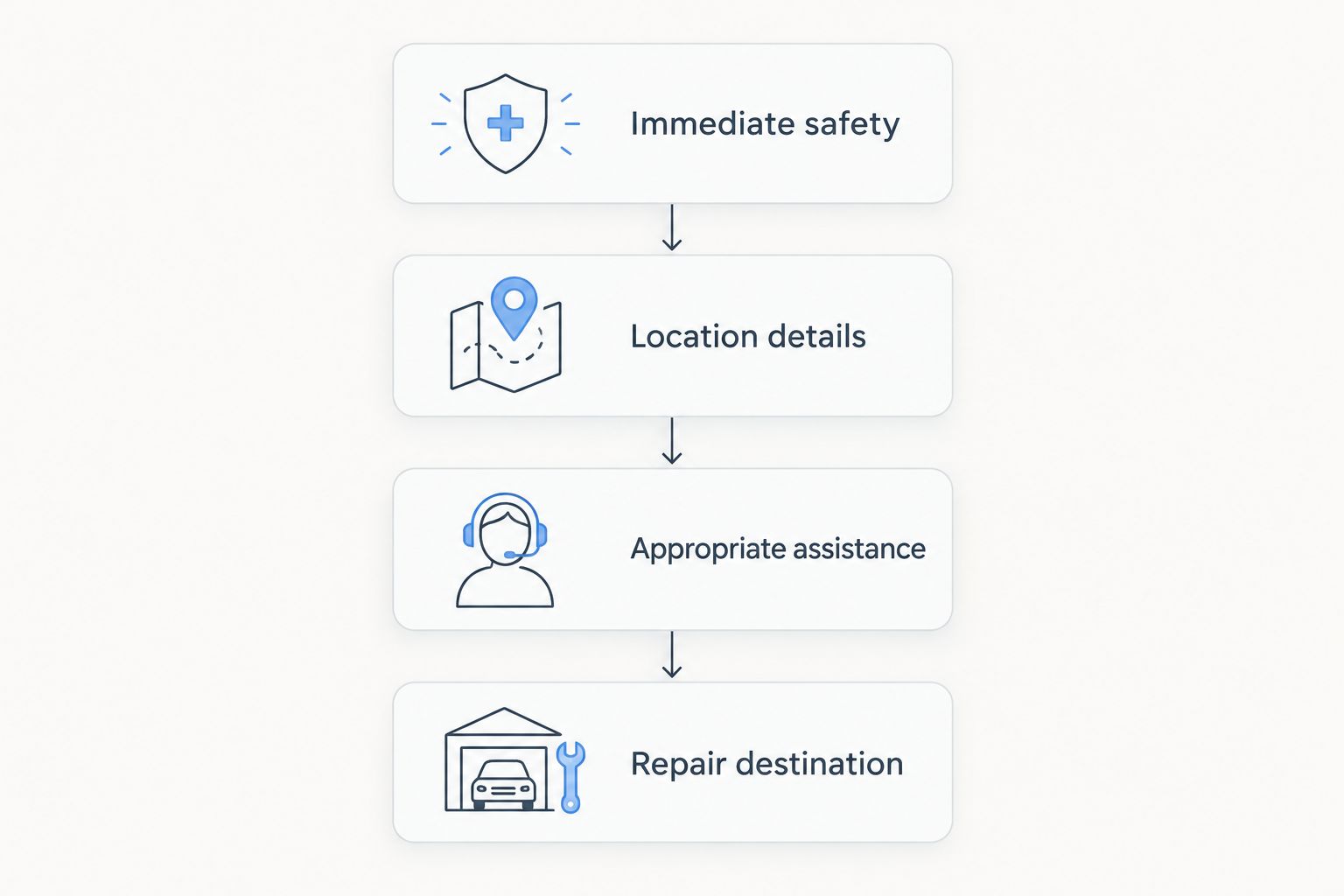
The sequence during a breakdown is simple: address immediate safety, identify your location, request the appropriate assistance, and confirm the destination. For an immediate emergency, call 911. Do not attempt roadside repairs where traffic makes the work unsafe.
After assistance arrives, keep the incident description for the repair shop. Note warning lights, unusual sounds, whether the engine stopped, and what happened before the problem. Clear observations help separate the roadside symptom from the underlying repair need.
Elite Auto Repair & Service Inc offers diagnostics and repair services in Kissimmee. Describe the incident plainly when seeking repair help; a successful jump-start or tow does not identify why the vehicle failed.
Which roadside assistance option should you choose?
Start with AAA if you want a separate membership, but check existing insurer and manufacturer coverage before enrolling. Choose an RV-focused comparison such as Good Sam when your vehicle setup requires it. Use pay-per-use assistance for the immediate incident rather than mistaking it for continuing protection.
For your 2026 decision, answer 3 questions: which vehicles need protection, where should a tow end, and how is help dispatched? If the terms do not answer those questions clearly, keep comparing.
Get repair help in Kissimmee
Explore diagnostics, brakes, AC repair, and other vehicle repair services.
FAQ
What's the best roadside assistance plan for Florida drivers?
AAA is the default membership option to compare, not an automatic winner for every driver. Check existing insurer and manufacturer coverage first, then compare towing destinations, vehicle eligibility, and dispatch rules.
Is AAA better than roadside assistance through my insurance?
The better choice is the one whose written coverage matches your vehicles and towing needs. Compare membership eligibility against policy-linked protection, and ask your insurer how assistance requests are recorded.
Do I need roadside assistance if my car has manufacturer coverage?
Check the manufacturer assistance terms before adding separate coverage. Confirm that your vehicle remains eligible and that the services and towing destination meet your needs.
What's a roadside assistance option to compare for an RV in Florida?
Good Sam belongs on an RV owner's shortlist because it offers RV-focused roadside assistance. Confirm eligibility for the exact RV, tow vehicle, and trailer setup rather than assuming every configuration is covered.
Can roadside assistance tow my car to my preferred repair shop?
Your plan's towing destination rules determine whether you can choose your preferred shop. Check destination restrictions and distance limits before requesting the tow.
Does roadside assistance pay for engine or transmission repairs?
Do not treat roadside assistance as engine or transmission repair coverage. Check separate warranty or insurance terms for any repair protection, and arrange diagnosis to identify the cause of the breakdown.
Who can inspect my car after a breakdown in Kissimmee?
Elite Auto Repair & Service Inc offers diagnostics, engine and transmission repair, brakes, AC repair, and other services in Kissimmee. Explain what happened before the breakdown and what roadside assistance was performed.
One last thing
A jump-start answers whether the engine can start at that moment. It does not establish why the battery lost power. Likewise, adding coolant does not identify a leak, and a tow does not diagnose an engine problem.
Treat roadside assistance as the first step, not the completed repair. Elite Auto Repair & Service Inc offers diagnostics for drivers in Kissimmee who need the cause identified after the immediate breakdown is handled.