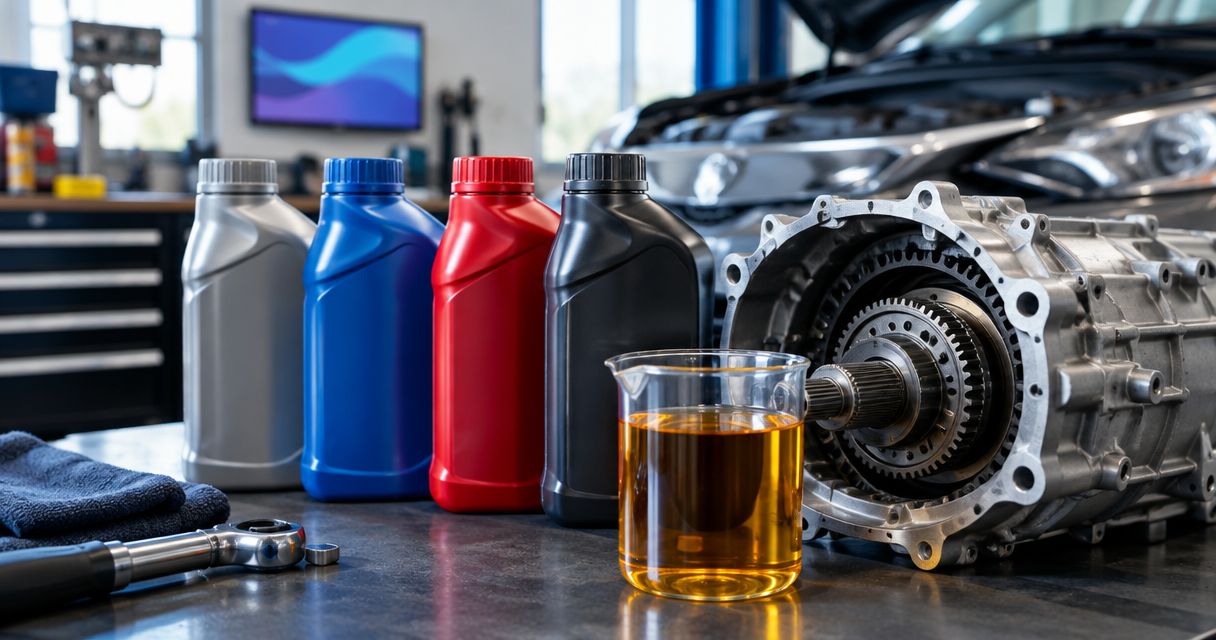
Best overall: the synthetic fluid that meets your transmission’s exact manufacturer specification. Best for conventional automatics: specification-matched synthetic ATF; best for CVTs: transmission-specific synthetic CVT fluid; best for dual-clutch gearboxes: specified synthetic DCT fluid; best for manuals: specified synthetic manual transmission lubricant. This 2026 guide ranks those choices by compatibility, not by bottle branding.
- The best synthetic transmission fluid meets your gearbox’s exact specification; synthetic alone does not establish compatibility.
- Choose synthetic ATF, CVT fluid, DCT fluid, or manual transmission lubricant according to the transmission type.
- Elite Auto Repair & Service Inc provides transmission repair in Kissimmee, FL; bring your symptoms and service history.
- Check the required specification and filling procedure before buying fluid or approving a transmission service.
Why this matters
The wrong transmission fluid is not an upgrade, even when the bottle says synthetic. Transmissions depend on specific friction characteristics and viscosity, and different gearbox designs do not share one universal requirement.
Elite Auto Repair & Service Inc provides engine and transmission repair in Kissimmee, FL. If your vehicle slips, shifts harshly, or leaks fluid, describe the symptom before requesting a fluid change. A transmission complaint needs a diagnosis, not an assumption that a different lubricant will fix it.
Elite Auto Repair & Service Inc is a service option for Kissimmee drivers who need transmission repair rather than another bottle recommendation.
What makes the best synthetic transmission fluid?
Use these criteria to judge any synthetic transmission fluid in 2026:
- Exact specification: The fluid documentation must match the requirement for your particular transmission. Vehicle make alone is not enough.
- Correct transmission type: Conventional automatic, continuously variable, dual-clutch, and manual transmissions have different lubrication requirements.
- Documented compatibility: Read the manufacturer’s approval or application information. Do not treat a broad front-label claim as proof.
- Required viscosity: Thicker fluid is not automatically more protective. Follow the specified fluid grade and performance standard.
- Correct service procedure: Fluid choice and installation belong together. Level checks, filling conditions, and filter requirements depend on the gearbox.
- Condition of the transmission: A suitable fluid maintains the system; it does not repair damaged components or explain a warning light.
Before you shop, gather 3 identification details: vehicle model year, transmission identification, and required fluid specification. Your owner’s manual is a starting point; transmission-specific service information resolves questions the manual does not answer.
Synthetic transmission fluids at a glance
These recommendations cover 4 transmission types, each with a separate use case. The table is a compatibility guide, not a claim that one category outperforms another in the same gearbox.
| Ranked fluid choice | Best for | Standout feature | Key limitation |
|---|---|---|---|
| Specification-matched synthetic ATF | Conventional automatic transmissions | Matches the automatic transmission’s required fluid standard | Not a universal replacement for CVT, DCT, or manual fluids |
| Transmission-specific synthetic CVT fluid | Continuously variable transmissions | Matches the CVT’s specified lubrication and friction requirements | Generic automatic transmission fluid is not a substitute |
| Specified synthetic DCT fluid | Dual-clutch transmissions | Matches the particular gearbox’s lubrication requirements | Wet-clutch and dry-clutch designs require separate checks |
| Specified synthetic manual transmission lubricant | Manual gearboxes that permit synthetic lubricant | Matches the required lubricant and synchronizer compatibility | Some manuals require ATF rather than gear oil |
Only choose a synthetic version when its documentation meets the specified application. The word synthetic does not override the vehicle manufacturer’s requirement.
1. Specification-matched synthetic ATF: best for conventional automatics
Synthetic automatic transmission fluid, or ATF, serves conventional automatic gearboxes that specify a compatible fluid standard. It lubricates components and supports the hydraulic and friction functions the transmission uses to change gears.
The important choice is the specification, not the most familiar brand. A bottle labeled multi-vehicle still needs documentation showing that it covers your exact application.
Specification-matched synthetic ATF pros
- Gives you a clear selection rule based on the transmission’s required standard.
- Keeps viscosity and friction requirements central to the decision.
- Lets you compare documented applications instead of general performance slogans.
Specification-matched synthetic ATF cons
- Different automatic transmissions require different ATF standards.
- A broad compatibility statement does not establish a manufacturer approval.
- Correct fluid cannot repair worn clutches, damaged seals, or other failed components.
Best for: Drivers with a conventional automatic transmission and a confirmed specification that a synthetic ATF meets.
For your 2026 service decision, ask for the fluid’s full name and specification on the estimate. If the transmission has already been serviced, compare that choice with the previous invoice rather than assuming the fluid currently inside is correct.
Do not select fluid by color. Color is not a reliable way to identify a fluid standard, and appearance alone does not establish compatibility or diagnose a transmission problem.
Verdict: Buy specification-matched synthetic ATF for a conventional automatic; skip any bottle whose application remains unconfirmed.
2. Transmission-specific synthetic CVT fluid: best for CVTs
A continuously variable transmission, or CVT, changes its operating ratio differently from a conventional stepped automatic. It needs the fluid specified for that particular transmission, not simply a bottle labeled automatic transmission fluid.
Some CVTs use belt or chain systems. Vehicles described as having an electronic CVT can use a different design, so the CVT name by itself does not identify the required fluid.
Transmission-specific synthetic CVT fluid pros
- Keeps the CVT’s own fluid specification at the center of the purchase.
- Separates CVT applications from conventional automatic applications.
- Provides a clear basis for checking a replacement fluid’s technical documentation.
Transmission-specific synthetic CVT fluid cons
- CVT fluid requirements differ between manufacturers and transmission designs.
- A CVT label alone does not prove compatibility with your vehicle.
- Fluid replacement does not establish the cause of shuddering, noise, or poor acceleration.
Best for: Drivers whose transmission-specific documentation calls for a CVT fluid that the selected synthetic product meets.
Check the gearbox identification before comparing bottles. Do not rely exclusively on a vehicle listing or a general description of the drivetrain.
If your CVT develops a new vibration or warning message, document when it happens: during acceleration, after warming up, or at a steady speed. Those observations help the repair shop investigate the complaint; they do not determine which fluid to buy.
Verdict: Buy transmission-specific synthetic CVT fluid after confirming the application; skip conventional ATF unless the manufacturer explicitly specifies it.
3. Specified synthetic DCT fluid: best for dual-clutch gearboxes
A dual-clutch transmission, or DCT, uses separate clutches to manage gear changes. The lubricant requirement depends on the design, including whether the clutches operate wet or dry and how the gearbox’s lubrication circuits are arranged.
That distinction matters. A dry-clutch transmission still has lubrication requirements, but you should not assume that it uses the same fluid arrangement as a wet-clutch transmission.
Specified synthetic DCT fluid pros
- Directs your choice toward the exact dual-clutch gearbox specification.
- Accounts for lubrication requirements that a generic ATF recommendation overlooks.
- Encourages checking the service procedure before opening a drain or fill plug.
Specified synthetic DCT fluid cons
- DCT is a transmission category, not a universal fluid specification.
- Some designs have separate fluid circuits or service requirements.
- Clutch wear, control faults, and fluid problems require different repair decisions.
Best for: Drivers with a confirmed dual-clutch transmission whose service information specifies a compatible synthetic DCT fluid.
For a 2026 DCT service, the estimate should identify what is being serviced. A gearbox oil change and work on another fluid circuit are not automatically the same operation.
Avoid choosing a fluid solely because the product name includes dual-clutch. Match the exact standard, then confirm the filling and level-check procedure. If the transmission hesitates or jerks, request diagnosis before treating lubricant replacement as the solution.
Verdict: Buy the specified synthetic DCT fluid for the identified gearbox and circuit; wait if either remains unclear.
4. Specified synthetic manual lubricant: best for manual gearboxes
Manual transmissions do not all use the same lubricant. Depending on the design, the manufacturer can specify dedicated manual transmission fluid, gear oil, or ATF.
The correct synthetic option must meet that requirement and suit the transmission’s synchronizers. A heavy gear oil is not automatically a better choice simply because the gearbox contains gears.
Specified synthetic manual lubricant pros
- Matches the lubricant to the manual gearbox rather than the vehicle category.
- Keeps synchronizer compatibility part of the selection process.
- Avoids assuming that every manual transmission needs conventional gear oil.
Specified synthetic manual lubricant cons
- Manual gearbox requirements vary substantially between applications.
- API GL-4 and GL-5 labels are not interchangeable instructions for every gearbox.
- Hard shifting can involve clutch operation or mechanical faults, not just lubricant.
Best for: Drivers with a manual transmission that permits a synthetic lubricant meeting its exact specification.
Check the owner’s manual and transmission service information before substituting a different lubricant. Do not assume that a higher-numbered gear oil classification is a universal upgrade.
If the gearbox is difficult to shift, explain whether the problem happens with the engine running, while moving, or when cold. That description helps separate the complaint from a simple fluid-selection question.
Verdict: Buy the specified synthetic manual lubricant; skip substitutions based only on viscosity or a higher classification number.
How to choose before you approve service
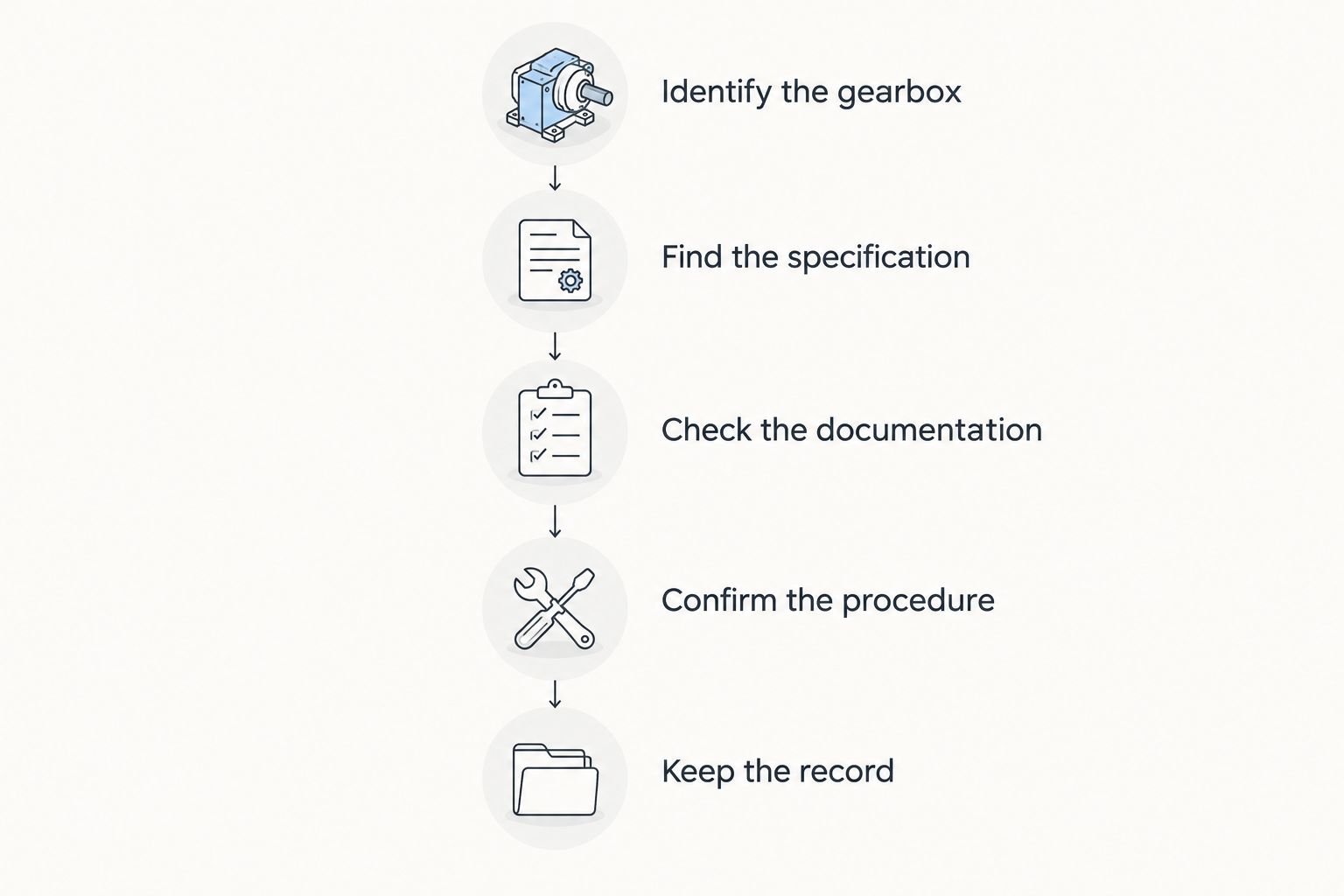
Use a short sequence to keep the purchase tied to your vehicle rather than a generic ranking.
- Identify the gearbox. Confirm the transmission type and identification, especially when the vehicle model offered different transmissions.
- Find the specification. Locate the manufacturer’s required fluid standard in the owner’s manual or transmission-specific service information.
- Check the documentation. Compare the chosen fluid’s technical information with that standard. Distinguish formal approval from a supplier’s suitability statement.
- Confirm the procedure. Establish the filling method, level-check conditions, and any filter or seal requirements before service begins.
- Keep the record. Save the fluid identification and service details with your maintenance history.
Keep 2 written records: the service estimate and the completed invoice. Together, they show what you authorized and what fluid the shop installed.
Do not add an aftermarket treatment unless the vehicle manufacturer’s instructions support its use. Changing a fluid’s friction behavior is not a substitute for diagnosing a shifting problem.
How these choices are ranked
This 2026 ranking puts application fit ahead of brand recognition. Each recommendation owns a different transmission type, so none is a substitute for another simply because it appears higher on the page.
The deciding criteria are specification match, transmission design, documented compatibility, and correct installation. Synthetic formulation matters only after those checks are satisfied.
A documented match beats a broad claim about protection. If the specification is unclear, postpone the purchase and resolve the application first.
Which synthetic transmission fluid should you choose?
Choose the manufacturer-specified synthetic fluid for your identified transmission. That is the default recommendation for an undecided buyer in 2026—not a universal bottle for every vehicle.
If you are choosing because of slipping, harsh shifting, a leak, or a warning message, make the next move a diagnostic appointment. Elite Auto Repair & Service Inc provides transmission repair in Kissimmee, FL; explain the symptom and bring any previous service records.
Get help with transmission problems
Discuss shifting symptoms, leaks, and transmission repair in Kissimmee, FL.
FAQ
What's the best synthetic transmission fluid in 2026?
The best synthetic transmission fluid in 2026 is one that meets the exact specification for your transmission. Confirm the gearbox type and required standard before comparing brands.
Is synthetic transmission fluid better for every car?
Synthetic transmission fluid is not an automatic upgrade for every car. Compatibility with the manufacturer's specification comes first, including the required viscosity and friction characteristics.
Can I put synthetic ATF in a CVT?
Use synthetic ATF in a CVT only when the manufacturer specifies that exact fluid application. A conventional automatic transmission fluid label does not establish CVT compatibility.
Do all dual-clutch transmissions use the same fluid?
Dual-clutch transmissions do not all use the same fluid. Check the exact gearbox specification and whether its design has separate lubrication circuits.
Can a manual transmission use automatic transmission fluid?
Some manual transmissions specify automatic transmission fluid. Follow the manufacturer's requirement rather than assuming that every manual gearbox needs gear oil.
Will changing transmission fluid fix slipping?
A transmission fluid change does not guarantee a fix for slipping. Low fluid, leaks, control problems, and worn components require diagnosis before choosing a repair.
Where can I get help with transmission problems in Kissimmee?
Elite Auto Repair & Service Inc provides transmission repair in Kissimmee, FL. Describe the symptoms and bring your service history so the complaint is clear before you authorize work.
One last thing
The useful detail on a transmission service invoice is not just synthetic. It is the exact fluid identification and specification.
Before you approve your 2026 service, ask for those details in writing. A fluid recommendation is only useful when you can match it to your gearbox.