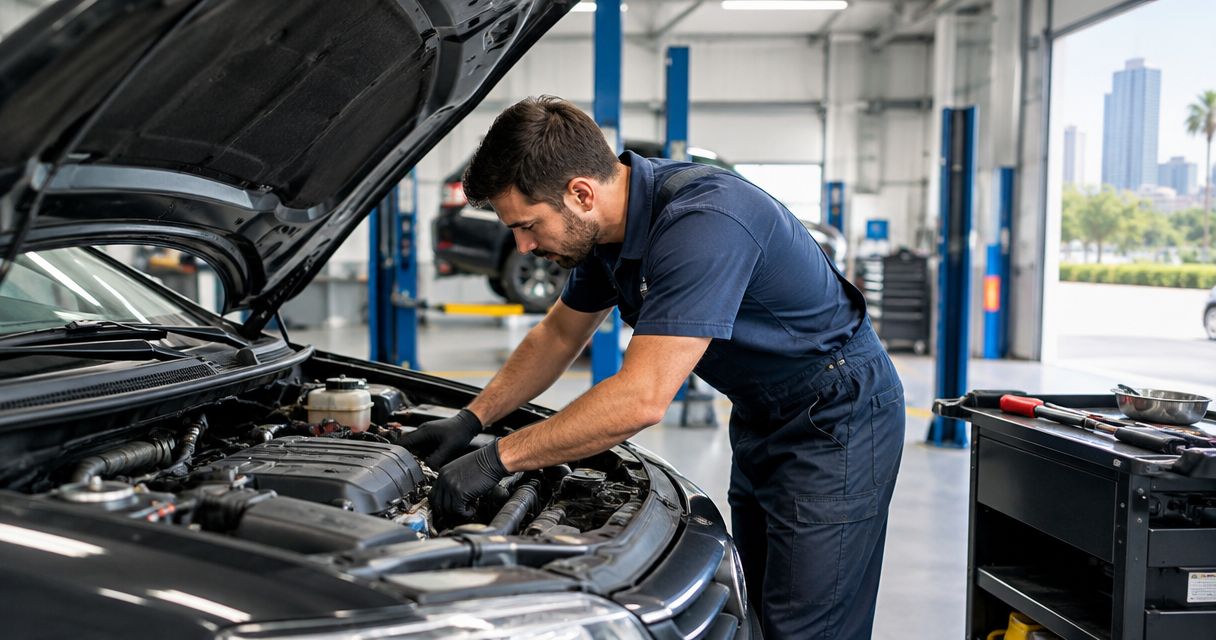
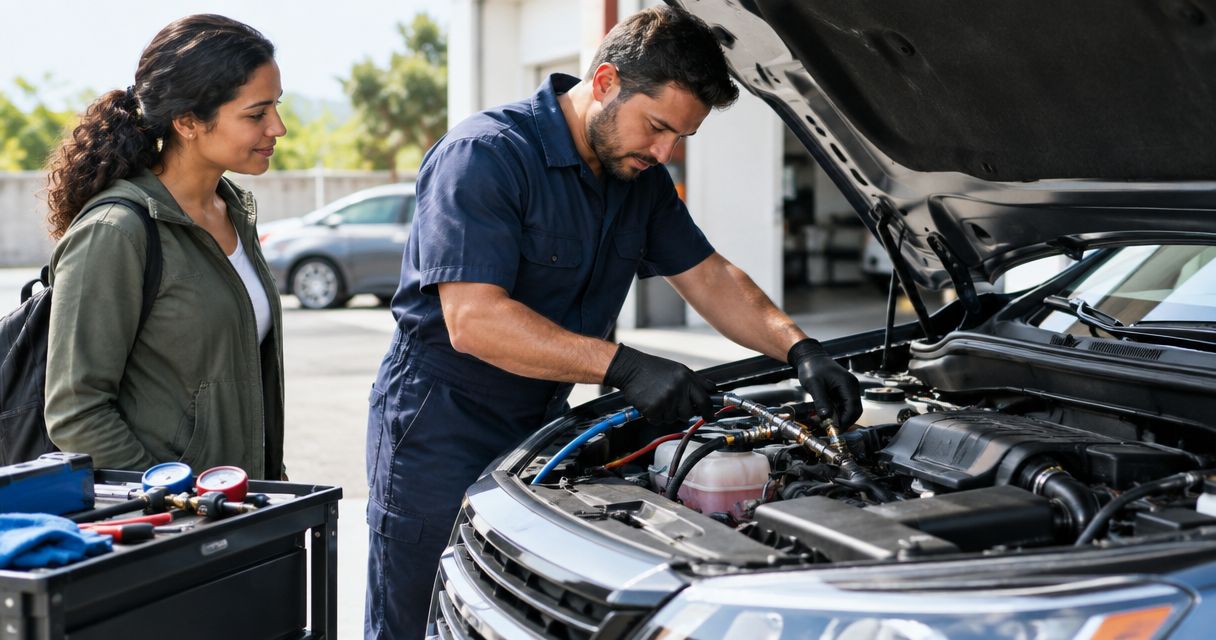
Rideshare and delivery drivers’ car AC repair is the diagnosis and correction of cabin cooling faults to keep a working vehicle comfortable between pickups and deliveries. This guide to car AC repair for rideshare drivers explains how to separate airflow problems from cooling problems, describe symptoms clearly, and plan service around your driving schedule in 2026.
- Car AC repair for rideshare drivers starts with diagnosis, not an automatic refrigerant refill.
- Elite Auto Repair & Service Inc suits Kissimmee drivers seeking AC repair and routine maintenance at one shop.
- Weak airflow and warm airflow require different checks; record what changes at stops and while driving.
- Confirm the repair under your normal pickup and delivery conditions before resuming a full shift.
Why car AC repair matters for rideshare and delivery drivers
Your vehicle is both transportation and a workspace. Passenger pickups mean repeated door openings, while delivery stops interrupt steady driving and let warm air back into the cabin. An AC problem that seems manageable on a short personal trip becomes harder to work around during repeated stops.
Elite Auto Repair & Service Inc is best for Kissimmee drivers seeking car AC repair alongside routine vehicle maintenance. The shop offers AC repair, diagnostics, oil changes, brakes, and other repair services. Visit Elite Auto Repair & Service Inc for its local service information; confirm scheduling directly rather than assuming a repair fits between trips.
The practical priority for your 2026 work schedule is a correct diagnosis. Replacing a cabin filter will not fix a refrigerant leak, and adding refrigerant will not repair a blower that fails to move air. Start by identifying what the system actually does.
How to plan car AC repair around your driving work
1. Record when the cooling changes
Start with observations you can collect without tools. Note whether air stays warm from startup, becomes warm after several stops, or cools better once the vehicle moves. Record whether the airflow itself weakens or simply loses its chill.
For a repeatable symptom check, try a 3-minute parked observation outdoors, followed by a normal 5-minute drive if the vehicle is otherwise safe. These are suggested observation windows, not pass-or-fail AC specifications. Keep settings consistent, and write notes only after parking safely.
A useful symptom description gives the technician conditions to reproduce, not a guessed replacement part.
- Record the fan speed and temperature setting.
- Note whether recirculation is selected.
- Describe cooling at stops versus during normal driving.
- Record noises, odors, and warning lights separately.
2. Check settings and accessible airflow restrictions
Best for: strong cooling complaints caused by settings or restricted cabin airflow. First confirm that the temperature control is set cold and that air is directed through the intended vents. Check that vent outlets are open and not covered by a phone mount or other equipment.
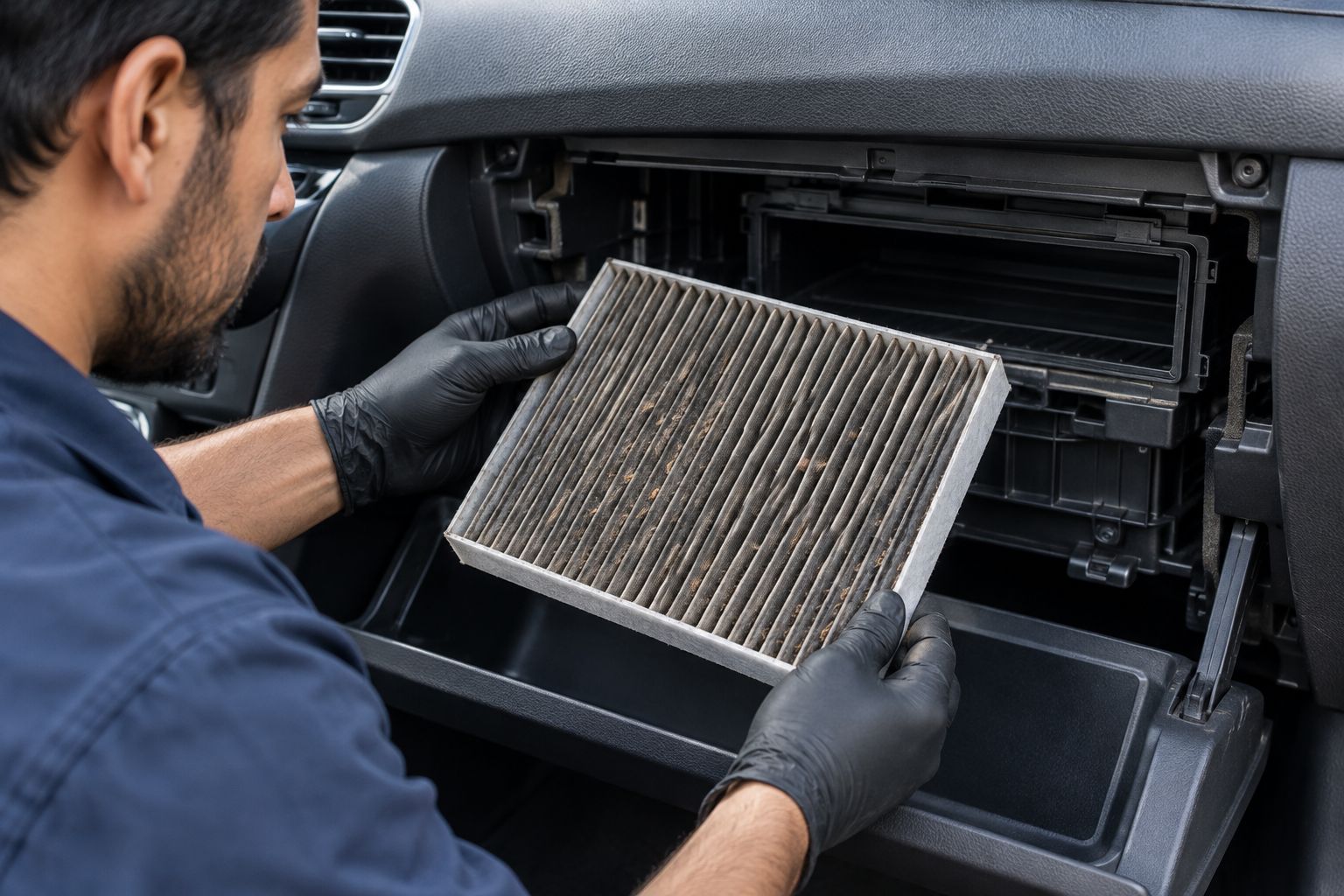
A restricted cabin air filter can reduce airflow. Inspect it only if the owner’s manual describes a safe, accessible procedure; some housings require more disassembly than others. Replace the filter according to the vehicle instructions rather than assuming every cooling complaint needs one.
Strong airflow that remains warm points beyond a simple filter check. Stop the basic checks there instead of opening refrigerant connections or reaching near moving engine components.
- Confirm temperature, vent selection, and fan settings.
- Remove objects blocking cabin vents or air intakes.
- Inspect the cabin filter using the owner’s manual.
- Record whether airflow changes across fan speeds.
A filter inspection checks an airflow restriction; it does not establish whether the refrigerant circuit works correctly.
3. Request diagnosis before approving a recharge
Best for: warm air, recurring loss of cooling, or cooling that changes at stops. Begin by bringing your symptom notes to the appointment. Professional testing is the next step when settings and accessible airflow checks do not explain the problem.
Elite Auto Repair & Service Inc offers car AC repair and diagnostics in Kissimmee. Ask what the inspection found and how the proposed work addresses your complaint. The service offering alone does not establish the failed component or the repair duration.
Refrigerant is not a routine consumable like fuel. A low charge calls for investigation of refrigerant loss; a refill alone does not correct a leak. Review the limitations of DIY car AC recharge kits before treating a kit as a diagnostic shortcut.
- Provide your stop-and-drive symptom notes.
- Ask whether the fault concerns airflow, refrigerant, controls, or heat rejection.
- Ask how any suspected leak was identified.
- Request an explanation before authorizing parts replacement.
4. Separate the AC complaint from urgent vehicle faults
Start by checking the instrument panel and the owner’s manual. Warm cabin air alone is different from an engine-temperature warning, smoke, or a strong burning smell. Do not continue a work shift to gather more AC symptoms when the vehicle shows an urgent warning.
Cooling that improves while moving can involve condenser airflow, but that pattern does not prove a fan has failed. Refrigerant charge, controls, and other faults also require testing. Avoid requesting a specific replacement solely because an online symptom list sounds familiar.
Never open a hot coolant reservoir or radiator cap. Engine coolant and AC refrigerant are separate systems, even though overheating can affect how a vehicle operates its AC.
- Follow the owner’s manual for warning lights.
- Stop safely for overheating, smoke, or burning odors.
- Keep hands clear of fans and drive belts.
- Report temperature warnings separately from cabin cooling symptoms.
5. Build a repair plan around your work schedule
Start by identifying when you can leave the vehicle for inspection. Then ask the shop to distinguish diagnosis time from repair time. A booked appointment does not itself establish when testing, authorization, and repairs will finish.
For your 2026 repair plan, tell the shop that the car handles passenger pickups or delivery stops. That context helps explain why cooling at a stop matters as much as cooling on an open road. It does not replace a technician’s tests.
Ask for a written estimate describing the diagnosed issue and proposed work. If several concerns appear, request a clear separation between the AC complaint, safety-related repairs, and maintenance recommendations.
- Share your next required driving period.
- Confirm the expected diagnostic process and update method.
- Ask what requires authorization before work begins.
- Arrange alternate transportation if you cannot leave the vehicle.
6. Confirm cooling under normal working conditions
Start with your original notes after the repair. Check the same settings and the same general conditions that produced the complaint. A system that feels cold immediately after pickup still needs to address the intermittent symptom you reported.
Your 2026 post-repair check should include ordinary stops as well as normal driving. Do not create unsafe traffic conditions or leave a running vehicle unattended. Conduct parked checks outdoors, away from enclosed spaces where exhaust can accumulate.
There is no single vent-temperature reading that proves every vehicle is repaired under every condition. Outside temperature, humidity, fan setting, and vehicle design affect the result. Ask how the shop verified the specific fault.
- Compare airflow with your pre-repair notes.
- Check cooling during an ordinary pickup-style stop.
- Listen for the original noise, if one was reported.
- Contact the shop if the same symptom returns.
7. Keep a short cooling and maintenance record
Start with a simple phone note or paper log. A 1-week symptom log is a useful suggested format after an intermittent complaint; record only what you actually observe. You do not need a paid app to track when cooling changes.
Keep the repair invoice with your 2026 maintenance records. Record what was diagnosed, what was repaired, and whether the original symptom stopped. This makes a repeat visit more specific than saying the AC feels different again.
Follow the vehicle’s maintenance schedule for filters and related inspections. Do not create a fixed recharge interval: adding refrigerant repeatedly without addressing the reason for loss is not preventive maintenance.
- Save the diagnosis and repair description.
- Record recurring symptoms with driving conditions.
- Follow the specified cabin-filter maintenance procedure.
- Bring prior AC repair records to future appointments.
Compare your AC service options
Choose the option that matches the fault, not the shortest description of a service. Owner checks help document symptoms. Professional diagnosis addresses problems those checks cannot establish.
| Option | Best for | Main advantage | Key limitation |
|---|---|---|---|
| Owner settings and airflow checks | Incorrect settings or accessible airflow restrictions | Lets you check simple causes before arranging service | Cannot establish refrigerant charge or diagnose internal faults |
| Cabin filter service | A confirmed restricted filter | Addresses a specific airflow restriction | Does not repair leaks, compressors, or electrical faults |
| Professional AC diagnosis | Warm air, intermittent cooling, or unexplained symptoms | Tests the cause before selecting a repair | Requires inspection time before the repair scope is known |
| Vehicle-specific specialist diagnosis | A vehicle requiring equipment or procedures the chosen shop does not support | Matches the vehicle to appropriate technical capability | Requires confirmation that the provider supports the exact vehicle |
For Elite Auto Repair & Service Inc, the relevant advantage is access to AC repair and other listed vehicle services at one Kissimmee shop. The limitation is that your vehicle’s fault, required work, and completion timing still need confirmation. Ask about your make, model, and powertrain before booking, particularly for hybrid or electric vehicles.
Discuss your AC symptoms
Ask about car AC repair and diagnostics for your vehicle in Kissimmee, FL.
Common AC repair mistakes rideshare drivers make
Treating cooling at speed as proof the system works
Air that cools while moving but warms at pickups is still a work-relevant fault. Tell the shop about both conditions. Do not accept a road-only symptom check as an explanation for a problem that happens while stopped.
Adding refrigerant whenever the cabin gets warm
Warm air does not establish a low charge. Incorrect charging can create additional problems, and a refill does not repair a leak. Ask for diagnosis instead of making refrigerant addition a recurring part of your driving routine.
Describing every symptom as weak AC
Weak airflow, strong warm airflow, unpleasant odors, and intermittent cooling are different complaints. Separate them in your notes. A precise description helps keep the inspection focused without dictating the technician’s conclusion.
Scheduling passengers immediately after an uncertain repair window
An appointment is not a completion guarantee. Keep the first post-service driving period flexible until the shop confirms the work is finished and you have checked the original symptom. Do not build a full shift around an unconfirmed handover time.
Ignoring visibility while focusing on passenger comfort
AC helps remove moisture from cabin air during defogging. A cooling fault therefore deserves attention beyond hot-weather comfort. If you cannot keep the windshield clear, stop safely rather than continuing a trip with restricted visibility.
FAQ
What is the best first step for car AC repair for rideshare drivers?
Record whether the problem is weak airflow, warm airflow, or cooling that changes between stops and normal driving. Check basic settings, then arrange diagnosis if those checks do not explain the complaint.
Why does my car AC get warm while I wait for a pickup?
AC that warms at a stop requires diagnosis of condenser airflow and the rest of the cooling system. The symptom alone does not prove that a fan, compressor, or refrigerant charge is the cause.
Should I recharge my AC before taking it to a repair shop?
Do not add refrigerant solely because the vents blow warm. Diagnosis should establish whether the charge is low and investigate refrigerant loss before a recharge is treated as the solution.
Can a cabin air filter fix weak car AC?
Replacing a restricted cabin filter can improve airflow. It does not repair a refrigerant leak or establish why strong airflow remains warm.
Can I keep making deliveries with broken AC?
Stop driving if heat affects your ability to drive safely, visibility becomes restricted, or the vehicle shows an urgent warning. A cabin cooling complaint and an engine-overheating warning require different responses.
How long will my car AC repair take?
The shop must diagnose the fault before confirming the repair scope and timing. Ask separately about inspection, authorization, and completion rather than assuming the appointment covers all three.
What should I check after an AC repair?
Check whether the original symptom is gone under the same general conditions and settings. Include ordinary stops and normal driving, then report any recurrence with specific observations.
One last thing
Ask for the repair to be checked where the problem happens. If cooling fades during pickup waits, say so before the inspection—not after a road test that never reproduced it. Add that sentence to your 2026 service notes: the condition that triggers the fault is more useful than a guessed part name.