Real estate agents’ brake repair service is vehicle inspection and repair aimed at keeping travel between listings, showings, and closings safe. This guide explains how to recognize trouble, arrange service, and protect your schedule without treating a short gap between appointments as proof that your car is safe to drive.
- Brake repair service for real estate agents starts with inspection, not an automatic brake-pad replacement.
- Elite Auto Repair & Service Inc serves agents seeking brake service and vehicle diagnostics in Kissimmee, FL.
- Arrange alternative transportation when braking changes; do not let showing schedules determine whether you drive.
- Choose repairs from documented findings, then keep the service record with your vehicle maintenance history.
Why brake repair matters for real estate agents
Your vehicle connects appointments at different properties. A brake concern creates two decisions: whether the vehicle should move, and how you will cover the next showing. Solve the safety question first; rearrange the calendar second.
Elite Auto Repair & Service Inc is best suited to real estate agents seeking a local brake-service shop in Kissimmee, FL. The shop offers brakes, diagnostics, and other vehicle repairs. Visit Elite Auto Repair & Service Inc to review the business before arranging service; confirm the inspection process and scheduling directly.
For your 2026 driving plan, separate routine maintenance from new symptoms. A planned inspection belongs on the calendar. Reduced stopping ability, a sinking pedal, or a suspected brake-fluid leak requires an immediate safety decision, not the next convenient opening.
An agent-specific plan does not require special brakes. It requires clear symptom notes, repair decisions based on inspection, and transportation that does not depend on finishing work before a client arrives.
How to arrange brake service around property appointments
1. Record symptoms before requesting repairs
Start with a written note or a 30-second voice memo while parked. Describe what happened rather than naming the part you think failed. A squeal, vibration, pull, or changed pedal feel gives the technician a starting point; none identifies the cause by itself.
Connect the symptom to the driving conditions. Note whether it occurred during gentle stopping, after repeated stops, or when first leaving a property. Do not recreate a dangerous symptom to make the description more precise.
You also need to distinguish a maintenance reminder from a change in braking. A dashboard warning deserves attention, but the exact symbol and the owner’s manual matter. Describe the light instead of calling every warning a brake failure.
- Record symptoms: describe the sound, pedal feel, or vibration.
- Note conditions: include cold starts, wet roads, or repeated stops.
- Photograph warnings only while safely parked.
- Add recent repairs or changes in vehicle behavior.
- Tell the shop whether stopping ability has changed.
2. Decide whether the vehicle should move
Do not drive a vehicle with reduced braking ability to preserve a showing appointment. If the pedal sinks, stopping distance changes noticeably, or you suspect a brake-fluid leak, stop using the vehicle and arrange professional help. Follow the owner’s manual for warnings and roadside procedures.
Noise alone does not establish how serious a problem is. Grinding, pulling, vibration, or recurring squealing still needs inspection; a remote description cannot establish roadworthiness. Ask the shop how to get the vehicle assessed without assuming that driving there is appropriate.
Build 2 transport plans into your 2026 appointment planning: one for reaching the shop and another for covering property visits. Keeping those decisions separate prevents the repair trip from becoming an excuse to continue driving throughout the day.
- Stop safely if braking performance changes.
- Read the instructions for the exact warning displayed.
- Arrange towing when safe driving is in doubt.
- Move client travel to another suitable vehicle.
- Notify appointment contacts before travel becomes urgent.
3. Request an inspection before approving parts
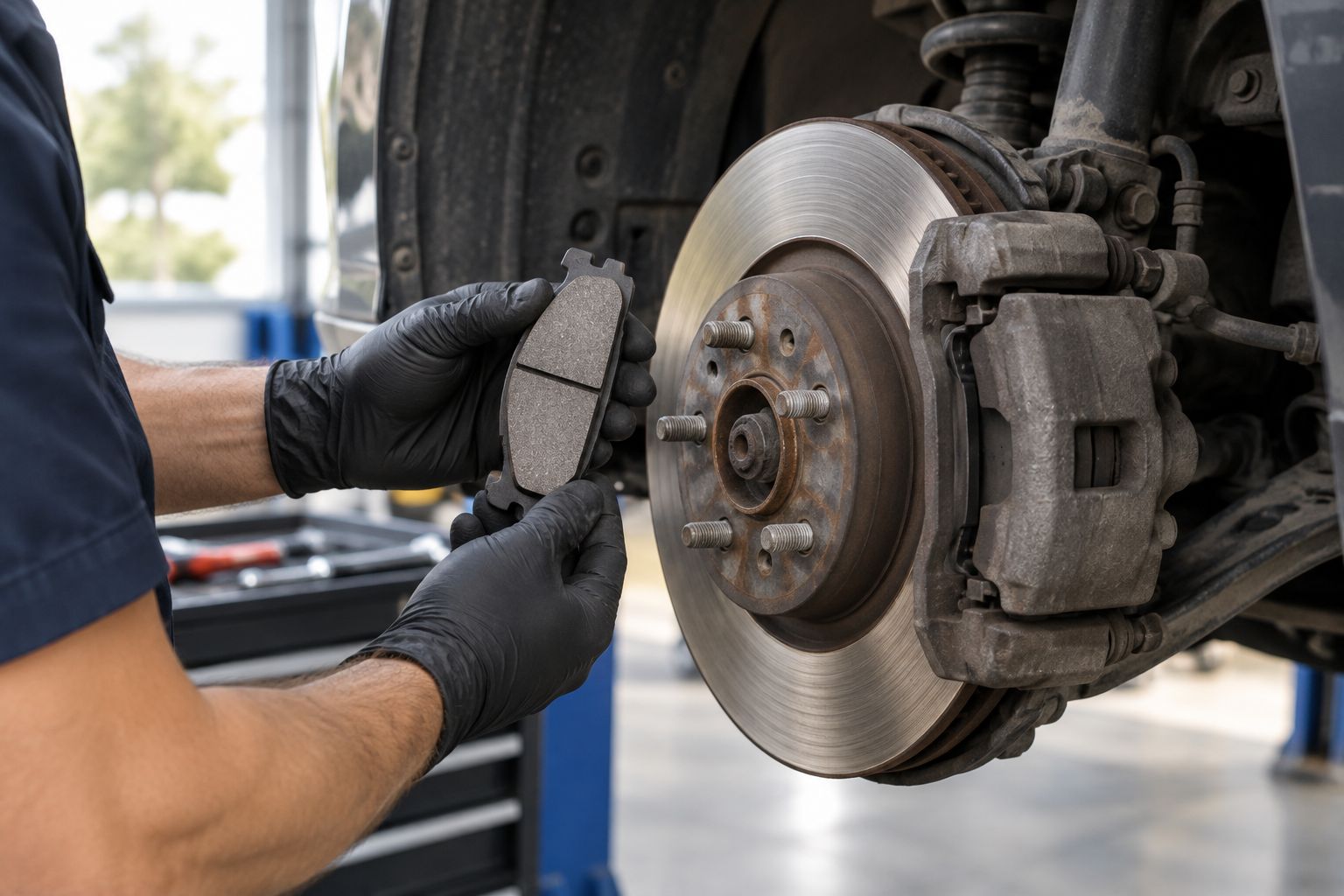
Write down your concerns and request a brake inspection. You do not need to select pads, rotors, or hydraulic components yourself. The useful question is what the inspection found and how each finding supports the proposed repair.
Elite Auto Repair & Service Inc offers brake service and diagnostics in Kissimmee. That makes the shop an option when you need the complaint assessed rather than simply ordering a replacement part. Confirm what the inspection includes and how findings will be explained before authorizing work.
Ask for measurements where relevant, not just descriptions such as worn or bad. Brake-pad thickness and rotor condition must be assessed against the requirements for your vehicle and components; a universal mileage rule does not replace that assessment.
- Request inspection of the reported braking concern.
- Ask which axle and components are affected.
- Request measured findings and applicable service limits.
- Ask whether leaks, sticking components, or uneven wear were found.
- Confirm which findings explain your original symptom.
4. Review the repair scope before authorizing work
Compare the proposed work with the complaint you reported. A useful explanation connects the symptom, the finding, and the repair. If the recommendation includes several components, ask why each belongs in the same job and which items address separate maintenance needs.
Approve the scope, not just the name of a service package. Replacing pads does not explain every brake complaint. Likewise, a vibration does not prove that every component needs replacement. The inspection should support the decision.
For your 2026 service records, separate necessary brake repairs from unrelated recommendations. Ask for clarification before approval, especially when the vehicle also needs tires, suspension work, or other maintenance. Keeping the decisions distinct makes the invoice easier to understand later.
- Review findings: match each repair to a documented condition.
- Ask why parts require replacement or further assessment.
- Separate brake concerns from unrelated maintenance.
- Confirm how additional findings require your approval.
- Ask how completion of the reported repair will be checked.
5. Plan transport around inspection and repair
Use your calendar first. Place 2 calendar blocks around the visit: one for dropping off or transferring the vehicle, and another for the repair discussion and collection. Do not place a client departure immediately after an assumed completion time.
Ask the shop about scheduling before promising when you will return to appointments. Inspection and repair are different stages. You need a transport plan that still works if the diagnosis changes the work required.
Elite Auto Repair & Service Inc also offers oil changes, AC repair, suspension work, and engine/transmission repair. Ask about other existing concerns when arranging the visit, but do not assume that combining jobs shortens the time away from your vehicle. Keep the brake complaint clearly identified.
- Plan transport: arrange a separate vehicle when needed.
- Block time for discussing the inspection findings.
- Ask when to expect the next status update.
- Keep showing details accessible outside the vehicle.
- Confirm collection arrangements before traveling to the shop.
6. Check the handover and save the record
At collection, compare the completed work with what you authorized. Ask what was repaired, whether the original complaint was checked, and whether any follow-up instructions apply to the installed components. Instructions vary; do not substitute a generic internet routine.
Keep 1 service record per visit in a folder you can search from your phone. Include the date, odometer reading, reported symptom, findings, and completed work. That record helps you describe a recurring issue without reconstructing it between appointments.
Before returning to a full 2026 showing schedule, understand the shop’s handover instructions. If braking feels unsafe, stop and contact the shop rather than continuing a route to see whether the problem disappears. A completed invoice is not a reason to ignore a new symptom.
- Save records: retain the invoice and inspection findings.
- Confirm which original symptoms were addressed.
- Ask about component-specific follow-up instructions.
- Record the date and odometer reading.
- Report persistent or new braking concerns promptly.
Compare brake-service approaches for your schedule
The best option depends on the repair required and where it can be performed safely. Start with diagnosis, then compare the practical arrangements. Convenience matters, but it does not establish whether a provider can complete the necessary work.
The options below describe service approaches, not promises about any particular provider. Confirm inspection scope, equipment, repair procedures, and communication before choosing. No service format removes the need to explain findings and authorize repairs.
| Option | Best for | Main advantage | Key limitation |
|---|---|---|---|
| Local general repair shop | Agents seeking brake service alongside other vehicle repairs | Provides a place to discuss braking and other reported concerns | You must confirm the shop’s process and scheduling |
| Vehicle dealership service department | Agents seeking service through their vehicle’s dealer network | Keeps the visit within that service network | Dealer affiliation alone does not establish the repair scope or timing |
| Mobile brake service | Agents whose diagnosed job is suitable for an appropriate work site | Brings the service arrangement to a chosen location | Site conditions, equipment, and job scope must be confirmed |
| DIY brake repair | Owners with the necessary skills, equipment, and vehicle-specific instructions | Gives the owner direct control over the work | The owner is responsible for safe lifting, correct repair, and verification |
A local shop is a practical starting point when you want inspection and a clear repair discussion. Mobile service requires particular attention to the work site and job limitations. DIY work is not an appointment-saving shortcut for someone without brake-repair experience.
Common mistakes real estate agents make
Scheduling repairs inside a narrow showing gap
A gap between appointments is not a repair window until the work is understood. Inspection can change the scope. Arrange coverage for the next appointment instead of requiring the shop to fit an unknown repair into your calendar.
Best approach: make the vehicle handover independent of client travel. You retain control of your schedule without making a safety decision around a departure deadline.
Treating a quiet drive as proof the problem is gone
An intermittent symptom can disappear before the inspection. That does not explain its cause. Tell the technician what happened, when it happened, and whether braking performance changed, even if the car behaves normally on arrival.
Best approach: keep the original symptom note. Do not cancel an assessment solely because the noise stopped during the drive home.
Buying pads before identifying the fault
Brake complaints involve more than friction material. Ordering pads first commits you to a part before you understand the repair. It also distracts from questions about rotor condition, hydraulic problems, or uneven operation.
Best approach: request findings before choosing components. Discuss suitable parts after the shop identifies the work needed for your vehicle.
Combining client transportation with an unresolved concern
Driving alone to assess a noise is not a sound basis for carrying clients afterward. If braking has changed or vehicle safety remains in doubt, move the property tour to another suitable transport arrangement.
Best approach: resolve the safety question before carrying passengers. Keep the client’s appointment separate from the decision about whether your car should move.
Filing only the payment receipt
A receipt without findings leaves out the information needed for a future repair discussion. When a concern returns, the important details are the symptom, measurements, components serviced, and date—not just evidence that a visit occurred.
Best approach: keep the detailed service paperwork. Use your 2026 maintenance folder to connect repeat symptoms with previous work rather than relying on memory.
FAQ
What's the best brake repair service for real estate agents?
The best brake repair service for real estate agents provides an inspection, explains the findings, and confirms the work before authorization. Elite Auto Repair & Service Inc is a local option for brake service and diagnostics in Kissimmee, FL; confirm scheduling directly.
Can I keep driving to showings if my brakes squeal?
A squeal alone does not establish whether your vehicle is safe to drive. Arrange an inspection, and stop driving if braking ability changes, the pedal sinks, or you suspect a brake-fluid leak.
Do real estate agents need special brake pads?
Your occupation alone does not determine the correct brake pads. Select components that meet your vehicle's requirements, then discuss your driving conditions and the inspection findings with the repair shop.
Should I replace brake pads and rotors together?
The inspection and vehicle-specific service requirements should determine whether pads and rotors need replacement together. Ask for pad measurements, rotor findings, and an explanation of the proposed work.
Is mobile brake repair better than a repair shop?
Mobile brake repair is not automatically better than a repair shop. Choose according to the diagnosed work, suitable equipment, safe working conditions, and the provider's ability to complete and check the repair.
How long should I block out for a brake repair appointment?
Confirm the appointment arrangements and expected updates with the shop rather than using a universal repair-time estimate. Arrange alternative transportation before inspection so a change in repair scope does not disrupt client appointments.
What should I ask before approving brake repairs?
Ask what failed inspection, which findings support replacement, and how each repair addresses your complaint. Confirm the authorized scope and how the shop will handle additional findings before work proceeds.
One last thing
Put the symptom in the calendar entry, not just the shop’s name. A note such as pedal vibration during gentle stops preserves the reason for the visit when you are switching between listing details and client messages.
After collection, add the repair outcome to that same entry and save the paperwork. You will have a useful history if the concern returns, without searching through texts or trying to remember what happened during a busy week.