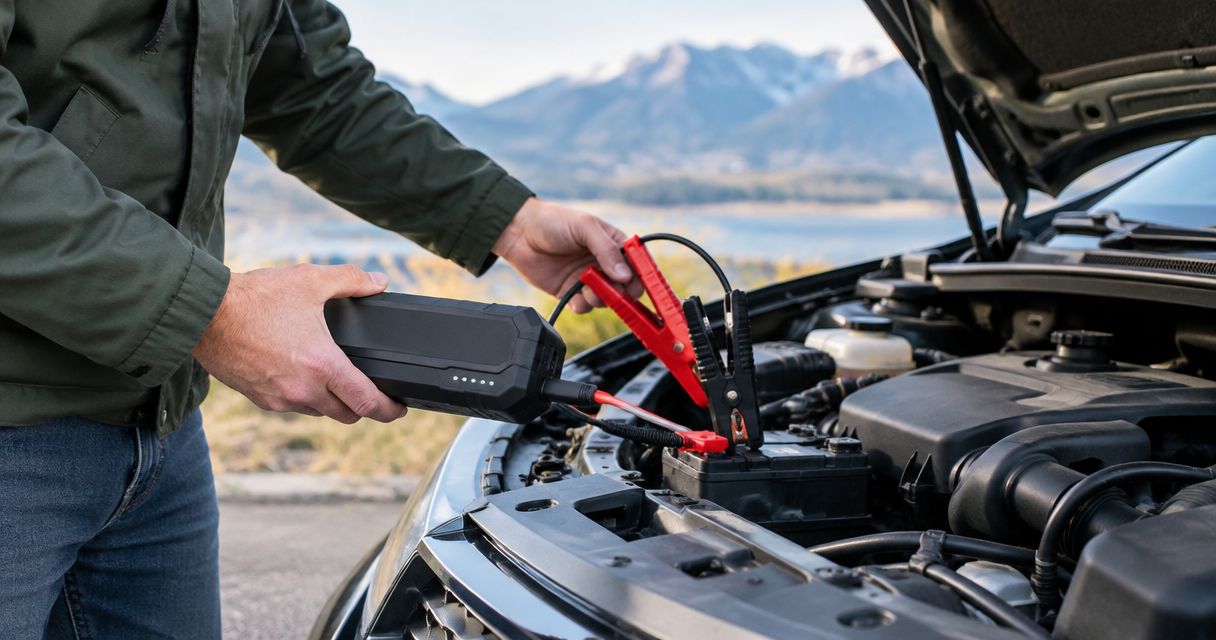
Best overall: NOCO Boost Plus GB40. Best for USB-C charging: NOCO Boost X GBX55. Best for larger engines: NOCO Boost HD GB70. Best for garage use: Clore Jump-N-Carry JNC660. These are the best portable jump starters to shortlist in 2026; choose by your vehicle’s requirements, charging routine, and storage space—not peak amps alone.
- NOCO Boost Plus GB40 leads the best portable jump starters shortlist for everyday emergency kits within its engine limits.
- NOCO Boost X GBX55 suits drivers who want USB-C charging and a higher engine-size rating.
- NOCO Boost HD GB70 suits larger engines; Clore Jump-N-Carry JNC660 suits garage-centered use.
- Elite Auto Repair & Service Inc provides diagnostics in Kissimmee when repeated jump-starts need an underlying cause identified.
Why this matters
A portable jump starter provides starting assistance without a second vehicle. It does not repair a failing battery, loose connection, or charging-system fault. Buying a larger pack does not solve those problems.
Elite Auto Repair & Service Inc is best for Kissimmee drivers who need diagnostics after repeated jump-starts. If your car keeps needing assistance, arrange auto repair and diagnostics rather than treating every successful restart as a fix.
For your 2026 emergency kit, the right purchase is a pack you can safely connect, keep charged, and match to your vehicle. A forgotten, discharged jump starter offers no useful backup.
What makes the best portable jump starters
Use these criteria before comparing models:
- Vehicle compatibility: Match the electrical system, fuel type, and engine size to the manufacturer’s instructions. A gasoline-engine limit is not a diesel-engine limit.
- Connection safeguards: Look for clearly documented reverse-polarity protection and operating instructions. Safety features do not replace correct clamp placement.
- Charging convenience: Choose a charging connection you can support at home. USB-C, older USB connections, and dedicated charging arrangements are different commitments.
- Storage practicality: Check the pack’s dimensions, weight, cable arrangement, and permitted storage temperatures. Your emergency equipment needs a secure home in the vehicle.
- Clear operating limits: Read the instructions for starting attempts, waiting periods, and low-voltage batteries. Do not assume every model works the same way.
- Useful extras: Lighting and device charging can help, but they should not outweigh starting compatibility. None of these picks replaces tire equipment or vehicle repairs.
There is no budget winner in this guide. Choose a compatible model first, then check current purchasing terms directly; a smaller pack is not a sensible substitute when your engine falls outside its rating.
Best portable jump starters at a glance in 2026
| Jump starter | Best for | Standout feature | Key limitation |
|---|---|---|---|
| NOCO Boost Plus GB40 | Everyday emergency kits | Compact lithium design with protected clamps | Lower engine-size limits than the GBX55 and GB70 |
| NOCO Boost X GBX55 | USB-C charging routines | USB-C input and output | Faster charging requires suitable charging equipment |
| NOCO Boost HD GB70 | Larger gasoline and diesel engines | Higher engine-size rating than the GB40 | Larger pack to store and carry |
| Clore Jump-N-Carry JNC660 | Garage-centered use | Lead-acid design with integrated cables | Heavier and bulkier than compact lithium packs |
The compatibility figures below come from NOCO’s published product specifications and operating instructions for these models. The JNC660’s battery type and operating features are described in Clore Automotive’s product documentation. Confirm the instructions supplied with your exact unit before use.
1. NOCO Boost Plus GB40: best for everyday emergency kits
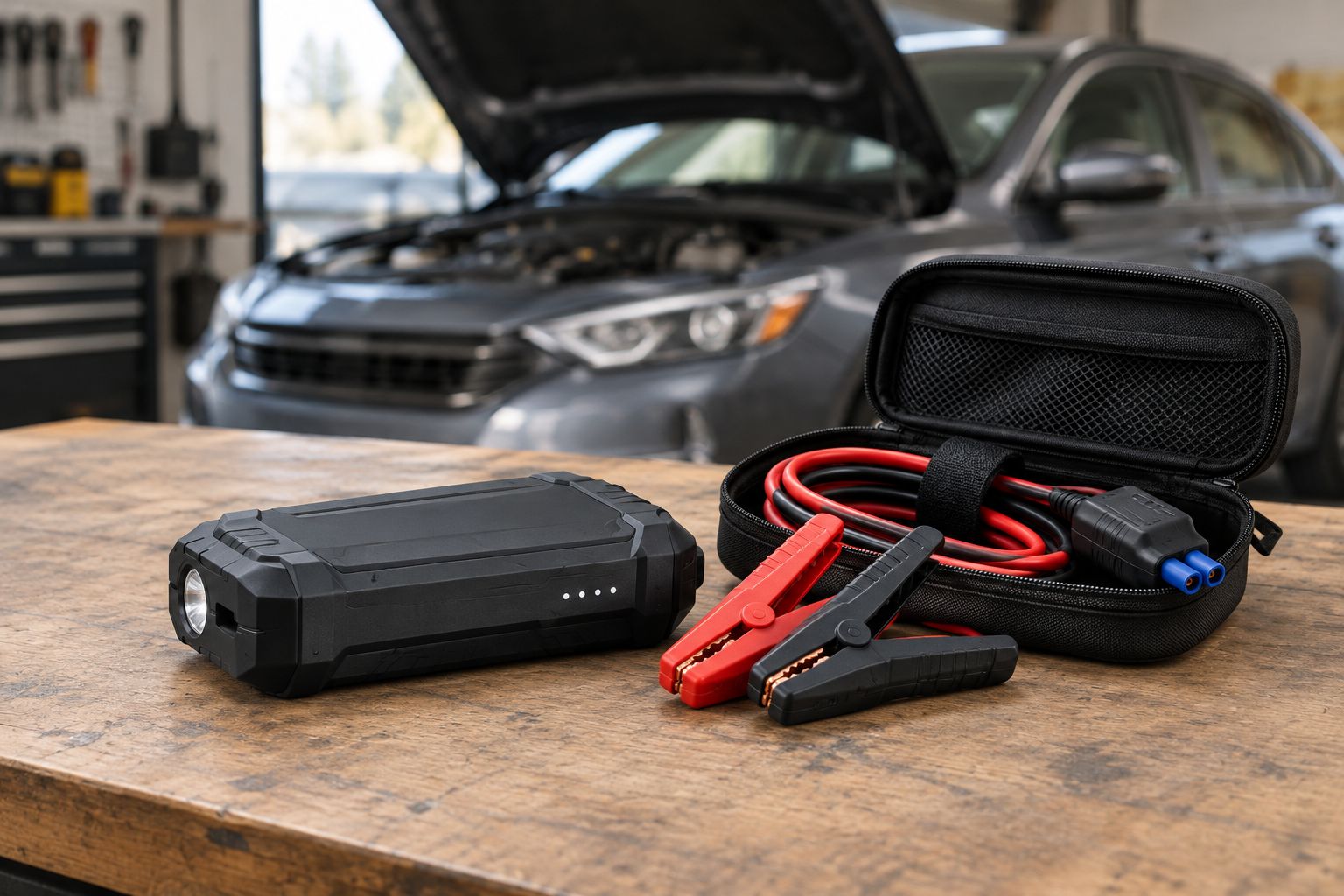
The NOCO Boost Plus GB40 is a lithium jump starter for 12-volt vehicle batteries. NOCO rates it for gasoline engines up to 6 liters and diesel engines up to 3 liters. Those limits make it the default pick here when your vehicle falls within its stated coverage.
The GB40 combines starting assistance, a flashlight, and USB device charging in a compact format. Its appeal is straightforward: you can dedicate it to emergency use without turning your trunk into a workshop.
NOCO Boost Plus GB40 pros:
- Compact format suits a dedicated vehicle emergency kit.
- Reverse-polarity protection helps identify an incorrect connection during normal operation.
- An integrated flashlight helps you see the battery area.
- USB output adds device-charging utility when needed.
NOCO Boost Plus GB40 cons:
- The 3-liter diesel limit excludes engines covered by larger models in this guide.
- Its Micro-USB charging connection does not match a USB-C-only charging setup.
- It does not include a tire inflator.
Best for: Drivers of compatible gasoline cars and smaller diesel vehicles who want a straightforward emergency pack.
Before buying, check the engine displacement in your vehicle documentation. Do not choose the GB40 simply because your car looks small; engine size and fuel type determine whether its published rating fits.
Verdict: Buy the NOCO Boost Plus GB40 for an everyday emergency kit when your vehicle fits its limits.
2. NOCO Boost X GBX55: best for USB-C charging routines
The NOCO Boost X GBX55 is a 12-volt lithium jump starter with USB-C charging. NOCO rates it for gasoline engines up to 7.5 liters and diesel engines up to 5 liters. It fits drivers who want broader engine coverage than the GB40 alongside a USB-C charging connection.
The charging arrangement is the main reason to pick it over the default. If your household already uses compatible USB-C charging equipment, keeping this pack ready fits that routine. Check the charger requirements rather than assuming every USB-C adapter delivers the same charging performance.
NOCO Boost X GBX55 pros:
- USB-C input and output support a modern charging setup.
- Its stated gasoline and diesel limits exceed the GB40’s limits.
- Protected clamps support normal connection checks.
- An integrated flashlight helps during roadside preparation.
NOCO Boost X GBX55 cons:
- Fast charging depends on a suitable charger and cable.
- It still requires charge checks; USB-C does not make it maintenance-free.
- It does not include a tire inflator.
Best for: Drivers who want USB-C charging and whose vehicles fall within the GBX55’s published engine limits.
Separate charging convenience from starting suitability. A familiar cable is useful, but it does not justify buying a pack that is incompatible with your vehicle.
Verdict: Buy the NOCO Boost X GBX55 when USB-C charging is a priority and its engine coverage fits your vehicle.
3. NOCO Boost HD GB70: best for larger engines
The NOCO Boost HD GB70 is a 12-volt lithium jump starter rated by NOCO for gasoline engines up to 8 liters and diesel engines up to 6 liters. It is the larger-engine pick because those published limits exceed both the GB40 and GBX55 limits.
Choose it for a specific compatibility need, not because a larger model sounds safer by default. You still need accessible connection points, a charged pack, and the correct starting procedure.
NOCO Boost HD GB70 pros:
- Its 6-liter diesel rating covers engines outside the smaller NOCO picks’ limits.
- Its gasoline-engine rating extends to 8 liters.
- Reverse-polarity protection supports normal connection checks.
- The integrated flashlight helps illuminate the work area.
NOCO Boost HD GB70 cons:
- Its larger body needs more storage space than the GB40.
- The charging arrangement differs from the GBX55’s USB-C setup.
- It does not include a tire inflator.
Best for: Drivers of larger compatible gasoline or diesel vehicles who need the GB70’s stated engine coverage.
Check storage before you buy. A pack sliding around the cargo area is not properly prepared emergency equipment; keep the clamps protected and follow the manufacturer’s temperature limits.
Verdict: Buy the NOCO Boost HD GB70 when your engine requires its higher published coverage.
4. Clore Jump-N-Carry JNC660: best for garage-centered use
The Clore Jump-N-Carry JNC660 is a 12-volt jump starter built around a lead-acid battery. It uses integrated cables and a built-in charger, giving it a different handling and charging routine from the compact lithium packs above.
Its best use case is a garage where storage space and carrying weight matter less. It remains portable, but it is not the pick for someone seeking a small emergency pack to tuck away in a passenger car.
Clore Jump-N-Carry JNC660 pros:
- Integrated cables keep the starting equipment together.
- A built-in charger supports a dedicated charging location.
- A battery-status gauge helps you check readiness.
- Its garage-centered format suits users who prefer a larger handled unit.
Clore Jump-N-Carry JNC660 cons:
- Lead-acid construction makes it heavier than the compact lithium alternatives.
- Its bulk takes up more vehicle storage space.
- It does not offer the same compact USB charging arrangement as the GBX55.
Best for: Drivers who mainly store and recharge a jump starter in a garage rather than carry it in a small vehicle kit.
Do not translate the JNC660’s peak-current figure into an assumed engine-size guarantee. Follow Clore’s application guidance and your vehicle’s jump-start instructions instead of treating unlike manufacturers’ ratings as interchangeable.
Verdict: Buy the Clore Jump-N-Carry JNC660 for garage-centered use; skip it when compact vehicle storage is the priority.
How these jump starters are ranked
This 2026 ranking prioritizes vehicle compatibility, connection safeguards, charging arrangements, storage practicality, and clear operating limits. Each recommendation has a different use case; the order is not a claim that one pack starts every vehicle better than another.
Peak amps alone do not settle the choice. A figure describing peak output does not tell you the pack’s engine coverage, charging requirements, cable access, or storage suitability. Use the manufacturer’s full instructions to compare those details.
Check your vehicle before you need a jump
Preparation is easier in your driveway than beside a disabled car. Check these points while the vehicle is working normally:
- Find the connection points: Some vehicles use designated jump-start terminals away from the battery. Locate them in the owner’s manual.
- Confirm compatibility: Check system voltage and any vehicle-specific restrictions, including instructions for hybrids and electric vehicles.
- Plan safe access: Make sure you can reach the terminals without placing cables near belts, fans, or other moving parts.
- Charge and secure the pack: Follow its charging schedule and temperature limits. Keep loose clamps from contacting metal objects.
Florida heat makes storage instructions especially relevant for Kissimmee drivers. Do not assume a pack belongs permanently in a hot parked vehicle merely because it is sold as emergency equipment.
If a battery is swollen, leaking, visibly damaged, or suspected to be frozen, do not attempt a jump-start. Arrange assistance. Stop repeated unsuccessful attempts rather than improvising around the pack’s protection features.
Which portable jump starter should you choose?
Choose the NOCO Boost Plus GB40 as the default when its engine limits fit your vehicle. Move to the NOCO Boost X GBX55 for USB-C charging, or the NOCO Boost HD GB70 for its larger-engine coverage. Choose the Clore Jump-N-Carry JNC660 when garage use matters more than compact storage.
For a 2026 purchase, confirm the exact model rather than relying on a marketplace title or a broad brand name. Similar-looking packs can have different connectors, operating procedures, and application limits.
A successful jump also deserves a follow-up decision. If the battery went flat after lights were left on, that gives you useful context; if the cause is unclear or the problem repeats, request testing. Elite Auto Repair & Service Inc offers automotive diagnostics in Kissimmee to identify the underlying issue.
Get repeated starting problems checked
Arrange diagnostics in Kissimmee instead of relying on repeated jump-starts.
FAQ
What's the best portable jump starter for an everyday car?
The NOCO Boost Plus GB40 is the default recommendation for an everyday emergency kit within its published limits. NOCO rates it for 12-volt batteries, gasoline engines up to 6 liters, and diesel engines up to 3 liters; confirm your vehicle's instructions before use.
Is the NOCO GBX55 better than the GB40?
The NOCO Boost X GBX55 is the better fit when you want USB-C charging or need its higher engine-size coverage. The NOCO Boost Plus GB40 remains the default for compatible vehicles when those differences are not priorities.
Which portable jump starter should I choose for a diesel?
Choose a jump starter with a published diesel rating that covers your engine. NOCO rates the GB40 for diesels up to 3 liters, the GBX55 up to 5 liters, and the GB70 up to 6 liters; those ratings do not override vehicle-specific restrictions.
Can I keep a jump starter in my car in Florida?
Keep a jump starter in your car only within the manufacturer's storage-temperature limits. A parked vehicle heats up, so check the instructions and choose storage that protects the pack from excessive heat and loose metal objects.
Will a portable jump starter charge a dead car battery?
A portable jump starter provides starting assistance; it is not a substitute for a battery charger. A discharged battery needs appropriate charging and testing, especially when the reason for the discharge is unknown.
Can I jump-start a hybrid or electric vehicle?
Follow the vehicle manufacturer's instructions for its auxiliary battery and designated connection points. Do not connect a conventional portable jump starter to a high-voltage traction battery or assume every hybrid and electric vehicle permits the same procedure.
Why does my car keep needing a jump-start?
Repeated jump-starts mean the starting or electrical system needs diagnosis. Battery condition, connections, charging-system operation, and unwanted electrical draw are checks that help identify the cause; another restart does not establish that the problem is fixed.
One last thing
Write down your vehicle’s designated jump-start connection points before an emergency. A compatible pack is only useful when you know where and how the owner’s manual directs you to connect it.
Make that check part of your 2026 emergency-kit preparation. Elite Auto Repair & Service Inc provides diagnostics and auto repair in Kissimmee when starting trouble calls for more than another jump.