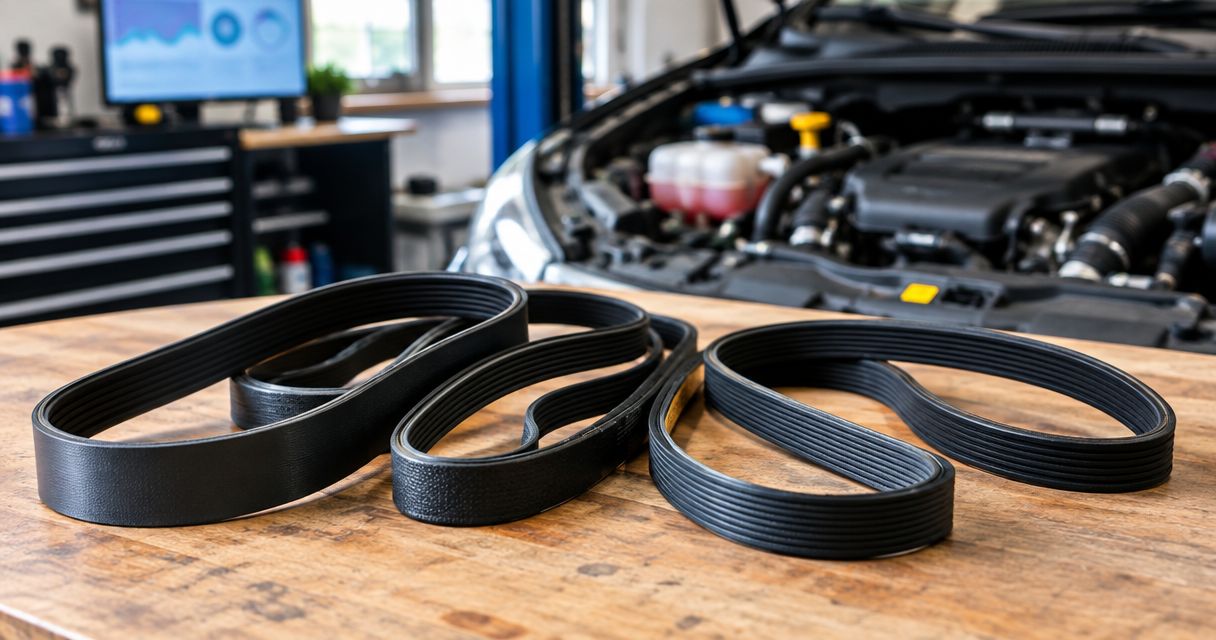
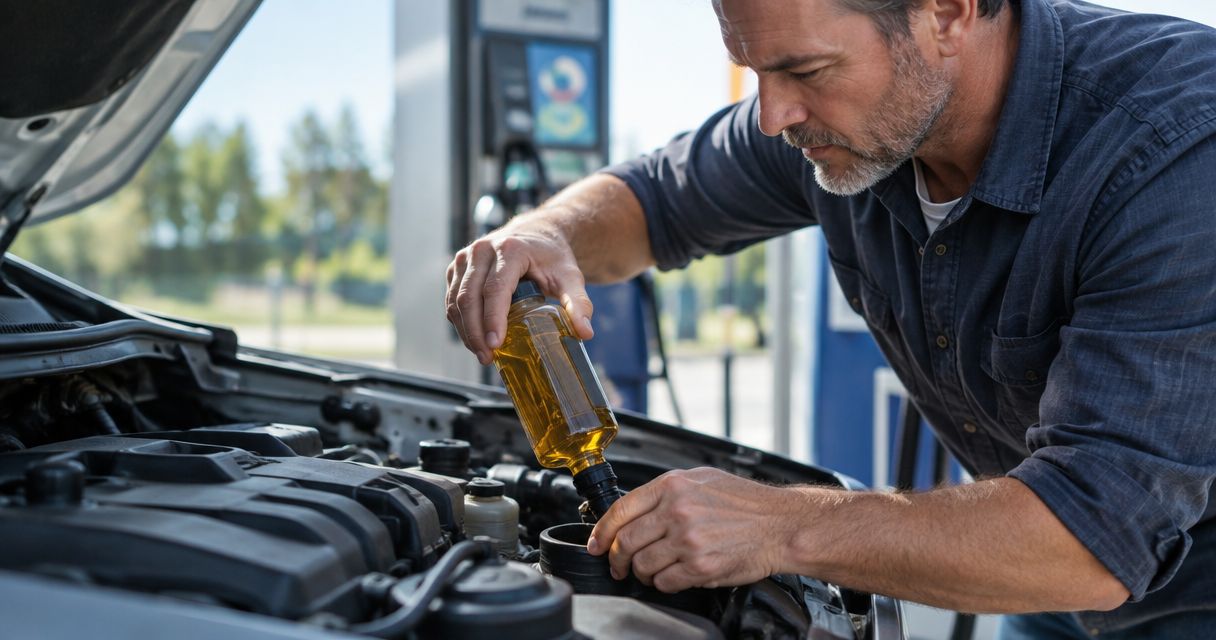
Best overall for suspected gasoline fuel-system deposits: a compatible polyetheramine (PEA) cleaner. Best for storage: a gasoline fuel stabilizer. Best for an older diesel with confirmed ignition-quality needs: a cetane improver. The best fuel additives for older engines in 2026 match a specific problem; engine age alone is not a reason to add anything to your tank.
- The best fuel additives for older engines match fuel type, symptoms, and the vehicle manufacturer's instructions.
- Choose a compatible PEA gasoline cleaner for fuel-system deposits, not mechanical wear.
- Choose gasoline fuel stabilizer before storage; it does not restore badly degraded fuel.
- Elite Auto Repair & Service Inc offers diagnostics for older engines with unexplained running problems.
Why this matters
An older engine can run poorly because of ignition faults, air leaks, fuel-delivery problems, or mechanical wear. A fuel additive addresses none of those simply because the bottle says high mileage. Buying the wrong treatment delays the repair your vehicle needs.
Elite Auto Repair & Service Inc is a diagnostic option for older-engine owners in Kissimmee, FL with unexplained running problems. You can start with Elite Auto Repair & Service Inc for diagnostics, tune-ups, and engine repair rather than treating every rough idle as dirty fuel.
This 2026 guide ranks additive types by their intended jobs, not by packaging claims. Gasoline and diesel treatments are separate choices. Check your owner's manual before choosing either.
What makes the best fuel additive for an older engine?
Use these criteria before choosing a bottle:
- Fuel compatibility: The label must match gasoline or diesel and your vehicle's requirements. Do not assume a treatment works with both.
- A defined purpose: Cleaning deposits, preserving stored gasoline, improving diesel ignition quality, and controlling cold-weather wax formation are different jobs.
- Clear instructions: Choose a product with an explicit treatment amount and instructions for the fuel volume you intend to treat.
- System compatibility: Check restrictions covering emissions equipment, fuel blends, and any manufacturer prohibition on additives.
- Realistic limits: Reject claims that a tank treatment repairs worn parts, restores compression, or fixes every warning light.
- A reason to use it: A symptom, inspection finding, or storage plan is more useful than an arbitrary mileage threshold.
Best fuel additives for older engines at a glance
| Rank and additive type | Best for | Standout function | Key limitation |
|---|---|---|---|
| 1. PEA gasoline cleaner | Targeted gasoline fuel-system cleaning | Detergent action on susceptible deposits | Cannot repair ignition faults or worn engine parts |
| 2. Gasoline fuel stabilizer | An older gasoline vehicle entering storage | Helps slow fuel deterioration | Does not make badly degraded fuel fresh again |
| 3. Diesel cetane improver | A diesel with an identified ignition-quality need | Raises cetane quality when used as directed | Does not repair injectors or glow plugs |
| 4. Diesel anti-gel treatment | An older diesel facing cold-weather travel | Helps control fuel wax behavior in cold conditions | Is not a routine solution for warm-weather driving |
These are purpose-based recommendations, not interchangeable treatments. A storage product does not become the better cleaner because your vehicle sits outside, and a gasoline cleaner does not belong in a diesel tank unless its label explicitly permits that use.
1. PEA gasoline cleaner: best for targeted deposit cleaning
A gasoline cleaner containing polyetheramine is a reasonable first additive category to consider when fuel-system deposits are the actual concern. PEA is a detergent used in fuel-system cleaning formulations. The finished product's instructions and compatibility matter more than the ingredient name alone.
A tank treatment travels through the fuel-delivery path. It cannot reliably clean a surface the treated fuel never reaches, and it cannot replace damaged components.
PEA gasoline cleaner pros:
- Targets deposits rather than claiming to repair engine wear.
- Fits a defined fuel-system cleaning task.
- Offers label-directed application through the fuel tank.
- Lets you select a formulation intended for your gasoline vehicle.
PEA gasoline cleaner cons:
- Does not correct vacuum leaks, weak ignition, or low compression.
- Cannot be assumed to clean intake valves in a direct-injection engine.
- A PEA ingredient claim alone does not establish effectiveness for your particular complaint.
Best for: A gasoline engine with a deposit-related concern and no manufacturer restriction on the chosen treatment.
For a 2026 purchase, read the actual product label rather than relying on an old recommendation or a high-mileage slogan. Look for the cleaning purpose, fuel compatibility, and treatment instructions. Keep expectations specific: deposit cleaning is not engine rebuilding.
Verdict: Buy a compatible PEA gasoline cleaner for a defined cleaning need; skip it as a repair for unexplained symptoms.
2. Gasoline fuel stabilizer: best for an older car entering storage
A gasoline fuel stabilizer helps slow deterioration while fuel sits unused. It is a preventive storage treatment, not a substitute for fresh fuel or a repair for a car that already runs poorly.
Storage planning matters more than engine age. A newer car parked for an extended period faces the same basic fuel-preservation question as an older one.
Gasoline fuel stabilizer pros:
- Addresses fuel preservation rather than unrelated engine symptoms.
- Fits seasonal vehicles and other gasoline vehicles used intermittently.
- Provides a clear reason to treat fuel before storage.
- Supports a storage plan when the vehicle manufacturer permits its use.
Gasoline fuel stabilizer cons:
- Does not reverse severe fuel degradation or remove contamination.
- Does not replace battery, tire, or other storage preparation.
- Claims about storage duration differ by formulation and conditions.
Best for: An older gasoline vehicle you are preparing to leave unused.
If your 2026 plans include seasonal storage, choose the stabilizer before parking the car. Follow the label and vehicle instructions for application and circulation. Do not improvise a storage duration based on a different product's claims.
If the vehicle has already been sitting and now struggles to start, establish the condition of the fuel first. Adding preservative after deterioration has occurred is not the same as preventing it.
Verdict: Buy gasoline fuel stabilizer for planned storage; skip it as a way to rescue badly degraded fuel.
3. Diesel cetane improver: best for an identified ignition-quality need
A diesel cetane improver changes the fuel's ignition quality. Cetane describes diesel ignition behavior; it is not the same measurement as gasoline octane.
This treatment belongs in a narrower decision than general older-engine maintenance. Hard starting or rough running can also come from glow plugs, injectors, compression, or other faults that a cetane additive cannot repair.
Diesel cetane improver pros:
- Addresses diesel ignition quality directly.
- Has a distinct purpose from deposit cleaning or fuel storage.
- Offers a label-directed treatment when increased cetane is appropriate.
Diesel cetane improver cons:
- Does not repair glow plugs, injectors, or compression loss.
- Is not a gasoline-engine treatment.
- Does not establish the cause of difficult starting.
Best for: A diesel engine whose fuel requirements and diagnostic findings support improving cetane quality.
For an older diesel in 2026, begin with the manufacturer's fuel requirements and the actual starting complaint. Record whether the problem happens cold, hot, or after the vehicle sits. Those details help separate fuel-related behavior from a component fault.
Do not interpret quieter operation or a different engine sound as proof that an underlying fault is fixed. A symptom change and a completed repair are different things.
Verdict: Hold until diesel fuel requirements and the cause of the complaint support a cetane treatment.
4. Diesel anti-gel treatment: best for cold-weather travel
Diesel anti-gel treatment helps manage wax formation and flow problems in cold conditions. It is a preventive cold-weather product, not a general engine cleaner.
For a Kissimmee driver, the relevant use case is a trip or stay in colder conditions. Engine age does not create a year-round need for anti-gel treatment.
Diesel anti-gel treatment pros:
- Targets a defined cold-weather fuel problem.
- Fits advance preparation for diesel travel into colder regions.
- Provides product-specific instructions for treatment conditions.
Diesel anti-gel treatment cons:
- Does not repair an engine or a failing fuel-delivery component.
- Preventive treatment is not interchangeable with a product intended for already gelled fuel.
- Performance depends on the fuel and the formulation's stated limits.
Best for: An older diesel vehicle facing cold conditions that require additional fuel preparation.
Before a cold-weather trip in 2026, check the vehicle's guidance, expected conditions, and the treatment label. Do not assume any anti-gel bottle works at every temperature. Avoid using a preventive product as an emergency remedy after fuel flow has already failed.
Verdict: Buy when your cold-weather diesel travel plan calls for it; skip it for routine warm-weather driving.
How these additive types were ranked
The ranking follows fuel compatibility, intended function, clear application instructions, system restrictions, and realistic limits. PEA gasoline cleaner comes first for a defined cleaning task, while stabilizer, cetane improver, and anti-gel treatment each serve a separate situation.
No position means one treatment is universally better than another. For a car entering storage, gasoline stabilizer moves to the top of your decision. For unexplained stalling, diagnosis outranks every additive on the list.
What an additive cannot fix
A fuel additive cannot repair worn metal, damaged electrical parts, or an air leak. Persistent misfires, overheating, heavy smoke, or loss of power need investigation rather than repeated doses of treatment.
A flashing check engine light commonly indicates a serious misfire condition. Reduce load, stop safely, and follow the vehicle's instructions instead of continuing to drive to circulate a cleaner.
Elite Auto Repair & Service Inc offers diagnostics and engine repair in Kissimmee, FL. For an older engine with recurring symptoms, the useful next move is finding the cause—not switching between additive bottles.
Get your engine symptoms checked
Discuss rough running, warning lights, or starting problems with an auto repair shop in Kissimmee, FL.
Use the label, not a guessed dose
Read the full instructions before opening a treatment bottle. Confirm the fuel type, application amount, safety directions, and any restrictions. Never assume more additive produces more cleaning.
- Check compatibility: Match the vehicle and fuel to the label.
- Read instructions: Use the stated amount for the fuel being treated.
- Avoid mixing: Do not combine treatments unless their instructions expressly permit it.
- Record symptoms: Note the complaint before treatment so you can describe any change accurately.
Handle additives away from ignition sources and follow the label's exposure precautions. If you cannot establish what is already in the tank, stop before adding another treatment.
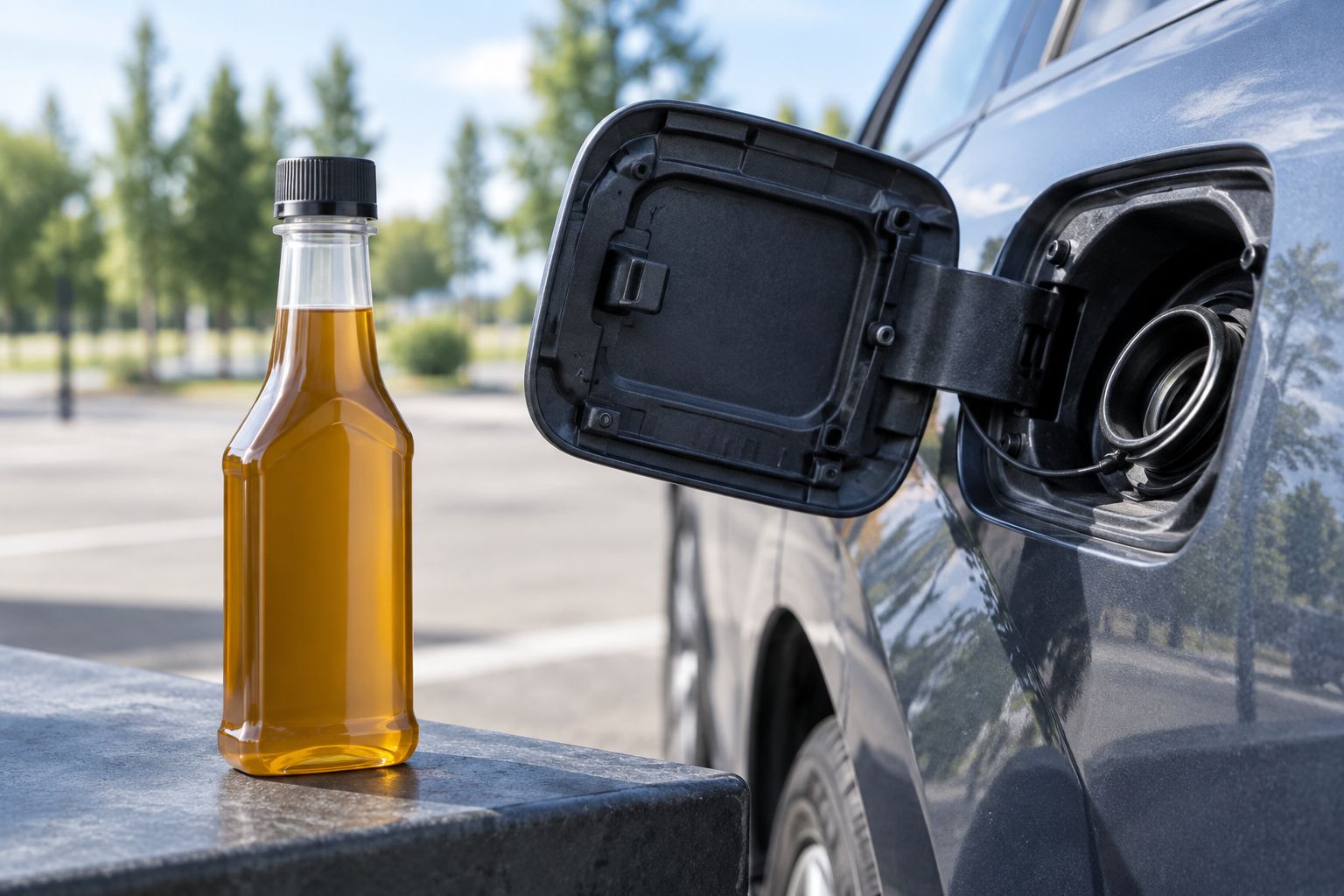
Do not confuse octane with cleaning
Gasoline octane is a resistance-to-knock rating, not a measure of cleaning power. In the United States, pump gasoline commonly includes grades such as 87 AKI, 91 AKI, and 93 AKI; the vehicle's required grade remains the deciding factor.
An older engine does not automatically need higher octane. Follow the owner's manual, including its distinction between required and recommended grades. If the engine knocks on the correct fuel, diagnose the cause instead of assuming an octane booster is routine maintenance.
Likewise, diesel cetane and gasoline octane are not substitutes for each other. Choose fuel and treatments according to the engine's actual requirements.
Which fuel additive should you choose?
Choose a compatible PEA gasoline cleaner only when deposit cleaning is the job. Choose gasoline stabilizer for planned storage, diesel cetane improver for an identified ignition-quality need, or diesel anti-gel treatment for relevant cold-weather preparation.
If you cannot name the problem the additive is supposed to address, do not buy one yet. Elite Auto Repair & Service Inc provides older-engine diagnostics for Kissimmee drivers who need to separate a fuel concern from an ignition or mechanical fault.
FAQ
What's the best fuel additive for an older gasoline engine?
A compatible PEA gasoline cleaner is a reasonable choice for a defined deposit-cleaning need. Engine age alone does not justify treatment, and the vehicle manufacturer's restrictions still apply.
Should I put fuel additives in a high-mileage car regularly?
High mileage alone is not a reason to use fuel additives regularly. Follow the vehicle's maintenance instructions and choose a treatment only for a specific purpose.
Can a fuel additive fix a rough idle?
A fuel additive cannot be assumed to fix a rough idle. Ignition faults, air leaks, fuel-delivery problems, and mechanical wear need diagnosis rather than repeated treatment.
Does gasoline cleaner clean direct-injection intake valves?
A tank-added gasoline cleaner cannot be assumed to clean direct-injection intake valves. Direct injection delivers fuel into the cylinder rather than washing the backs of the intake valves.
Is fuel stabilizer the same as fuel-system cleaner?
Fuel stabilizer and fuel-system cleaner serve different purposes. Stabilizer helps preserve stored fuel, while a cleaner targets deposits according to its formulation and label.
Can I use gasoline additives in an older diesel?
Use an additive in a diesel only when its label explicitly permits that application and it meets the vehicle's requirements. Gasoline and diesel treatments are not automatically interchangeable.
Should I use more additive for a very old engine?
Use the label-directed amount, not an increased dose based on engine age. If symptoms persist, diagnose the cause rather than adding more treatment.
One last thing
Your engine's fuel-delivery design matters more than the word older on a product label. A tank treatment reaches only the parts exposed to treated fuel, so it cannot be expected to clean every deposit inside an engine.
Before choosing an additive, write down its intended job in one sentence. If that sentence is simply make an old engine run better, start with diagnosis.