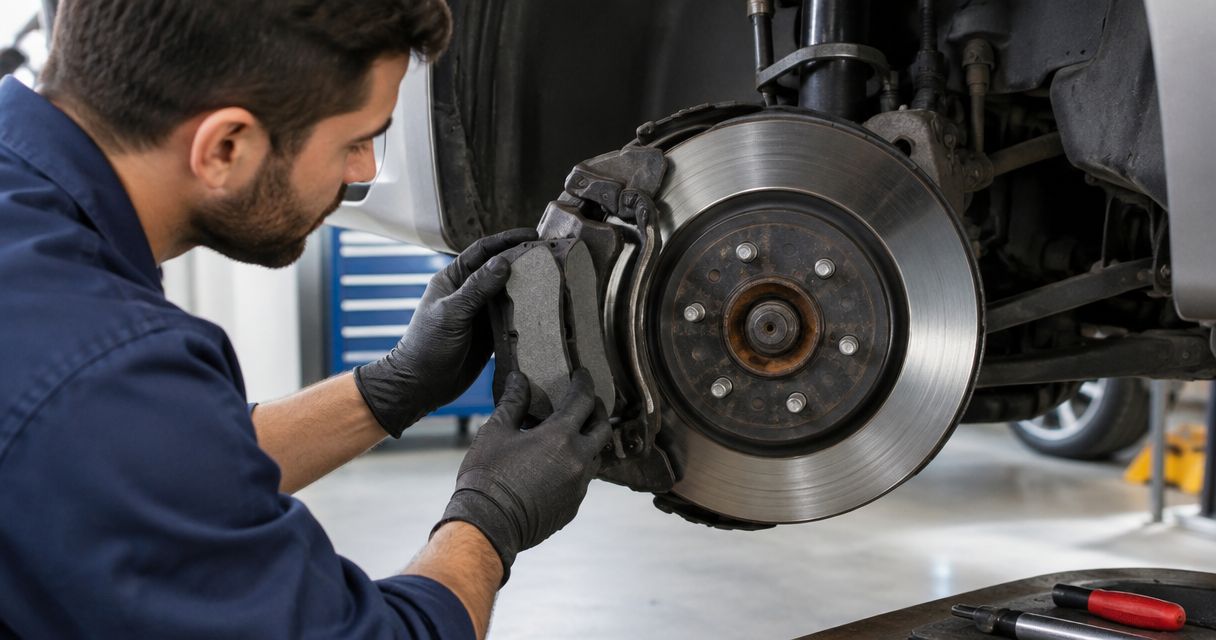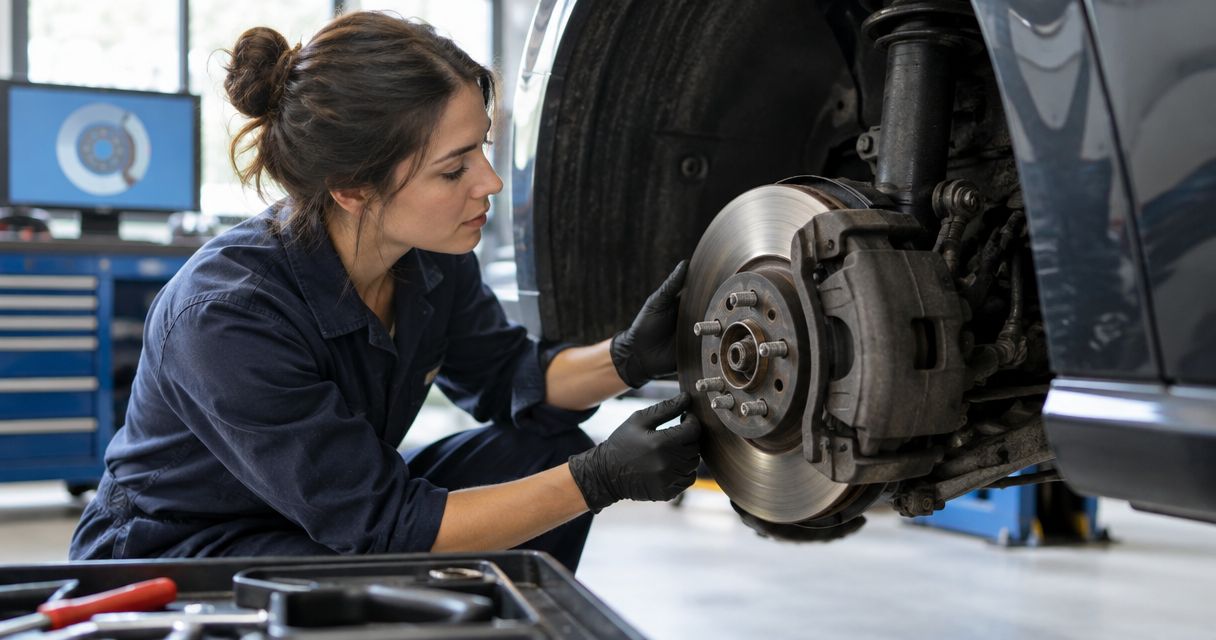
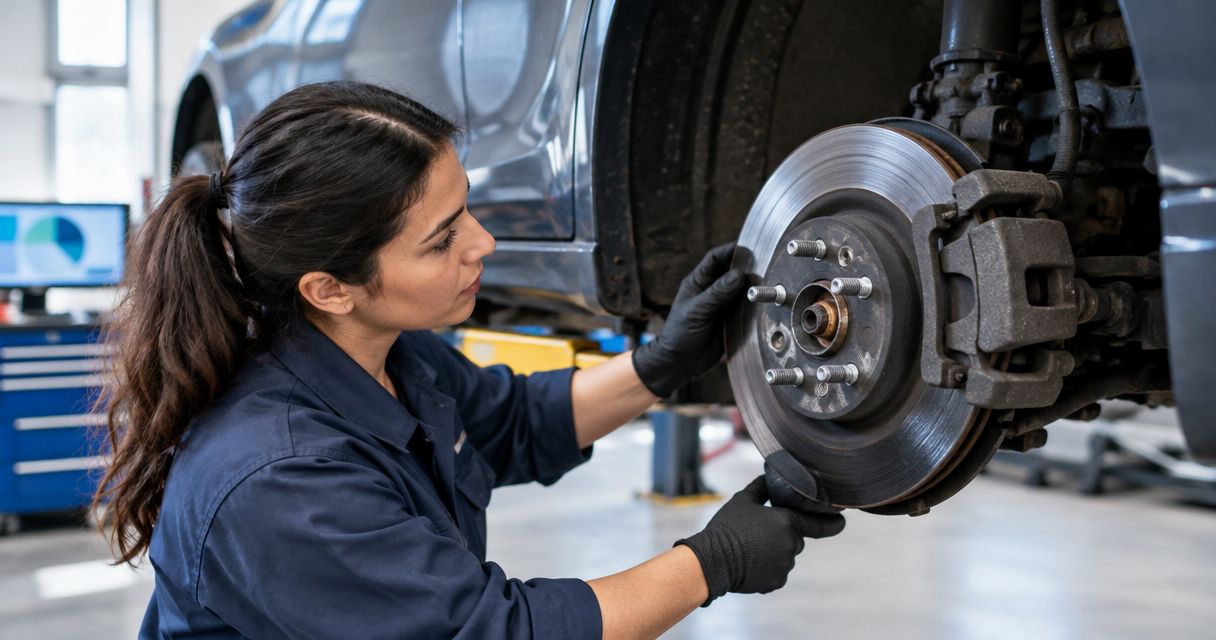
Get your brakes checked at the intervals listed in your vehicle’s maintenance schedule, and arrange an inspection sooner whenever braking changes. Ask for a brake check during routine maintenance rather than waiting for noise or a warning light. A quick visual check does not replace a complete inspection when you notice grinding, pulling, vibration, or a soft pedal.
- How often should you get your brakes checked? Follow your vehicle’s schedule and inspect sooner when braking changes.
- A brake inspection checks more than pads: rotors, hydraulic components, and pedal operation also matter.
- Elite Auto Repair & Service Inc provides brake service for drivers in Kissimmee, FL.
- Do not keep driving with reduced stopping ability, a sinking pedal, or a suspected brake fluid leak.
Why this matters
Brake inspection timing and brake replacement timing are different decisions. An inspection establishes condition; it does not automatically mean you need new pads, rotors, or other parts. Waiting until replacement feels unavoidable removes the opportunity to identify uneven wear or a developing leak earlier.
For your 2026 maintenance plan, start with the schedule for your exact vehicle rather than a general mileage rule. Elite Auto Repair & Service Inc offers brake service in Kissimmee, FL. Bring the vehicle’s service history and describe what changed so the inspection addresses your concern.
How often should you get your brakes checked?
Use your manufacturer’s inspection schedule as the baseline, then bring the inspection forward when symptoms or operating conditions justify it. There is no single interval that fits every vehicle, brake design, and driving pattern.
Follow this sequence to decide when to book:
- Read the maintenance schedule. Look for brake inspection requirements, brake fluid service, and any separate guidance for demanding driving conditions.
- Check your service records. Find the last documented inspection and its findings, not just the date the pads were replaced.
- Describe your driving. Tell the shop about stop-and-go trips, towing, hills, or long periods without use.
- Report changes immediately. Explain whether the noise, pulling, or vibration happens during braking, while moving, or after the vehicle sits.
- Set the next check from the findings. Ask the technician to connect the recommendation to measured condition and the manufacturer’s instructions.
If you cannot find the previous inspection record, arrange a baseline inspection instead of assuming a recent oil change included one. Ask what the service covered; maintenance package names do not establish inspection depth.
Which inspection approach fits your situation?
These approaches serve different purposes. A routine check helps track condition, while a symptom-driven inspection investigates a specific concern.
| Approach | Best for | Main benefit | Limitation |
|---|---|---|---|
| Manufacturer-scheduled inspection | Drivers maintaining a documented service plan | Keeps inspection timing tied to the vehicle’s requirements | Does not replace an earlier check when symptoms appear |
| Brake check during routine maintenance | Drivers already bringing the vehicle in for service | Creates an opportunity to spot visible wear or leaks | Scope varies; ask whether wheels are removed and components measured |
| Symptom-driven inspection | Drivers noticing noise, vibration, pulling, or pedal changes | Focuses diagnosis on a current problem | Waiting for symptoms can leave wear unnoticed |
| Baseline inspection | Drivers with an unfamiliar vehicle or incomplete records | Establishes current condition | Does not reconstruct the vehicle’s entire repair history |
Use scheduled inspections to track condition, not as permission to ignore a new symptom. That distinction matters more than choosing a generic interval from an online checklist.
What should a brake inspection include?
A useful inspection explains the condition of the braking system, not just whether a pad looks thin through a wheel. The exact procedure depends on the vehicle and the concern you report.
Ask the shop to distinguish between a visual screening and a detailed inspection. For a braking complaint, the work should address the relevant mechanical, hydraulic, and electronic components rather than assuming the pads are responsible.
Pads, rotors, and other friction components
The technician checks remaining friction material, uneven wear, rotor condition, and signs of overheating or damage. Vehicles with drum brakes also need the applicable shoes, drums, and operating hardware checked.
An outer pad does not establish the condition of the inner pad. If access limits what the technician can see, ask whether wheel removal is needed to assess wear accurately.
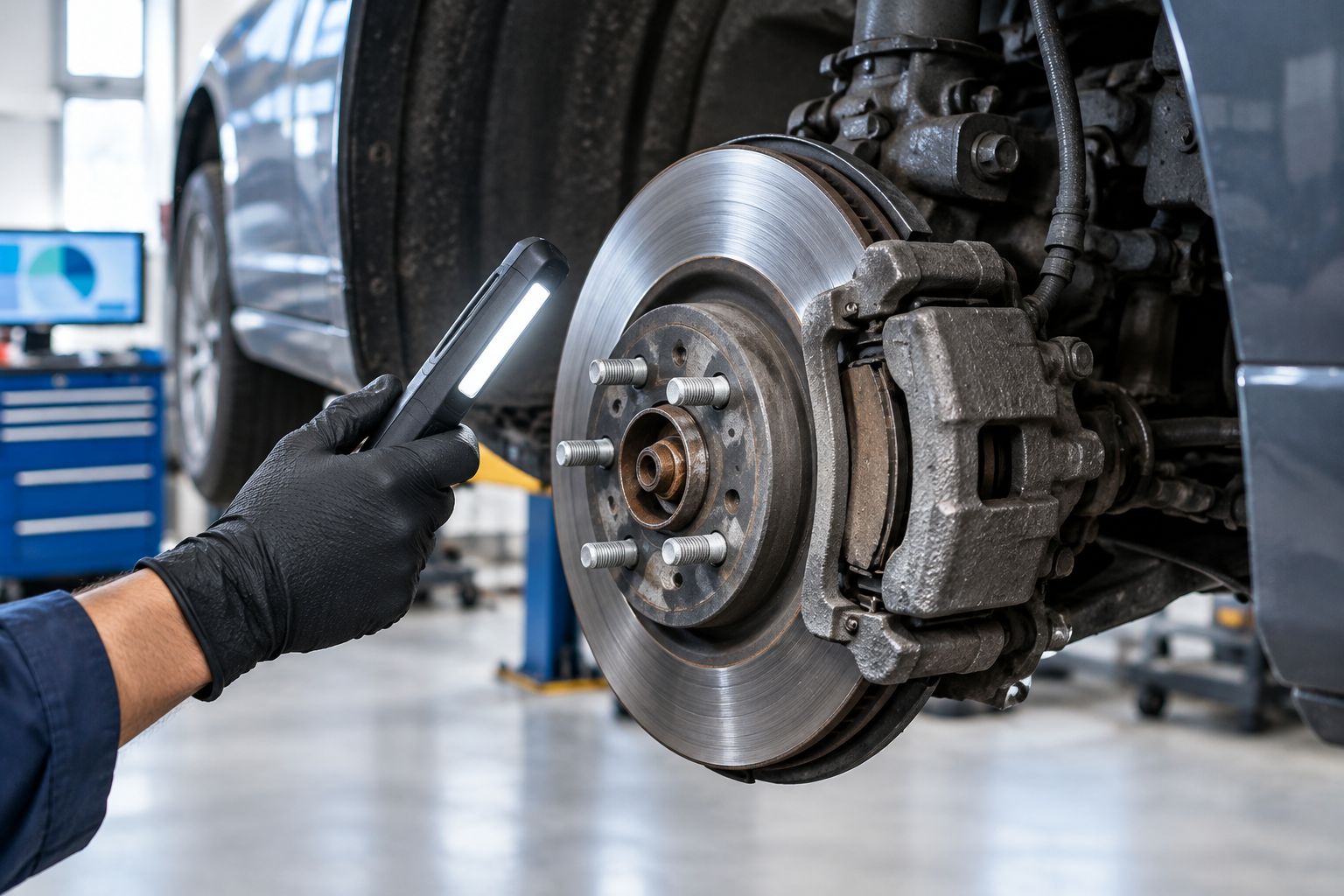
Calipers, hoses, lines, and fluid
The inspection should look for relevant leaks, damaged hoses, corroded lines, sticking components, and abnormal wear patterns. Pad replacement alone does not correct a sticking caliper or a hydraulic leak.
Brake fluid also has its own manufacturer requirements. A fluid level check is not the same as a brake fluid service, and a low reservoir needs an explanation rather than an automatic top-up.
Pedal operation and warning indicators
Tell the technician about a pedal that feels softer, travels farther, or changes under steady pressure. Report brake and ABS warnings even if they disappear before the appointment.
An ABS warning and a red brake warning do not mean the same thing. Follow the instructions for the specific indicator in your owner’s manual rather than judging urgency by whether the vehicle still moves.
Why brake inspection timing varies
Your 2026 inspection plan should reflect how the vehicle operates, not just how far it travels. These factors help explain why similar vehicles need different follow-up decisions:
- Stop-and-go driving: Repeated braking uses the friction components more often than steady cruising. Describe frequent traffic queues and short urban trips.
- Towing and heavier loads: Extra mass increases the braking work needed to slow the vehicle. Follow the vehicle’s applicable operating and maintenance guidance.
- Hilly routes: Repeated downhill braking adds heat and changes the demands on the system. Mention regular hill driving when discussing inspection timing.
- Long periods parked: Corrosion and sticking components can develop while a vehicle is unused. A low odometer reading does not establish brake condition.
- Previous inspection findings: Uneven wear, limited remaining material, or a developing concern should guide the next check. Ask for the findings in writing.
- New symptoms: Noise, pulling, vibration, leaks, or pedal changes override a routine reminder. The next scheduled service is not the right waiting point for reduced braking ability.
For help organizing your records, use the dealer maintenance schedule to warranty-safe repair workflow. Keep the manufacturer’s requirements separate from additional work recommended because of current condition.
What brake symptoms mean you should not wait?
Reduced stopping ability needs immediate attention, regardless of the last inspection date. If the pedal sinks, braking becomes unpredictable, or you suspect a brake fluid leak, stop in a safe place and arrange assistance rather than driving to test it again.
Grinding, repeated squealing, vibration during braking, or pulling also warrant an inspection. These symptoms do not identify the failed part by themselves; tires, suspension, and other components can contribute to similar complaints.
Give the shop observations rather than a diagnosis:
- Does the noise happen only while braking, or whenever the wheels turn?
- Does the steering wheel shake, the pedal pulse, or the whole vehicle vibrate?
- Does the vehicle pull during braking or while cruising too?
- Did the symptom begin after service, after sitting, or without an obvious change?
- Is a warning indicator on, and does it remain on after the parking brake is released?
Do not repeatedly brake hard to reproduce a problem. Explain the conditions and let the technician decide how to evaluate the vehicle safely.
Should you get your brakes checked at every oil change?
An oil change is a useful opportunity to ask for a brake check, but it does not establish the correct inspection interval for every vehicle. Oil service timing and brake inspection requirements are separate.
When booking maintenance in 2026, ask whether the appointment includes a visual brake check or a more detailed inspection. If you already have a braking symptom, state that when booking so it is treated as a diagnostic concern, not an incidental observation.
For an electric vehicle, use the same principle with its scheduled maintenance visits. Regenerative braking does not eliminate the need to inspect the friction brakes.
Do you need new brake pads after every inspection?
A brake inspection does not automatically require pad replacement. The decision should follow measured wear, component condition, symptoms, and the vehicle’s service specifications.
Ask for the remaining pad thickness, rotor measurements when relevant, and an explanation of uneven wear. A useful recommendation separates work needed now from items that need monitoring.
Do not use a generic pad-thickness threshold as a substitute for the applicable specification. The technician should explain the measurement and what it means for your vehicle.
What should you ask before approving brake work?
Before approving a repair, make sure the estimate addresses the inspection findings. Replacing the most familiar part is not the same as correcting the cause.
Ask these questions:
- What condition did the inspection find? Request the specific wear, damage, leak, or operating problem.
- What measurements support replacement? Ask how the results compare with the applicable service limits.
- Does another component explain the wear? A sticking component can affect the replacement parts if left unresolved.
- What work is urgent? Separate a safety-related repair from maintenance or monitoring.
- How will the repair be checked? Ask how the shop will verify operation and address the original complaint.
Elite Auto Repair & Service Inc is a local brake-service option for drivers in Kissimmee, FL. Choose the inspection based on your symptoms and maintenance needs; a service listing alone does not establish what your vehicle needs or how much work is required.
Arrange a brake inspection
Ask about brake service in Kissimmee and describe any noise, vibration, pulling, or pedal changes.
FAQ
How often should you get your brakes checked in 2026?
Follow your vehicle manufacturer’s brake inspection schedule and arrange an earlier check whenever braking changes. Use routine maintenance visits to review the last findings and confirm the next inspection.
Should I wait for my brakes to squeak before getting them checked?
No. Brake wear and hydraulic problems do not always produce a squeak. Scheduled inspections and attention to pedal or stopping changes are more useful than waiting for noise.
Does an oil change include a complete brake inspection?
An oil change does not automatically include a complete brake inspection. Ask what the appointment covers, including whether the technician removes wheels or measures components.
Can I drive if my brake pedal feels soft?
Do not continue driving if a soft pedal comes with reduced or unpredictable braking. Stop safely and arrange assistance rather than testing the brakes on the road.
Do brakes need checking if I barely drive my car?
Yes. Low mileage does not rule out corrosion, sticking components, or deterioration. Follow time-based manufacturer requirements and report changes after the vehicle has been parked.
Do electric vehicles still need brake inspections?
Yes. Regenerative braking does not eliminate the friction brakes or their inspection requirements. Follow the maintenance instructions for the specific vehicle.
Where can I get my brakes checked in Kissimmee, FL?
Elite Auto Repair & Service Inc offers brake service in Kissimmee, FL. Describe your symptoms and ask which inspection scope fits your vehicle before arranging service.
One last thing
The most useful item to leave with is not a vague statement that the brakes are fine. Ask for a written condition record: what was inspected, what was measured, what needs attention, and what should trigger an earlier return.
Keep that record with your 2026 maintenance documents. Your next brake check should follow both the manufacturer’s schedule and the condition found today.