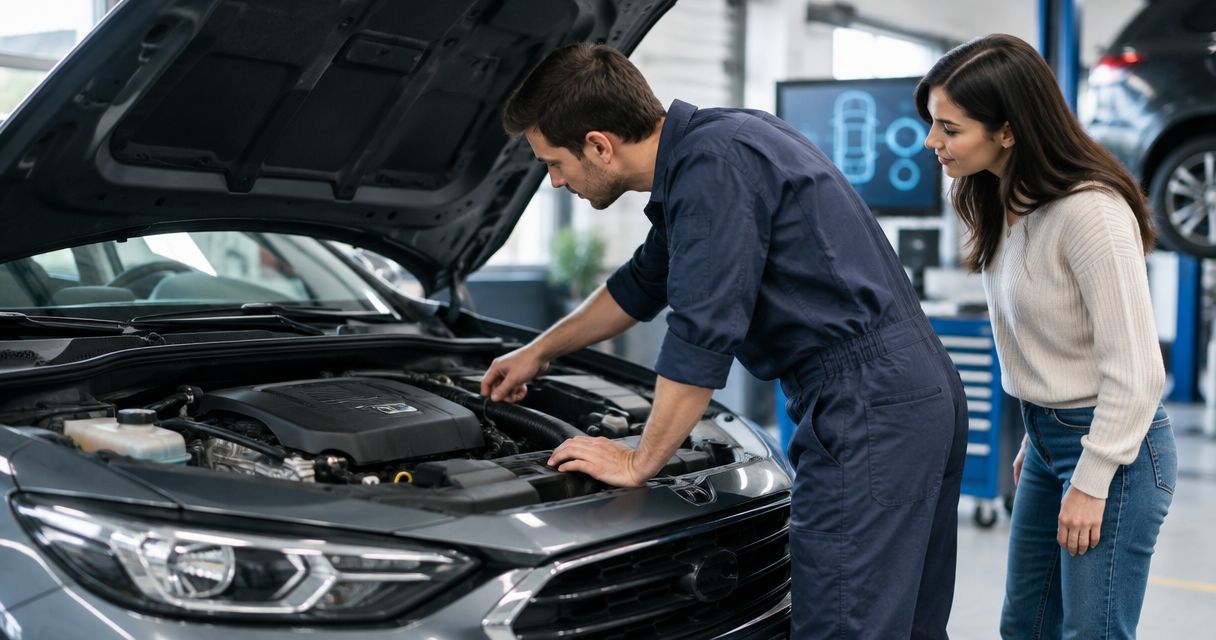

Senior drivers’ brake repair service is the inspection and repair of vehicle brakes with the aim of maintaining dependable stopping and independent travel. This 2026 guide explains when to stop driving, what to tell a repair shop, and how to request clear findings without assuming every older driver has the same needs.
- Brake repair service for senior drivers should address changes in stopping, pedal feel, and warning lights before routine travel continues.
- Elite Auto Repair & Service Inc provides brake service and diagnostics for drivers in Kissimmee, FL.
- Choose professional brake inspection for diagnosis; home observations cannot establish that a vehicle is safe to drive.
- Request written findings, repair authorization, and instructions before collecting your vehicle.
Why brake repair service matters for senior drivers
A change in braking deserves attention, regardless of the driver’s age. For senior drivers who depend on a car for appointments, shopping, or family visits, a brake problem also creates a transportation problem. Planning the inspection and the trip home matters alongside the repair itself.
Senior drivers are not a single group with identical strength, mobility, hearing, or driving habits. Tell the shop about your actual concern: a pedal that takes more effort, a sound you cannot identify, or a vehicle that no longer stops as expected. Do not let an age-based assumption replace a mechanical inspection.
Elite Auto Repair & Service Inc is best for Kissimmee drivers seeking local brake service and vehicle diagnostics. The shop’s stated services include brakes, diagnostics, and suspension repair; the cause of your particular braking complaint still requires inspection. Visit Elite Auto Repair & Service Inc for information about its auto repair and maintenance services.
For your 2026 maintenance plan, use your vehicle’s owner’s manual and current condition rather than a generic replacement schedule. Driver age alone does not determine when brake pads, rotors, or hydraulic components need replacement.
How to arrange brake repair without unnecessary guesswork
1. Separate urgent symptoms from routine concerns
Start with what you can observe without tools or a test drive. A pedal that suddenly sinks, substantially reduced stopping ability, smoke near a wheel, or a suspected brake-fluid leak calls for stopping safely and arranging professional assistance. Do not drive to the shop to prove that the problem is serious.
Warning lights need context. A red brake warning can indicate a parking-brake condition or a brake-system problem; follow the vehicle’s manual. An ABS warning concerns the anti-lock system and needs diagnosis, but the light alone does not identify the failed part.
Keep these decisions separate:
- Stop driving when braking ability changes substantially or the vehicle cannot stop predictably.
- Arrange towing when safe braking is in doubt.
- Read the owner’s manual for the exact warning displayed.
- Report grinding, pulling, vibration, or new pedal effort when requesting an inspection.
2. Record the symptoms before calling
Write down what happened in plain language. You do not need to identify a caliper, rotor, or hydraulic fault before asking for help. A useful description explains when the symptom appears and what feels different from your usual driving experience.
Keep a note on paper if using a phone is inconvenient. Record 3 observations: the symptom, the driving situation, and the warning lights. For example, describe whether vibration happens while braking or also occurs when the brakes are not applied. Do not reproduce an unsafe situation just to complete your notes.
Give the shop these details:
- Describe the sound or sensation without guessing the failed part.
- State whether the symptom began suddenly or gradually.
- Identify whether it happens during braking, turning, or ordinary travel.
- Mention recent repairs, long storage, or a recent impact if relevant.
- Bring your symptom notes and available service records.
3. Request an inspection before authorizing replacement
Your first task is to gather records; the technician’s task is to identify the cause. A professional brake inspection is the appropriate next step when symptoms involve stopping, pedal feel, or warning lights. It avoids treating a symptom description as a confirmed diagnosis.
Elite Auto Repair & Service Inc offers brake service and diagnostics in Kissimmee. Ask how the inspection will address your complaint and what authorization is required before work begins. The service list does not establish the exact repair your vehicle needs or how long that repair will take.
Ask for findings you can understand:
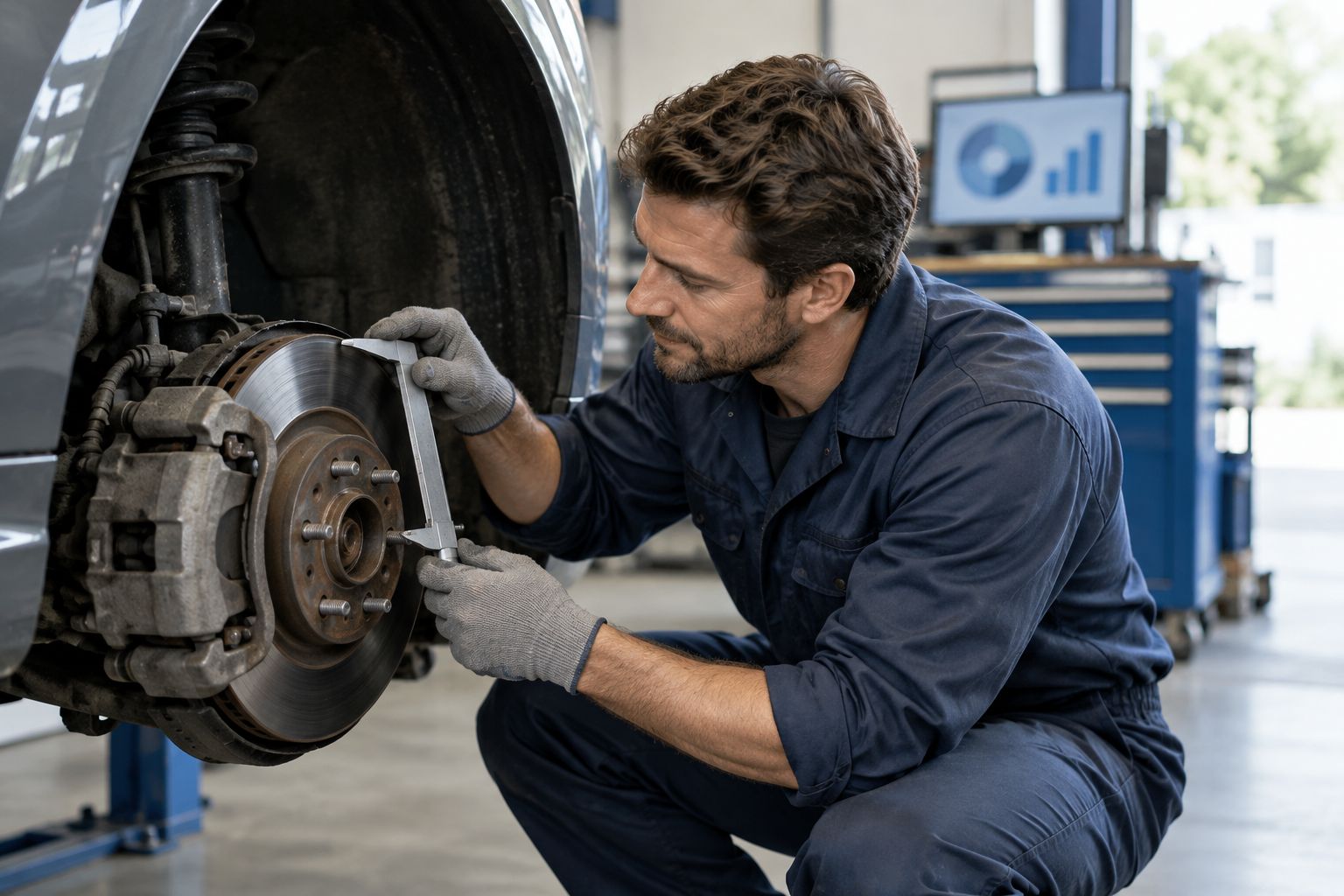
- Request pad and rotor measurements against the vehicle’s applicable specifications.
- Ask whether the inspection found leaks, sticking components, or uneven wear.
- Request an explanation of any warning-light diagnosis.
- Ask whether tires or suspension need further inspection to explain the complaint.
- Confirm that additional work requires your approval.
4. Compare the proposed repair with the findings
Read the written recommendation before agreeing to parts replacement. A brake-pad recommendation should connect to measured wear or an identified condition. A rotor recommendation should explain the relevant measurement, damage, or other finding rather than rely only on a general statement that the brakes are old.
Authorize the diagnosed repair, not an unexplained package. Pads, rotors, calipers, hoses, and hydraulic components perform different jobs. Replacing one type of component does not automatically resolve a fault in another.
Keep 1 written estimate with your 2026 service records so you can compare the authorized scope with the final invoice. If the explanation remains unclear, ask the shop to restate it before proceeding.
Review these points:
- Identify the affected wheel positions and components.
- Separate confirmed faults from preventive recommendations.
- Ask why each recommended component needs service.
- Confirm which findings make continued driving unsafe.
- Request revised authorization if inspection reveals additional work.
5. Explain your communication and transportation needs
Choose how you want to receive information before leaving the vehicle. You can request a written summary, a phone explanation, or permission for a trusted person to join the discussion. These are communication preferences, not reasons to assume someone else should make your decisions.
Arrange a ride separately from the repair authorization. Do not assume a shop provides transportation, collection, or a waiting appointment unless the shop confirms it. Likewise, a vehicle that arrives by tow truck does not become safe to drive simply because you need to get home.
Make the handoff clear:
- Tell the shop your preferred way to receive updates.
- Name any person you authorize to discuss the vehicle.
- Confirm who can approve additional work.
- Ask about access arrangements that matter to you.
- Arrange transport without relying on an unconfirmed service.
6. Review the completed work before leaving
Read the final invoice alongside the authorized estimate. Ask which findings were corrected and whether any concerns remain unresolved. If warning lights were part of the original complaint, request an explanation of their status rather than assuming every dashboard light was related to the same fault.
Ask what pedal feel or operating instructions to expect after the specific repair. Some replacement friction components have manufacturer instructions for initial use; follow the instructions applicable to the parts installed. Do not improvise repeated hard stops on public roads.
Before taking the keys:
- Match completed work to the authorization you gave.
- Ask how the technician checked the original complaint.
- Request any applicable written operating instructions.
- Clarify what symptoms require an immediate return or a tow.
- Keep the final invoice with your maintenance records.
7. Build a vehicle-specific follow-up plan
Start with the owner’s manual, then add the technician’s findings from this visit. There is no single brake-pad replacement interval that fits every senior driver. Vehicle design, driving conditions, use, and component condition all affect service decisions.
For a 2026 follow-up plan, distinguish scheduled maintenance from symptom-driven inspection. A new grinding sound or a change in stopping should not wait for a future calendar reminder. Conversely, a quiet brake system still needs the inspections and maintenance specified for the vehicle.
Leave with a usable plan:
- Record the service date and odometer reading.
- Keep the inspection findings with the invoice.
- Note any manufacturer-specified brake-fluid maintenance.
- Set reminders based on the vehicle’s schedule and documented recommendations.
- Request inspection promptly if braking changes again.
Compare your next-step options
Choose the option that matches the vehicle’s condition, not just the easiest trip. Home observations help you describe a problem; they cannot confirm braking safety. Professional inspection identifies mechanical faults, while towing addresses transportation when driving is unsafe.
| Option | Best for | Main benefit | Key limitation |
|---|---|---|---|
| Owner’s manual and symptom notes | Understanding warnings and preparing for a call | Gives the technician a clearer description | Cannot diagnose internal wear or hydraulic faults |
| Professional brake inspection | New noises, vibration, pulling, or pedal changes | Connects repair recommendations to inspected conditions | Requires arranging an inspection and transport if needed |
| Independent second opinion | An unclear recommendation when the vehicle can be transferred safely | Provides another assessment of the findings | Does not replace immediate action on unsafe braking |
| Towing to a repair shop | Substantially reduced braking or uncertain stopping safety | Avoids driving a vehicle with suspected brake failure | Moves the vehicle but does not diagnose or repair it |
The right sequence is observe, arrange safe transport, inspect, then authorize. A second opinion is useful for an unclear recommendation, but it is not permission to drive a vehicle with a serious braking problem between shops.
Common mistakes senior drivers should avoid
These mistakes concern the repair process, not a person’s age or driving ability. Use this 2026 checklist to keep decisions tied to the vehicle’s condition and your own preferences.
Treating increased pedal effort as an age issue
A harder-to-press pedal deserves mechanical attention even if your leg strength has also changed. Tell the technician what feels different. Discuss personal mobility concerns separately with an appropriate health professional; neither discussion replaces the other.
Waiting until the next essential appointment
Scheduling brake attention around a medical visit or other fixed commitment creates pressure to keep driving. Arrange inspection when the concern appears, and organize another way to make the essential trip. A necessary destination does not make an unsafe vehicle safe.
Letting a helper replace your instructions
A relative or friend can help record information and arrange a ride, but the shop still needs clear authorization. State whether the helper can discuss findings, approve work, or only assist with transport. Keep control of those permissions.
Requesting a pad replacement without a diagnosis
Brake noise does not prove that pads are the only problem. Ask for inspection before choosing parts. Replacing friction components will not correct every hydraulic, warning-light, tire, or suspension concern associated with braking symptoms.
Leaving without understanding unresolved findings
A completed repair does not necessarily address every concern discussed at drop-off. Ask which complaint was resolved and what still needs attention. Keep 2 documents together: the authorized estimate and the final invoice, including any written inspection findings.
FAQ
What is the best brake repair service for senior drivers?
The best brake repair service for senior drivers connects recommendations to inspection findings and explains the work clearly. Choose a shop that addresses your specific symptoms, confirms authorization, and explains whether the vehicle is safe to drive.
Where can senior drivers get brake service in Kissimmee?
Elite Auto Repair & Service Inc provides brake service and diagnostics in Kissimmee, FL. Describe your symptoms when requesting service, and confirm the arrangements you need before bringing the vehicle.
Can I drive to a repair shop if my brake pedal sinks?
Do not drive to the shop if a sinking pedal accompanies reduced or uncertain braking. Stop safely and arrange professional assistance or towing rather than testing the vehicle on public roads.
Do senior drivers need special brake pads?
Driver age alone does not determine which brake pads a vehicle needs. Select components that meet the vehicle’s requirements, and discuss any concerns about pedal effort or stopping with the technician.
How often should I replace my brake pads?
Replace brake pads according to measured condition and the vehicle’s applicable specifications, not a universal interval. Follow the owner’s manual for inspections and request attention sooner when braking changes.
Does an ABS warning mean I need new brake pads?
An ABS warning does not establish that brake pads need replacement. The anti-lock system requires diagnosis, and you should follow the owner’s manual for the displayed warning and any accompanying symptoms.
Can a family member help me discuss the repair?
Yes, a family member can help if you authorize the shop to involve that person. Explain whether the permission covers discussing findings, approving repairs, or arranging transportation.
One last thing
Ask this before approving work: Which inspection finding explains the change I noticed? That question connects your experience behind the wheel to the proposed repair. It also helps separate an immediate safety issue from unrelated maintenance recommendations.
For your next brake visit, bring your symptom notes and ask for a plain-language explanation before authorizing work. Clear findings make the decision easier without requiring you to become a mechanic.