
Theme park workers’ car AC repair is the diagnosis and repair of a vehicle’s cooling system with the aim of keeping the commute comfortable and dependable. This 2026 guide explains how to check symptoms safely, arrange service around a shift, and avoid replacing parts before the cause is confirmed.
- Car AC repair for theme park workers starts with separating weak airflow from air that blows warm.
- Elite Auto Repair & Service Inc suits Kissimmee workers seeking local car AC repair and vehicle diagnostics.
- Record whether cooling changes at idle or while driving; that distinction helps guide diagnosis.
- Choose diagnosis before a recharge, and confirm repair scope and pickup arrangements before leaving your vehicle.
Why car AC repair matters for theme park workers
Your work schedule determines when you can leave a vehicle, approve repairs, and collect it. A repair plan needs to account for those commitments—not just the cooling complaint. Give the shop your next required departure time rather than assuming the car will be ready before your shift.
A hot cabin after parking does not, by itself, identify a failed component. Weak airflow, warm airflow, and cooling that changes in traffic are different complaints. Reporting the difference gives the technician something specific to investigate.
Elite Auto Repair & Service Inc is best for Kissimmee workers seeking local car AC repair and vehicle diagnostics. The shop’s auto repair and maintenance services include AC repair, diagnostics, and other vehicle repairs. Confirm appointment and collection arrangements directly before planning your commute around a visit.
For your 2026 maintenance plan, treat a recurring cooling problem as a service issue rather than a reason to keep adding refrigerant. A recharge does not repair a leak, restore a failed blower, or correct an electrical fault.
How to arrange AC repair around your shift
1. Separate airflow problems from cooling problems
Start with observations you can make from the driver’s seat. With the vehicle safely parked outdoors, select AC, adjust the fan, and check whether air reaches the selected vents. Keep clear of moving engine parts; this check does not require opening the hood.
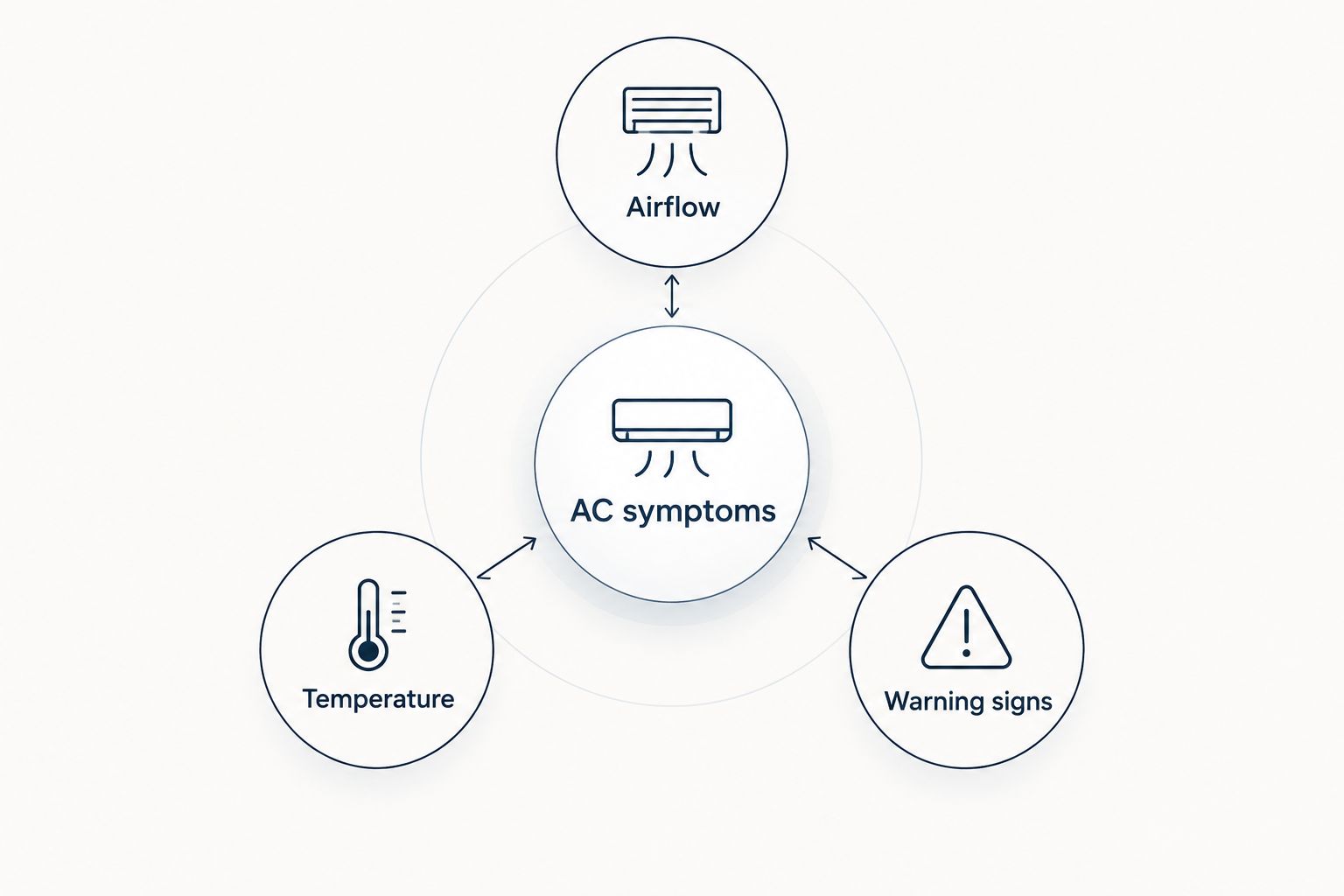
Organize your AC symptoms under Airflow, Temperature, and Warning signs. Strong air that stays warm points to a different diagnostic path from a fan that barely moves air. Neither observation proves which part has failed.
Record 3 observations before calling: how strongly the air blows, whether it becomes cool, and whether anything unusual happens when AC is selected. A brief note is more useful than describing the entire system as broken.
Do not continue testing if you notice smoke, a burning smell, or an engine temperature warning. Those signs require attention beyond cabin comfort.
- Airflow: note weak output, missing fan settings, or air from unexpected vents.
- Temperature: describe warm, cool, or changing vent air.
- Warning signs: report unusual noises, odors, or dashboard warnings.
- Keep your hands away from belts, fans, and refrigerant fittings.
2. Compare the complaint at idle and during your normal drive
Notice whether the AC behaves differently in 2 situations: while safely stopped outdoors and during ordinary driving. Do not take a special test drive if the vehicle has an overheating warning, smoke, or another safety concern.
Cooling that improves once the vehicle moves is useful information, but it is not proof that the refrigerant charge is low. Condenser airflow and other operating conditions belong in the diagnosis. Let the technician decide which tests fit the symptom.
Record observations only when parked, or have a passenger take notes. Include whether the problem starts immediately, appears after driving, or returns after the vehicle has sat through your shift. That pattern helps the shop reproduce an intermittent complaint.
- Compare cooling while stopped with cooling during your normal commute.
- Note whether the problem follows a long parking period.
- Describe whether all selected vents behave alike.
- Report interruptions in cooling rather than guessing at a failed part.
3. Request diagnosis before authorizing a recharge
Your first useful step is to provide the symptom notes, vehicle details, and previous AC repair history. You do not need a gauge kit or a diagnosis of your own before contacting a repair shop.
Elite Auto Repair & Service Inc provides car AC repair and diagnostics in Kissimmee. Professional assessment is the next step when basic control checks do not explain the problem. Discuss the diagnostic work before approving refrigerant service or replacement parts.
For a 2026 repair visit, give the shop the vehicle’s model year and any records of refrigerant or sealant previously added. Different systems require the correct refrigerant and service procedure. A can selected by appearance is not a substitute for identifying the system.
Ask what finding supports the proposed repair. That keeps the conversation focused on the fault rather than a list of possible components.
- Provide the vehicle’s make, model, model year, and symptoms.
- Disclose previous recharges, repairs, and stop-leak products.
- Ask whether the complaint involves airflow, cooling, or both.
- Request an explanation of the test findings before approving repairs.
4. Build the visit around your actual shift commitments
Before requesting service, write down when you can drop off the vehicle and when you next need it. Distinguish a preferred collection time from a firm work deadline. The shop needs that distinction before you rely on any proposed arrangement.
Ask whether the appointment covers diagnosis only or also allows time for an approved repair. Inspection can reveal work that requires a separate decision. Do not treat an appointment as confirmation that every possible repair will be completed during that visit.
Choose a contact method you can actually use during work. If you cannot answer calls on shift, explain when you can respond and ask how the shop handles authorization. Arrange alternate transportation before handing over your only commuting vehicle.
- Confirm drop-off and collection arrangements directly.
- State your next required departure time clearly.
- Ask how findings and repair authorization will be communicated.
- Plan transportation without assuming completion before your shift.
- Remove work credentials and personal items you need that day.
5. Review the proposed repair by cause, not part name
Read the diagnosis before deciding what to authorize. A named part alone does not explain why it needs replacement. Ask how the finding connects to the symptom you reported and what the repair is intended to restore.
For example, a restricted cabin filter can reduce airflow, but replacing it does not repair a refrigerant leak. A refrigerant service addresses a different part of the system from a blower repair. Keep those distinctions clear when reviewing the recommendation.
For your 2026 service record, retain the written findings and approved work. If the shop identifies additional problems, ask which relate to the AC complaint and which are separate maintenance or repair needs. Make each decision with the scope clearly stated.
- Ask for the confirmed fault in plain language.
- Match each proposed repair to the reported symptom.
- Ask how any identified refrigerant leak will be addressed.
- Separate AC work from unrelated maintenance recommendations.
- Keep the written diagnosis and authorization details.
6. Use safe checks instead of repeated DIY top-ups
Use the owner’s manual to verify control settings and locate any owner-serviceable cabin filter instructions. Those checks stay outside the pressurized refrigerant circuit. Stop if access requires unfamiliar disassembly or work near moving components.
A recharge is not a general cure for warm air. Adding refrigerant without establishing the system’s condition risks an incorrect charge and leaves other faults unresolved. The EPA prohibits intentional venting of automotive refrigerants during service; refrigerant handling is not an ordinary household maintenance task.
If you are comparing DIY equipment, read the AC recharge kit guide before treating a kit as the next step. Equipment selection does not replace diagnosis, correct refrigerant identification, or the proper service procedure.
- Check AC, recirculation, fan, and vent settings first.
- Follow the owner’s manual for cabin filter access.
- Do not open refrigerant lines or release refrigerant.
- Avoid adding sealant as a substitute for locating a leak.
- Tell the technician about anything already added to the system.
7. Confirm the repair against the original complaint
At collection, ask what failed, what work was completed, and how the result was checked. Compare the explanation with your original notes. If the complaint involved cooling in traffic, a statement that the vents felt cold once does not explain whether that operating condition was assessed.
Seek 2 confirmations: that airflow behaves correctly and that cooling was checked under conditions relevant to the complaint. Do not insist on a universal vent temperature; the vehicle, ambient conditions, and test procedure matter.
Keep the invoice with your 2026 maintenance records. If the symptom returns, report when and how it returned rather than adding refrigerant first. Follow the shop’s instructions for returning the vehicle, and ask questions before assuming any coverage terms.
- Review the completed work before leaving.
- Ask how the original symptom was checked.
- Confirm that the selected fan and vent controls function.
- Keep the diagnosis, invoice, and any written instructions.
- Report recurring symptoms promptly and accurately.
Compare your AC service options
Choose the option that answers the problem you have. An owner check helps describe symptoms; it does not establish refrigerant charge or justify component replacement. Professional diagnosis adds testing, but requires arranging a visit and reviewing the findings.
| Option | Best for | Main benefit | Key limitation |
|---|---|---|---|
| Owner checks using the vehicle manual | Confirming controls and describing airflow | Gives you useful observations without opening the refrigerant system | Cannot confirm charge level or diagnose every cooling fault |
| Elite Auto Repair & Service Inc | Kissimmee workers seeking local car AC repair and diagnostics | Offers AC repair alongside other vehicle repair services | Repair scope and collection arrangements need confirmation after assessment |
| Vehicle-brand service department | Questions about a manufacturer campaign or vehicle-specific coverage | Provides a route to checking manufacturer-related service matters | Coverage eligibility requires confirmation; do not assume the repair qualifies |
| DIY recharge kit | Understanding what a recharge kit does before deciding on service | Introduces refrigerant through compatible service equipment | Does not repair leaks or diagnose airflow, electrical, or mechanical faults |
A vehicle-brand service department is a useful contact when you need to establish campaign or coverage status. For an unexplained cooling complaint, the priority remains the same wherever you go: identify the fault before choosing the repair.
Discuss your car AC repair
Describe your cooling symptoms and ask about service arrangements around your shift.
Common mistakes theme park workers make
Assuming pickup will fit between shifts
A drop-off time does not establish a completion time. Confirm how diagnosis, authorization, and collection will work before leaving the vehicle, especially if you cannot answer calls while working.
Better move: tell the shop your next firm departure deadline and arrange another way to work when needed.
Calling every warm-air problem a recharge problem
Warm vent air describes a symptom, not a confirmed refrigerant shortage. Repeated top-ups can leave the cause unresolved and make the service history harder to track.
Better move: report when cooling fails and disclose previous refrigerant additions before authorizing more.
Treating weak airflow as proof of a failed compressor
A compressor diagnosis does not follow from weak vent airflow alone. The fan, air passages, filter, and control operation need consideration alongside the cooling system.
Better move: separate air volume from air temperature in your notes and ask what testing supports replacement.
Waiting until the next commute to check the result
Collecting the keys without discussing the original complaint leaves important questions unanswered. You need to know what changed and what to do if the symptom returns.
Better move: review the repair explanation at collection and retain the paperwork somewhere accessible outside the car.
FAQ
What’s the best first step for car AC repair for theme park workers?
Record whether the problem is weak airflow, warm air, or cooling that changes during the commute. Give those observations and your shift constraints to the repair shop before arranging service.
Can I keep driving if my car AC blows warm air?
Warm vent air alone does not establish whether the vehicle is safe to drive. If it occurs with an engine temperature warning, smoke, a burning smell, or another serious symptom, stop safely and seek assistance.
Is a recharge better than a full AC diagnosis?
Diagnosis is the better starting point for an unexplained cooling problem. A recharge does not identify every fault or repair a leak, blower problem, or electrical failure.
Why does my AC cool better while driving than while stopped?
Cooling that improves while driving points to an operating-condition difference, not a confirmed failed part. Tell the technician about the pattern so condenser airflow and other relevant conditions can be assessed.
Can I arrange AC repair around a theme park shift?
Discuss your drop-off window, authorization access, and required collection time before booking. An appointment does not guarantee that diagnosis and any resulting repair will fit within the same gap between shifts.
Does Elite Auto Repair & Service Inc handle car AC repair in Kissimmee?
Yes. Elite Auto Repair & Service Inc offers car AC repair and diagnostics in Kissimmee, FL. Contact the shop directly to discuss the symptoms and service arrangements.
Will replacing my cabin air filter fix warm AC?
A cabin filter replacement addresses a restricted filter, not every cause of warm AC. If airflow is strong but the air stays warm, replacing the filter alone does not establish or correct the cooling fault.
One last thing
A clear symptom note is more useful than arriving with a guessed replacement part. Save your observations somewhere you can access during work, not only on paper inside the vehicle. For your 2026 service visit, include what happens after parking through a shift and what changes during the drive home; those details help keep the repair discussion tied to your actual commute.