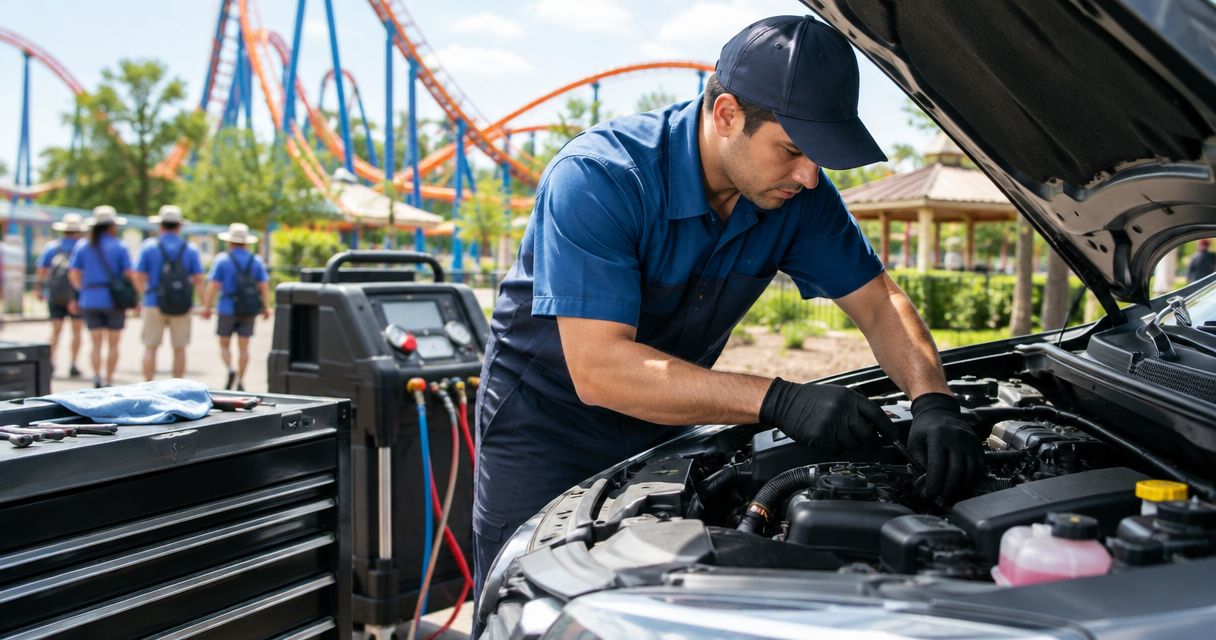

Fleet owners’ check engine light repair is the process of diagnosing and correcting engine-management faults to return vehicles to safe, dependable service. This 2026 guide explains how to manage driver reports, repair approvals, and vehicle handoffs when a warning light also affects routes, employees, and customer commitments.
- Check engine light repair for fleet owners starts with symptom reporting and diagnosis, not automatic parts replacement.
- Elite Auto Repair & Service Inc is best for Kissimmee fleet owners needing local diagnostics.
- A flashing light or severe running problem calls for a safe stop and assessment before further driving.
- Keep diagnostic records, repair approvals, and return-to-service checks together for each vehicle.
Why check engine light repair matters for fleet owners
A fleet warning light creates two decisions: what the vehicle needs and whether you can assign it to work. Treat those as separate questions. A trouble code helps direct testing; it does not establish that a vehicle is safe for its next route.
Your dispatch team also needs information that a private owner can keep in their head: who reported the fault, which vehicle is affected, and what changed while driving. A shared process keeps a vehicle from returning to rotation simply because a different driver takes the keys.
For your 2026 maintenance plan, separate code-reading equipment from actual fault diagnosis. The guide to OBD2 scanners for check engine lights covers the equipment side; the workflow below covers how to act on the findings.
How to manage fleet check engine light repairs
Set clear stop-driving rules
Start with a written driver instruction, not a scanner purchase. A flashing check engine light commonly signals a misfire that can damage the catalytic converter. Drivers should stop safely, shut off the engine, and arrange an assessment rather than finish the route.
A steady light does not automatically mean the vehicle can continue working. Severe shaking, overheating, smoke, fuel odor, or substantial power loss also require a safe stop. Follow the vehicle’s owner’s manual, and never have a driver recreate a dangerous symptom for a better report.
Give dispatch the same instructions as drivers. Otherwise, a delivery deadline can override the maintenance decision before anyone understands the fault.
- Distinguish a flashing light from a steady light in the reporting form.
- Require a safe stop for severe symptoms or accompanying critical warnings.
- Establish who arranges towing and replacement transportation.
- Keep the affected vehicle out of dispatch until someone authorizes its status.
Record symptoms before clearing anything
Use a shared form or maintenance spreadsheet to preserve what happened. Capture 3 symptom details: what the vehicle did, the driving conditions, and whether the behavior changed after stopping. Include the vehicle identifier, odometer reading, driver, and report date alongside those details.
If your team already has a compatible scanner and knows how to use it, save the trouble codes and available freeze-frame data. Freeze-frame data records operating conditions associated with a fault. Do not erase codes or disconnect the battery just to switch off the light; that can remove useful evidence and reset emissions-monitor readiness.
A scanner connects to the vehicle’s diagnostic port. Reading that connection is an information-gathering step, not proof that a particular component needs replacement.
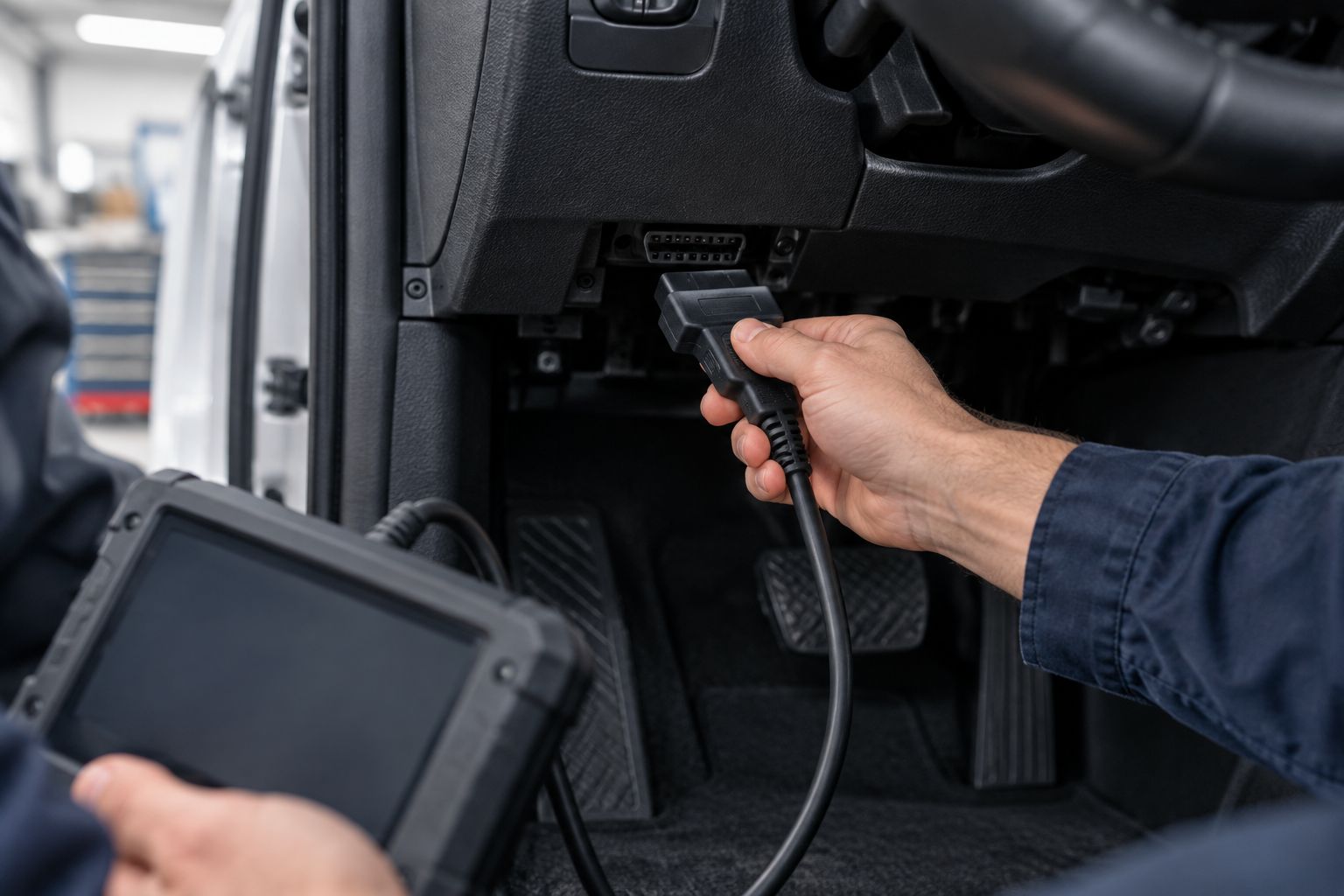
Keep the original report even if the light disappears before the appointment. Intermittent faults still need a useful history.
- Photograph the warning display only after parking safely.
- Record shaking, hesitation, stalling, unusual smells, or power loss.
- Note whether the problem occurred at idle, during acceleration, or after refueling.
- Save available codes and scan records without clearing them.
Request diagnosis before choosing parts
Begin with the information you already collected. Ask the repair shop to identify the cause of the warning and explain what testing supports the recommendation. A code that names a sensor circuit does not, by itself, prove the sensor failed; wiring, connections, or operating conditions can also matter.
For a local service option, Elite Auto Repair & Service Inc provides diagnostics and engine/transmission repair in Kissimmee, FL. Professional diagnosis is the next step when your driver report and code scan cannot establish the cause. Confirm arrangements for your vehicles directly rather than assuming dedicated fleet scheduling or account terms.
Approve a diagnosis, not a shopping list based only on code descriptions. The repair explanation should connect the reported symptom, test finding, and proposed work.
- Send the driver report before the diagnostic appointment.
- Ask what tests distinguish the suspected causes.
- Request an explanation of the confirmed fault in plain language.
- Clarify whether additional testing needs separate approval.
Separate diagnostic approval from repair approval
Use 2 approval stages: authorize investigation, then authorize the repair supported by the findings. This gives the shop permission to find the problem without leaving drivers or dispatchers to approve work outside their authority.
The written repair recommendation should identify the cause, proposed correction, and any related work. Ask which items address the warning light and which are separate maintenance needs. Both can deserve attention, but they should not be presented as the same decision.
Give the shop a named decision-maker and a backup contact. A clear approval chain prevents a diagnosed vehicle from sitting while messages move between the driver, office, and owner.
- Name the person authorized to approve diagnosis.
- Require approval before additional repair work begins.
- Separate warning-light repairs from unrelated maintenance recommendations.
- Record the approved work in the vehicle’s maintenance file.
Plan downtime around the diagnostic status
Start with your existing dispatch board or shared calendar. Label vehicles by their actual status: awaiting assessment, undergoing diagnosis, awaiting approval, or ready for release. A scheduled appointment is not a confirmed completion time.
Tell the shop how the vehicle is used, including repeated short trips, extended idling, or loaded operation when relevant. Those details help describe the conditions under which a fault occurs. They do not justify continuing to drive an unsafe vehicle.
For your 2026 operating schedule, keep repair timing and route coverage in the same conversation. Ask when the shop expects to provide its next update, then arrange coverage without promising a return date that has not been confirmed.
- Mark unavailable vehicles clearly on the dispatch schedule.
- Share the vehicle’s normal duty and reported fault conditions.
- Identify the next diagnostic or approval update.
- Reassign work without pressuring drivers to ignore warning signs.
Verify the repair before releasing the vehicle
Complete 4 release checks before putting the vehicle back into rotation. Confirm the documented repair, the status of the original symptom, the warning-light status, and any follow-up instructions. A light that was cleared during service is not, on its own, evidence that the underlying problem is resolved.
Ask how the shop checked the repair and whether further operation is needed to evaluate an intermittent fault or complete applicable monitors. Do not demand a universal driving distance. Verification requirements depend on the vehicle and the fault.
Give the receiving driver the relevant instructions, not just the keys. If a symptom returns, the driver should know whom to notify and when to stop.
- Review the repair description against the original complaint.
- Ask how the original symptom was checked after repair.
- Confirm the warning-light status and any unresolved findings.
- Record follow-up instructions before changing the dispatch status.
Track repeat faults by vehicle
Use a spreadsheet before investing in another system. Keep the warning report, diagnostic findings, approved repair, and release notes under the same vehicle identifier. This makes it easier to distinguish a recurring concern from a new fault.
For your 2026 review, compare the actual complaints rather than grouping every engine light into one category. The same code can have different causes, and a similar symptom can appear with different codes. Records should support a fresh diagnosis, not force the shop toward the previous repair.
Review repeated issues alongside scheduled maintenance. Routine service and fault diagnosis serve different purposes; an oil change does not replace investigation of an illuminated check engine light.
- Use a consistent vehicle identifier across drivers and service records.
- Retain diagnostic findings rather than only the final invoice.
- Flag repeat symptoms when requesting the next appointment.
- Record operational disruption without guessing at its cause.
Compare your diagnostic options
Choose an option by the task it performs, not by whether it switches off the light. Driver reporting, code scanning, and professional diagnosis belong at different points in the process.
| Option | Best for | Main advantage | Key limitation |
|---|---|---|---|
| Driver report and maintenance log | Initial triage and preserving symptoms | Captures what happened during actual work | Cannot establish the mechanical or electrical cause |
| In-house code scan | Fleets with compatible equipment and trained staff | Preserves codes and available operating data | A code alone does not identify the failed part |
| Elite Auto Repair & Service Inc diagnostics | Fleet owners seeking local diagnosis in Kissimmee | Provides diagnostics and engine/transmission repair services | Dedicated fleet arrangements and vehicle-specific needs require confirmation |
An in-house scan is useful when your staff can preserve evidence without treating the code description as a repair order. Professional diagnosis is the stronger next move when the cause remains unconfirmed, symptoms affect drivability, or a previous repair did not resolve the complaint.
Use these options together. A detailed driver report makes the diagnostic appointment more useful, while the shop’s findings make the maintenance record more valuable.
Common mistakes fleet owners make
Treating a steady light as permission to finish the route
The light’s behavior is only part of the assessment. A vehicle with a steady warning and severe shaking or power loss still needs a safe stop. Build dispatch decisions around symptoms and manufacturer instructions, not the assumption that only flashing lights matter.
Replacing the part named in a code description
A trouble code identifies a detected condition or affected system; it is not a parts order. Ask what testing confirms the cause before authorizing replacement. Otherwise, the vehicle can lose working time without resolving the original complaint.
Letting each driver manage the same fault separately
A shared vehicle needs a shared history. If each driver submits an isolated report, the repair shop loses the pattern of when the fault appears. Keep reports under the vehicle identifier and pass unresolved instructions between shifts.
Returning a vehicle after the light is merely cleared
Clearing codes changes the dashboard display and can reset readiness information. It does not repair a fault. Require the repair explanation and verification details before releasing the vehicle, even when dispatch urgently needs it back.
Treating unrelated maintenance as the diagnostic answer
A vehicle can need routine maintenance and a separate warning-light repair. Ask the shop to distinguish them. This keeps approval decisions clear and gives you a record of which work addressed the reported problem.
FAQ
What should a fleet driver do when the check engine light starts flashing?
The driver should stop safely, shut off the engine, and arrange an assessment before further driving. A flashing check engine light commonly indicates a misfire that can damage the catalytic converter. Follow the vehicle’s owner’s manual and arrange towing when needed.
Can a fleet vehicle keep working with a steady check engine light?
A steady check engine light alone does not establish that a fleet vehicle can safely keep working. Check for shaking, overheating, smoke, fuel odor, power loss, and other warnings. Follow the owner’s manual and obtain guidance before assigning further work.
Is reading a trouble code the same as diagnosing the problem?
Reading a trouble code is not the same as diagnosing the problem. The code directs investigation toward a detected condition or system. Testing is needed to establish the cause before choosing a repair.
Should I clear the codes before taking a fleet vehicle to the shop?
Do not clear codes before diagnosis simply to turn off the warning light. Clearing them can remove useful diagnostic information and reset emissions-monitor readiness. Save the driver’s report and any scan records for the repair shop.
What information should I send with a fleet vehicle for diagnostics?
Send the vehicle identifier, odometer reading, warning-light behavior, symptoms, operating conditions, and available scan records. Include recent related repairs and the person authorized to approve work. This gives the shop a consistent account even when the reporting driver cannot attend.
Does Elite Auto Repair & Service Inc offer check engine diagnostics in Kissimmee?
Elite Auto Repair & Service Inc offers automotive diagnostics in Kissimmee, FL. The shop also provides engine/transmission repair and other auto repair and maintenance services. Confirm your vehicle’s needs and any fleet-specific arrangements directly.
How do I know a fleet vehicle is ready to return to work?
Confirm the documented repair, original symptom status, warning-light status, and follow-up instructions before returning the vehicle to work. Ask how the repair was verified. A cleared warning light alone does not establish that the fault is resolved.
One last thing
Save the driver’s first report before the vehicle changes hands. A short description of what happened under load, at idle, or after refueling can preserve context that the next driver cannot recreate.
Make that handoff part of your 2026 routine. When contacting Elite Auto Repair & Service Inc for diagnostics, send the symptom history with the vehicle so the repair discussion starts with the original problem—not just the light currently on the dashboard.