
Instead of repeatedly checking a CARFAX report and guessing what to ask a mechanic, turn each history entry into a written inspection question before you buy. This 2026 workflow connects vehicle identity, service records, a hands-on inspection, and a final purchase decision without treating a clean report as proof of a healthy car.
- Use the CARFAX report pre purchase inspection workflow to connect recorded history with the vehicle’s current condition.
- CARFAX supports history checks; an independent inspection evaluates the vehicle itself. Neither replaces the other.
- Eliteautorepairit provides diagnostics for Kissimmee buyers who need mechanical symptoms investigated; confirm inspection scope before booking.
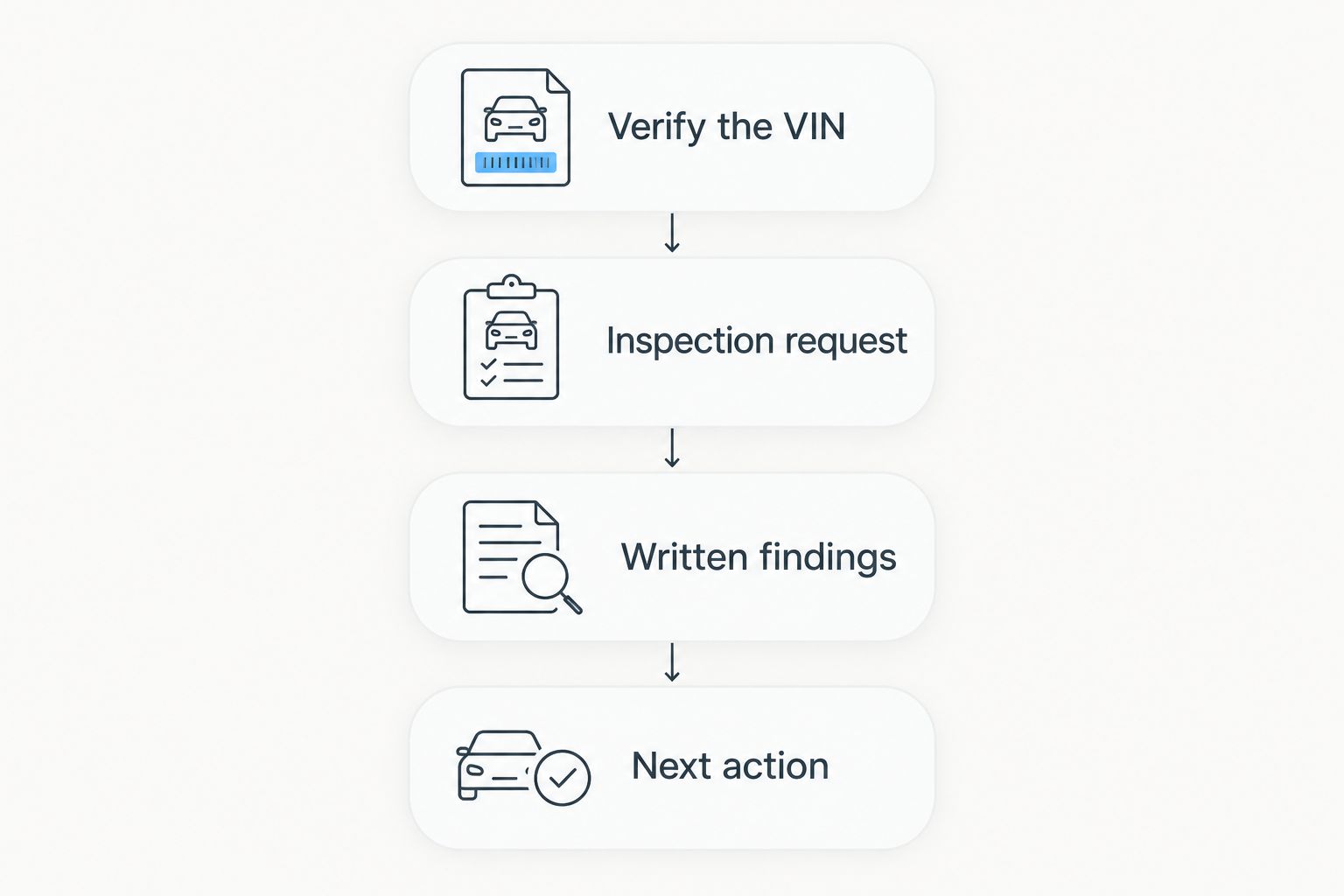
- Match the VIN, share the report, document findings, and resolve unanswered questions before committing.
Why this matters
A vehicle history report describes recorded events, not the car’s complete condition today. An accident that was never reported will not become visible just because you download a report. Likewise, a recorded oil change does not establish that the engine currently runs correctly.
For Kissimmee buyers, Eliteautorepairit offers auto diagnostics, brake service, AC repair, and engine and transmission repair. Ask about pre-purchase inspection availability and the exact checks included before arranging a seller’s visit.
Eliteautorepairit is best for Kissimmee buyers seeking auto diagnostics for an identified mechanical concern. A full purchase evaluation also needs an agreed inspection scope, seller permission, and access to the vehicle.
Use this 2026 process to keep history questions separate from mechanical findings. The goal is not to collect more paperwork. It is to identify what remains unknown before ownership changes.
Before you start
- Gather the vehicle records. Obtain the complete CARFAX report, the seller’s listing, available service receipts, the vehicle identification number, and the current odometer reading. Have access to the report itself rather than only a cropped summary.
- Arrange independent access. Get the seller’s permission for an inspection and, where appropriate, a road test. Confirm the shop’s inspection scope, scheduling requirements, and whether it can investigate the specific concerns you identify.
- Protect the cold start. Ask the seller not to warm the engine before the agreed inspection. A warm engine prevents the technician from observing the vehicle’s initial cold-start behavior; tell the shop if the car arrives already warm.
Do not finalize a purchase on the assumption that an inspection can happen afterward. Agree on the sequence before paying a nonrefundable deposit or signing a binding purchase agreement.
Vehicle identity and history worksheet
Match the vehicle first
- Verify the VIN. For modern vehicles using the standardized format, the VIN has 17 characters. Compare the report’s VIN with the dashboard VIN and the vehicle’s certification label; have any mismatch resolved before continuing.
- Record the mileage. Write down the current odometer reading and compare it with the report’s dated mileage entries. Separate a genuine discrepancy from an entry that needs clarification.
- Save the complete report. Keep a copy showing when you obtained it. For a 2026 purchase, distinguish the report’s retrieval date from the dates of the events it contains.
- Request supporting paperwork. Ask for invoices associated with major repairs, maintenance, or damage. A seller’s explanation is useful context, but it is not a substitute for the underlying record.
Expected result: You have a history report tied to the actual vehicle, plus a short list of identity or mileage questions. An unresolved VIN mismatch stops the workflow; it is not something to leave for a routine mechanical inspection.
Build the handoff worksheet
- Create a document with the fields History entry, Seller explanation, Inspection request, and Finding. These are your worksheet labels, not CARFAX interface controls.
- Copy each relevant history entry accurately. Preserve its date and wording rather than changing a damage entry into a stronger claim about accident severity.
- Add a practical inspection request beside each entry. For reported collision damage, request examination of the affected area and ask whether body or structural expertise is needed.
- Mark missing records as questions. A gap in reported maintenance does not prove that maintenance never happened, but it does leave work unverified.
Expected result: The mechanic receives specific questions instead of a general request to check whether the car is good.
Inspection scope and shop handoff
Assign the right check to each question
Different checks answer different questions. Use the CARFAX report and an independent inspection together; do not choose one as a replacement for the other. A recall lookup adds a separate safety check, not a mechanical pass certificate.
| Check | Best for | Useful evidence | Limitation |
|---|---|---|---|
| CARFAX report | Reviewing recorded vehicle history | Reported service, damage, mileage, and title-related entries | Unreported events and present mechanical condition remain outside its complete reach |
| Independent inspection | Evaluating current condition | Observations, measurements, scan findings, and road-test results within the agreed scope | Access limits and intermittent faults can leave questions unanswered |
| NHTSA VIN recall lookup | Checking unrepaired safety recalls in the lookup’s coverage | VIN-specific recall information | It does not evaluate ordinary wear or replace a history review |
Each check has a useful role and a clear limit. A report cannot measure brake wear, and a mechanical inspection cannot establish that every historical event was reported.
Agree on the inspection scope
- Send the worksheet ahead. Include the report, current mileage, seller disclosures, and your symptoms or concerns. Ask the shop to acknowledge which questions it can address.
- Confirm physical access. Ask whether the inspection includes an underside examination, brake and tire checks, fluid-leak inspection, and visible suspension components. Do not assume these checks are included simply because the appointment is called an inspection.
- Confirm diagnostic access. Ask which vehicle systems the shop can scan and whether the scope includes readiness status, stored faults, and relevant diagnostic follow-up. Reading a fault code alone is not a diagnosis.
- Confirm operating checks. Discuss a cold start, road test when safe and permitted, transmission operation, steering, braking, and AC performance. Ask the technician to identify anything that cannot be evaluated.
- Set specialist boundaries. Ask whether suspected structural damage, flood damage, or model-specific high-voltage concerns require another specialist.
Expected result: You know what the appointment covers, what it excludes, and which concerns require additional authorization or expertise.
Eliteautorepairit offers auto diagnostics and repairs across several mechanical systems. Confirm whether the shop can perform the purchase evaluation you need; the listed repair services do not establish a particular inspection package or written-report format.
Findings and purchase decision
Capture evidence, not just a verdict
- Ask for written findings. Request a clear distinction between an observed problem, a suspected cause, and an area that was not checked. Ask for supporting photographs or measurements where practical.
- Connect findings to history. Return to each worksheet entry. Record whether the inspection answered the question, found a related concern, or left the issue unresolved.
- Separate safety from maintenance. Ask the technician which findings affect safe operation and which are maintenance needs. Do not turn an unverified symptom into an assumed repair.
- Document the limits. Record whether the engine was already warm, a road test was declined, underside access was unavailable, or a fault could not be reproduced.
- Choose the next action. Proceed only when the evidence supports your decision. Otherwise, request further diagnosis, arrange specialist review, or decline the purchase.
Expected result: You have an evidence-based decision record rather than a reassuring verbal summary.
A useful 2026 inspection file contains 3 documents: the vehicle history report, your question worksheet, and the written inspection findings. Keep seller receipts with that file so explanations remain attached to their supporting evidence.
A qualified answer can still be incomplete. For example, a technician can observe uneven wear across 4 tires without establishing the underlying cause during the agreed inspection. Ask what additional testing would resolve the concern instead of assuming that replacing the tires settles it.
When the report changes before you buy
An updated report creates a second workflow: review the new information without repeating work that remains relevant. This is especially useful when a purchase discussion continues after the initial inspection.
- Confirm the same vehicle. Match the VIN again and retain both report copies. Do not compare reports from similar listings by model name alone.
- Identify the changed entry. Distinguish a newly added record from a newly occurring event. A record added in 2026 can describe an older event.
- Send only the relevant change. Show the inspector the new entry alongside the original findings. Ask whether it changes the interpretation or requires another examination.
- Recheck current condition when necessary. New damage, additional driving, warning lights, or a reported repair after the inspection can justify another assessment.
- Update the decision file. Write down what was rechecked and what remains open. A refreshed report does not automatically refresh an earlier mechanical inspection.
Expected result: Your purchase decision reflects both the latest information and the vehicle’s condition at the relevant visit.
Troubleshooting
The seller provides only a clean-report screenshot
Request the complete report and verify the VIN against the vehicle. A screenshot can omit context, later entries, or the identifying details you need. Pause if the seller will not provide enough information to establish which vehicle the report describes.
The seller refuses an independent inspection
Ask whether transport, timing, or permission is the obstacle. Offer an agreed appointment arrangement without giving up independence. Decline the purchase if you cannot obtain the access needed to evaluate the car. Refusal does not prove a defect, but it leaves your questions unanswered.
The engine is warm when the appointment begins
Tell the technician immediately and record the limitation. Ask whether another cold-start appointment is needed for the symptoms under review. Do not describe the car as having passed a cold-start check when nobody observed one.
The scan shows incomplete readiness monitors
Ask the technician to interpret readiness status alongside faults, battery history, and recent work. Incomplete monitors can follow a reset or power interruption; they do not independently prove concealment. Request follow-up under the vehicle’s appropriate operating conditions rather than relying on a generic driving-distance rule.
The report and inspection disagree
Identify what each source actually establishes. No reported accident does not cancel visible repair evidence, and a damage entry does not by itself establish a current safety defect. Obtain the supporting documents or specialist assessment needed to resolve that specific discrepancy.
Customize your workflow
Add questions that match how you will use the vehicle. For commuting in Kissimmee, discuss AC operation, cooling-system concerns, braking, and any drivability symptoms. For towing, ask whether the inspector can evaluate the relevant equipment and whether additional checks are needed.
Eliteautorepairit provides AC repair, brakes, suspension work, tune-ups, and engine and transmission repair. Use those service categories to frame your questions, then confirm the scope before booking. Do not assume a standard visit includes every system or specialist test.
For a 2026 purchase, keep observations separate from seller promises. Ask for evidence that agreed work was completed and determine whether reinspection is necessary before accepting the vehicle.
Discuss your vehicle concerns
Ask about diagnostics and the inspection scope needed before buying a used vehicle in Kissimmee.
FAQ
Do I still need a pre-purchase inspection if the CARFAX report is clean?
Yes. A clean CARFAX report does not establish the vehicle’s current mechanical condition or rule out unreported damage. Arrange an independent inspection with a clearly agreed scope before committing.
Should I get the CARFAX report before or after the inspection?
Get the report before the inspection so you can turn relevant history entries into inspection questions. Share the complete report and any supporting receipts with the technician.
Does CARFAX show every accident and repair?
No. CARFAX depends on information reported to it, so missing entries do not prove that an event or repair never happened. Compare the report with receipts, seller disclosures, and physical findings.
Can a mechanic tell whether someone recently cleared the check engine light?
A scan can show readiness status and other diagnostic information, but it does not always establish who cleared information or why. Ask the technician to interpret the findings rather than treating incomplete readiness as proof of misconduct.
What should I bring to a used-car inspection?
Bring the complete history report, VIN, current mileage, seller disclosures, available service receipts, and a written question list. Confirm vehicle access and seller permission before the appointment.
Can I buy a car with an accident on its CARFAX report?
An accident entry alone is not enough to decide whether to buy. Evaluate the documented damage, repair evidence, current condition, and any need for structural assessment before deciding.
Can Eliteautorepairit help with mechanical concerns before I buy?
Eliteautorepairit offers auto diagnostics, brakes, AC repair, and engine and transmission repair in Kissimmee. Ask about pre-purchase inspection availability, access requirements, and the exact checks included before booking.
One last thing
Ask what the technician could not inspect. A clear list of exclusions can be more useful than a broad statement that the car looks good. Carry every unresolved item into your purchase decision instead of letting it disappear between the appointment and the paperwork.