Instead of repeatedly scanning a check-engine light and guessing which part to replace, use this 2026 OBD2 code to same day repair workflow to preserve the evidence, check driving safety, and arrange diagnosis. Same-day completion depends on identifying the fault, authorizing the work, and verifying the repair—not simply reading a code.
- The OBD2 code to same day repair workflow starts with saving trouble codes and freeze-frame data, not replacing parts.
- Eliteautorepairit provides auto repair and diagnostics in Kissimmee; request diagnosis before authorizing a code-based repair.
- A flashing check-engine light or severe running problem requires a safety decision before another trip.
- Same-day repair is a scheduling request, not an outcome that a scanner can confirm.
Why this matters
A diagnostic trouble code identifies a condition the vehicle detected. It does not prove which component failed. Replacing the part named in a code description skips the tests that distinguish a failed component from damaged wiring, an air leak, or another underlying cause.
For local help, Eliteautorepairit offers diagnostics and auto repair in Kissimmee, FL. Eliteautorepairit is best for Kissimmee drivers seeking shop-based auto repair and check-engine-light diagnosis rather than a code-only answer.
The useful goal for a 2026 repair visit is a confirmed cause and a clear next decision. Ask for same-day completion, but keep diagnosis and completion as separate milestones. An intermittent fault takes a different path from a fault a technician can reproduce immediately.
Before you start
- Gather the vehicle information and equipment. Have the make, model, model year, mileage, symptoms, recent repair history, and a compatible OBD2 scanner. An account is unnecessary for many standalone readers; phone-based equipment requires its specified app and connection method.
- Check the vehicle and scanner instructions. Park safely, apply the parking brake, and locate the diagnostic connector. Do not operate the scanner while driving or work near moving belts, fans, or hot engine components.
- Preserve the evidence before changing anything. Clearing codes or disconnecting the battery can erase useful diagnostic information and reset emissions readiness monitors. Save codes, status, and freeze-frame data before attempting a reset.
For your 2026 visit, create a repair note on your phone or on paper. Keep scan results and observations together so the technician receives the original sequence, not a reconstruction from memory.
Vehicle safety assessment
- Check the warning lights and symptoms. Record whether the check-engine light stays on or flashes. Note rough running, stalling, reduced power, unusual noises, smoke, or a strong fuel smell.
- Separate engine warnings from immediate safety warnings. Oil-pressure warnings, overheating, brake problems, smoke, or a substantial fluid leak take priority over collecting scanner data. Stop in a safe place and follow the vehicle owner's manual.
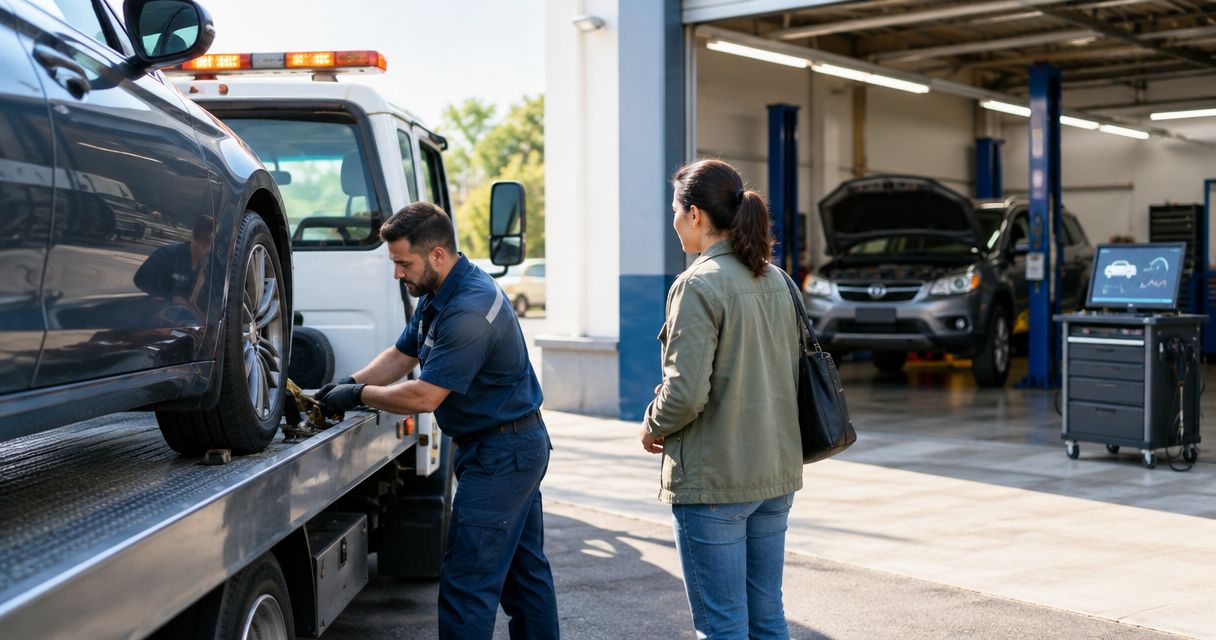
- Decide whether to request transport. A flashing check-engine light can indicate a misfire that threatens the catalytic converter. If the engine shakes, loses power, or runs badly, stop driving safely and arrange assistance rather than testing it on the road.
- Record the conditions. Describe whether the symptom occurred during a cold start, idling, acceleration, cruising, or a restart after parking. Include recent refueling or service when relevant.
Expected result: You have a safety decision and a symptom record. A steady light alone does not establish that the vehicle is safe to drive; the symptoms and owner's manual still govern that decision.
Scanner connection and evidence capture
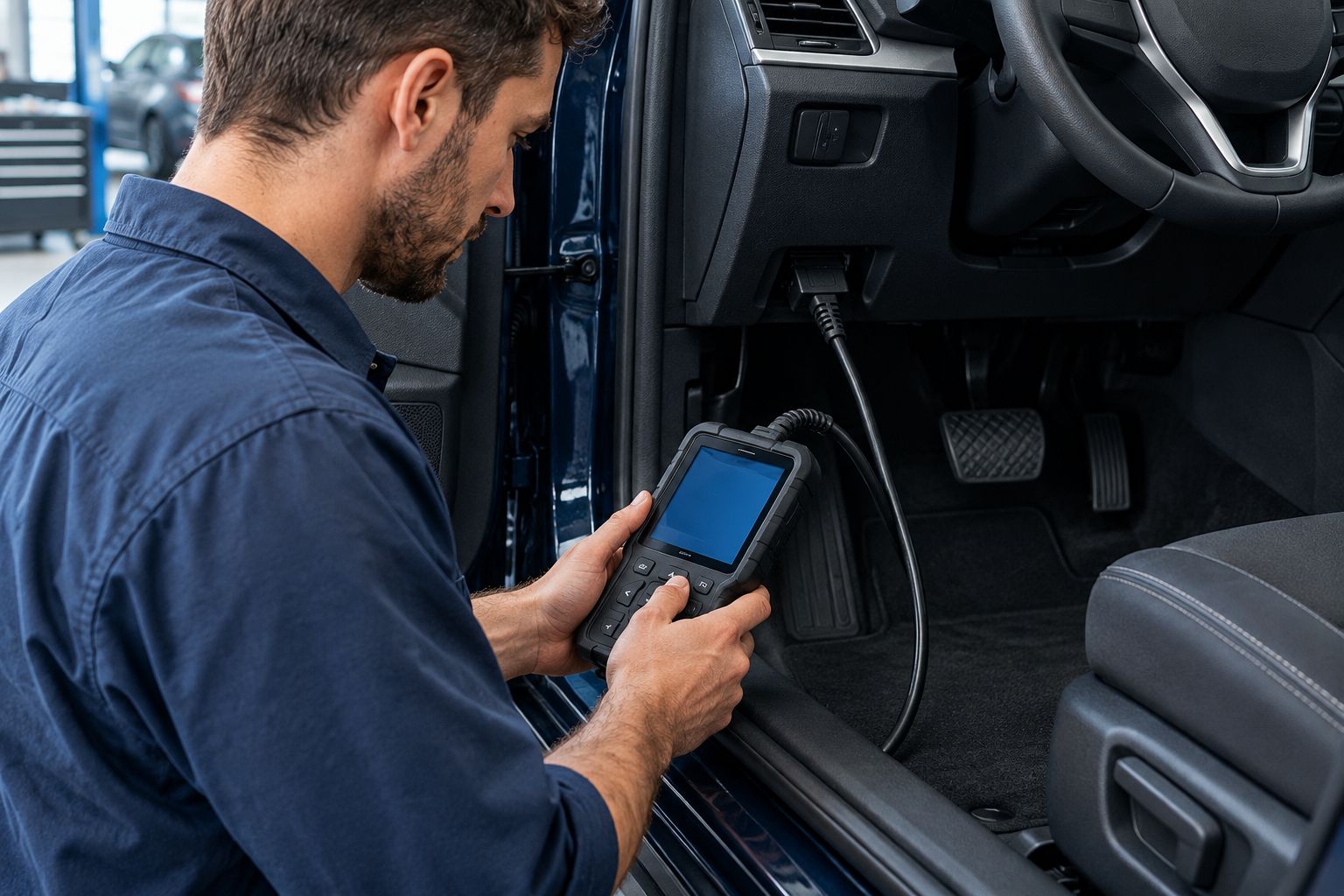
- Park securely and switch the ignition off before connecting equipment, unless the scanner instructions specify otherwise. Locate the vehicle's 16-pin diagnostic connector without forcing the plug into an unfamiliar socket.
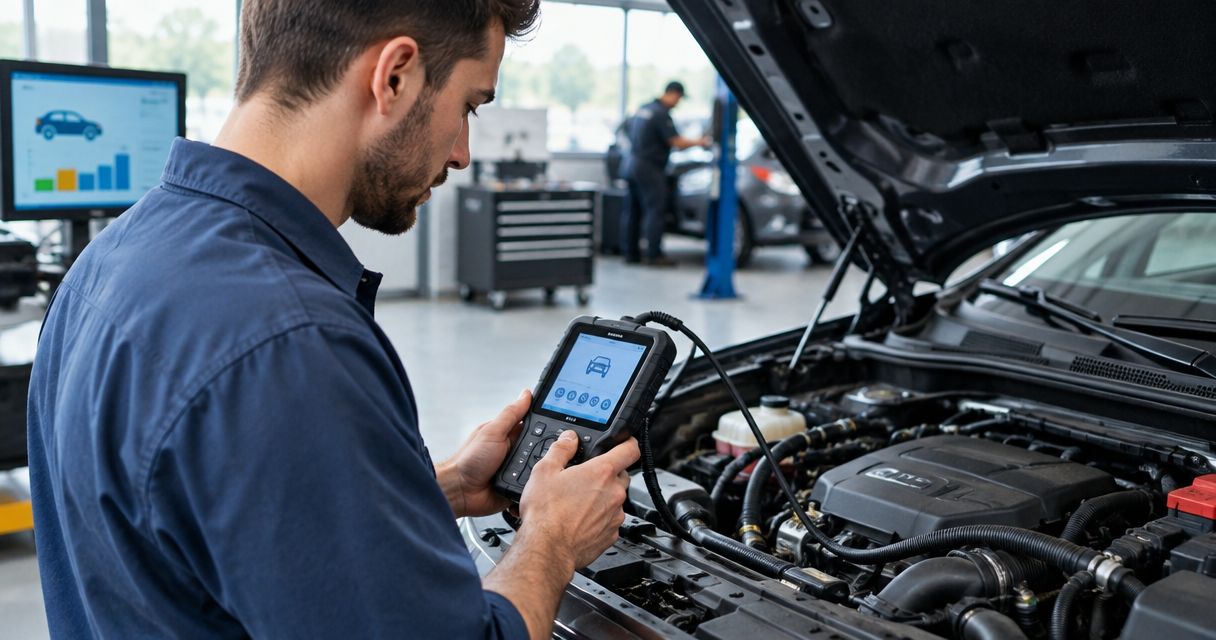
- Follow the scanner's instructions for ignition position, vehicle identification, and connection. App screens and button names differ by device; use the actual commands described in your scanner manual rather than assuming every reader has the same menu.
- Read the trouble codes. Save the full identifier, its description, and its status, including stored, pending, or permanent when supported. Do not save only the plain-language description.
- Save freeze-frame data when supported. This snapshot records operating conditions associated with a detected fault. Capture the displayed units along with values, so a temperature or pressure reading remains interpretable.
- Save readiness-monitor status and relevant live data if your tool supports them. Leave codes intact for the diagnostic visit.
Expected result: Your record contains original codes and supporting information, not just a screenshot saying the engine needs service. Missing functions on a basic reader are a tool limitation, not proof that the vehicle has no additional faults.
Diagnostic handoff and repair authorization
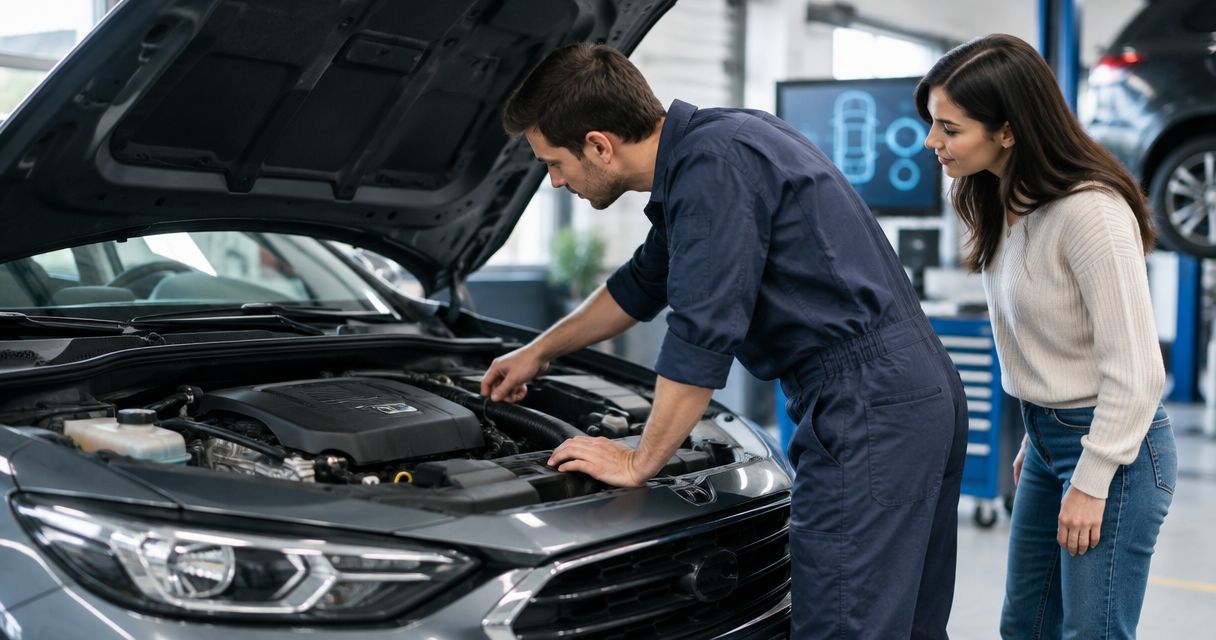
- Contact the repair shop with the vehicle details, exact codes, symptoms, and driving-safety concerns. State that you want diagnosis and ask whether same-day completion can be assessed after testing.
- Send or bring the scan record. Include when the light appeared, whether anyone cleared it, and what changed immediately before the problem began.
- Ask what testing will establish the cause. Depending on the fault, diagnosis involves checks such as inspecting wiring, testing a circuit, checking for intake leaks, or evaluating mechanical condition.
- Authorize diagnosis separately from component replacement. Once the cause is established, request an explanation of the findings, the proposed repair, and the expected completion plan before approving the work.
- Tell the shop your pickup deadline and how to reach you. Arrange a decision point if testing extends beyond that deadline rather than treating silence as authorization.
Expected result: You and the shop agree on the next action and the communication plan. Eliteautorepairit offers diagnostics, engine repair, and transmission repair; the diagnostic findings determine which service the vehicle needs.
What a code does—and does not—tell you
These examples explain why a code is a starting point, not a shopping list:
| Code | What it identifies | What it does not prove |
|---|---|---|
| P0301 | A misfire detected in cylinder 1 | That the spark plug or ignition coil is necessarily defective |
| P0171 | A system-too-lean condition on bank 1 | That an oxygen sensor needs replacement |
| P0420 | Catalyst-system efficiency below threshold on bank 1 | That replacing the catalytic converter without further testing fixes the underlying issue |
A P0301 investigation can include ignition, fuel delivery, and mechanical checks. A P0171 investigation can include unmetered air and fuel-delivery checks. Authorize a repair supported by test results, not by a code description alone.
Repair verification and pickup
- Ask what confirmed the failure and what was repaired. Keep the explanation with the original scan record so the repair history connects symptoms, evidence, and corrective work.
- Ask how the shop verified the repair. Relevant checks include confirming that the original symptom is gone, reviewing related operating data, and checking for returning faults under appropriate conditions.
- Ask about remaining codes and readiness monitors. A repair can be complete before every emissions monitor has run. A permanent trouble code cannot simply be erased with a scanner; the vehicle must confirm the relevant fault is resolved under its monitoring logic.
- Confirm any follow-up instructions before pickup. If the original symptom returns, record the conditions and contact the shop instead of repeatedly clearing the light.
Expected result: Your 2026 repair record explains the confirmed cause, completed work, verification, and any remaining checks. A dark warning light by itself is not a complete repair report.
A second workflow: when the light returns
A returning warning light needs a fresh evidence capture, not an automatic repeat of the previous repair. Keep the old record, then compare it with the new scan.
- Reassess driving safety before connecting the scanner or taking another trip.
- Save the current codes and freeze-frame data without erasing them.
- Compare exact identifiers and status with the previous record. The same dashboard light can accompany a different fault.
- Contact the shop with the repair history and new evidence. Describe whether the original symptom returned or a new symptom appeared.
For an intermittent problem, record the conditions each time it occurs. Do not deliberately recreate a dangerous stall, loss of power, or overheating event just to obtain data.
Expected result: The technician can distinguish a recurring condition from a separate fault. Your record also shows whether the warning returned immediately or only under particular operating conditions.
Owner scan versus shop diagnosis
| Workflow | Best for | Main benefit | Main limitation |
|---|---|---|---|
| Owner scan | Drivers gathering information before a visit | Preserves codes and operating snapshots | Does not establish the failed component by itself |
| Shop diagnosis | Drivers deciding which repair to authorize | Connects scan evidence with physical and electrical tests | Requires diagnostic work before a completion plan is settled |
These workflows complement each other. Use an owner scan to improve the handoff; use confirmed diagnosis to approve the repair. Neither workflow turns an unknown fault into a guaranteed same-day job.
Troubleshooting
The scanner will not connect
Confirm the ignition position and connection procedure in the scanner manual. Check that the plug is fully seated and that the reader supports the vehicle. If the reader has no power, follow the vehicle manual's fuse guidance; never bridge connector terminals or substitute a larger fuse.
The scanner shows no codes, but the warning remains
Identify the warning symbol first. A basic engine-code reader does not necessarily access brake, airbag, body, or transmission-control systems. Confirm what systems the reader supports and request diagnosis for the actual warning rather than assuming a blank engine scan means no fault exists.
The code returns after being cleared
Stop repeating the reset. Clearing a code does not repair the condition, and repeated clearing removes evidence. Save the returning code and its status, record the symptoms, and arrange testing before buying another component.
The warning disappeared before the appointment
Keep the appointment discussion focused on the original symptoms and saved evidence. Intermittent faults can leave stored information even when the light turns off. Tell the technician whether anyone disconnected the battery or erased codes between the event and the visit.
The repair cannot be completed that day
Ask which milestone remains: reproducing the symptom, completing a test, obtaining authorization, performing the work, or verifying the result. Set the next update time and discuss whether the vehicle should remain parked. Do not compress safety checks to meet a pickup deadline.
Customize your workflow
Build a reusable 2026 vehicle record with separate entries for symptoms, scans, authorizations, and completed repairs. Attach photos or screenshots without rewriting the original code descriptions. That preserves the distinction between what the vehicle reported and what a technician confirmed.
If you need a reader, use the guide to OBD2 scanners for check-engine lights to frame your selection around code status, freeze-frame capture, and vehicle compatibility. Buy for the information you need to preserve, not for a promise that the reader identifies every failed part.
For Eliteautorepairit auto repair visits, bring this record and request a clear diagnostic handoff. The advantage of shop-based service is access to testing and repair; the limitation is that a reliable completion plan follows the findings rather than preceding them.
FAQ
Can an OBD2 code lead to same-day repair?
An OBD2 code can start a same-day repair process, but it cannot guarantee completion. The cause must be confirmed, the work authorized, and the repair verified.
Should I clear the check-engine light before taking my car to a shop?
No—save the codes and supporting data, and leave them intact for diagnosis. Clearing codes can remove useful evidence and reset emissions readiness monitors.
Can I drive with a steady check-engine light?
A steady check-engine light alone does not establish that driving is safe. Check the symptoms and owner's manual; rough running, overheating, smoke, or other serious warnings require a separate safety decision.
Does P0301 mean I need a new spark plug?
No—P0301 identifies a misfire detected in cylinder 1, not a confirmed failed spark plug. Ignition, fuel delivery, wiring, and mechanical problems require appropriate testing.
What should I send the mechanic before my appointment?
Send the vehicle details, exact trouble codes, code status, symptoms, and saved freeze-frame data when supported. Include recent repairs and whether anyone cleared the codes or disconnected the battery.
Can a scanner erase a permanent trouble code?
A scanner cannot simply erase a permanent trouble code. The vehicle must confirm that the relevant fault is resolved through its monitoring process.
Does Eliteautorepairit offer check-engine-light diagnosis in Kissimmee?
Eliteautorepairit offers vehicle diagnostics and auto repair in Kissimmee, FL. Request diagnosis and discuss completion timing without treating an initial code reading as a confirmed repair plan.
One last thing
A cleared check-engine light and a verified repair are different outcomes. Before pickup, ask what failed, which test confirmed it, and how the repair was checked. Those answers matter more than a dashboard photograph with the light switched off.