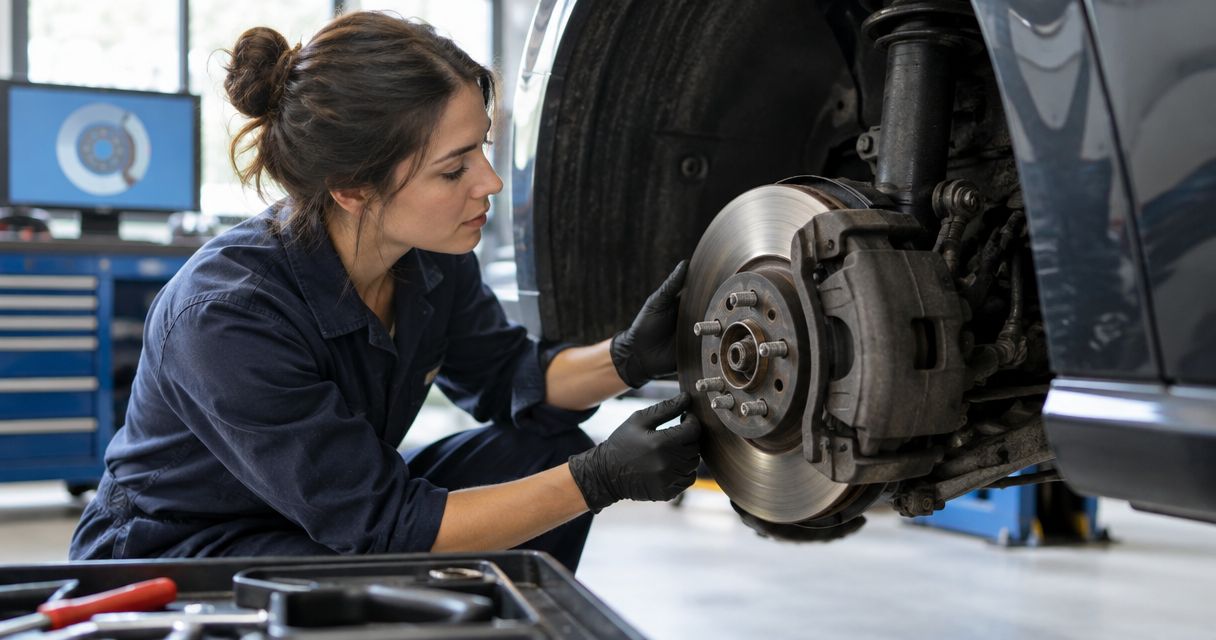
Signs your brakes need to be replaced include persistent squealing, grinding, visibly worn pads, and vibration when braking; a soft pedal, pulling, or longer stopping distance also calls for inspection. These symptoms do not all mean you need new brake pads: fluid leaks, sticking calipers, tires, and other faults can affect braking. If stopping power drops, the pedal sinks, or you see smoke near a wheel, stop driving and arrange roadside assistance.
- Signs your brakes need to be replaced include grinding, persistent squealing, worn pads, and braking vibration.
- A soft pedal or reduced stopping power requires urgent attention, not an automatic pad replacement.
- Elite Auto Repair & Service Inc provides brake inspections and pad and rotor service in Kissimmee, FL.
- Use inspection findings and vehicle specifications—not noise alone—to decide which brake parts need replacement.
What are the signs your brakes need to be replaced?
The strongest warning signs are changes in how your vehicle slows, how the pedal feels, and what you hear during braking. This 2026 guide separates signs of worn friction parts from symptoms that need a different repair. If you drive between appointments, the brake repair guide for real estate agents provides another service-planning resource.
| Warning sign | What it can indicate | What to do |
|---|---|---|
| Persistent squealing | Pad wear indicator, vibration, or contamination | Arrange a brake inspection |
| Grinding during braking | Severely worn friction material or another contact problem | Stop driving and arrange assistance |
| Pulsing during ordinary braking | Rotor thickness variation or another brake fault | Have the brakes inspected |
| Soft or sinking pedal | Hydraulic trouble, including a possible leak | Stop driving and arrange assistance |
| Pulling while braking | Uneven braking, tire trouble, or suspension issues | Request a brake and chassis inspection |
| Longer stopping distance | Reduced braking effectiveness or loss of traction | Stop driving if braking is impaired |
| Smoke near a wheel | Overheating or a dragging brake | Stop safely and keep clear |
A symptom tells you to inspect the brakes; measurements tell you what to replace. Avoid buying pads or rotors before identifying the cause.
Why this matters
Brakes are a system, not just a set of pads. Replacing worn pads will not correct a fluid leak, and replacing rotors will not fix a sticking caliper by itself. The repair needs to address both the damaged part and the reason it failed.
For Kissimmee drivers planning maintenance in 2026, the useful question is not simply whether the brakes make noise. Ask whether braking has changed, whether wear is uneven, and whether each component meets the vehicle manufacturer's specifications.
Persistent squealing: inspect before choosing parts
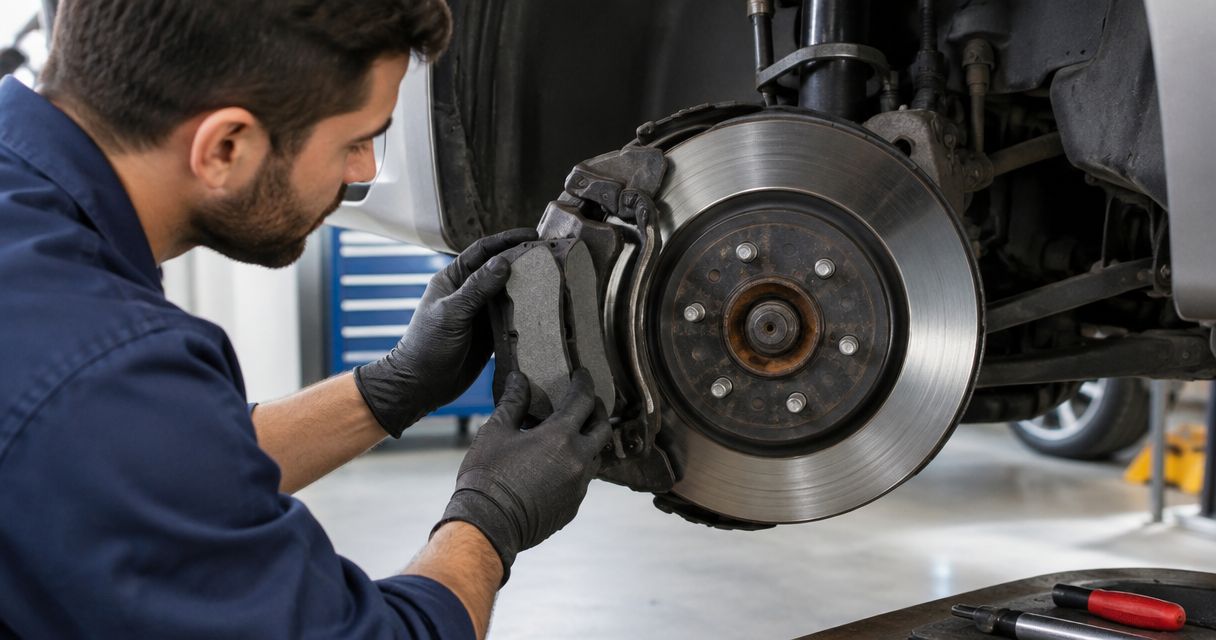
A high-pitched squeal during braking can come from a pad wear indicator contacting the rotor. Brake vibration, contamination, and friction-material characteristics can also produce noise. Sound alone does not establish remaining pad life.
Brief noise after rain or an overnight stop can occur as light surface rust clears from the rotors. Persistent, recurring, or worsening noise deserves inspection, especially when it comes with a change in pedal feel or stopping performance.
Tell the shop when you hear the sound: during light braking, after the brakes warm up, or even with your foot off the pedal. Those details help distinguish a wear warning from a dragging brake or another source of contact.
Grinding: stop driving rather than waiting
Grinding can mean the pad's friction material has worn away and metal is contacting the rotor. Debris or other brake hardware problems can also create scraping or grinding sounds. Either way, continuing to drive is not a useful diagnostic test.
Do not wait for grinding to become louder before arranging help. Continued metal contact can damage the rotor, while the underlying fault can reduce braking effectiveness.
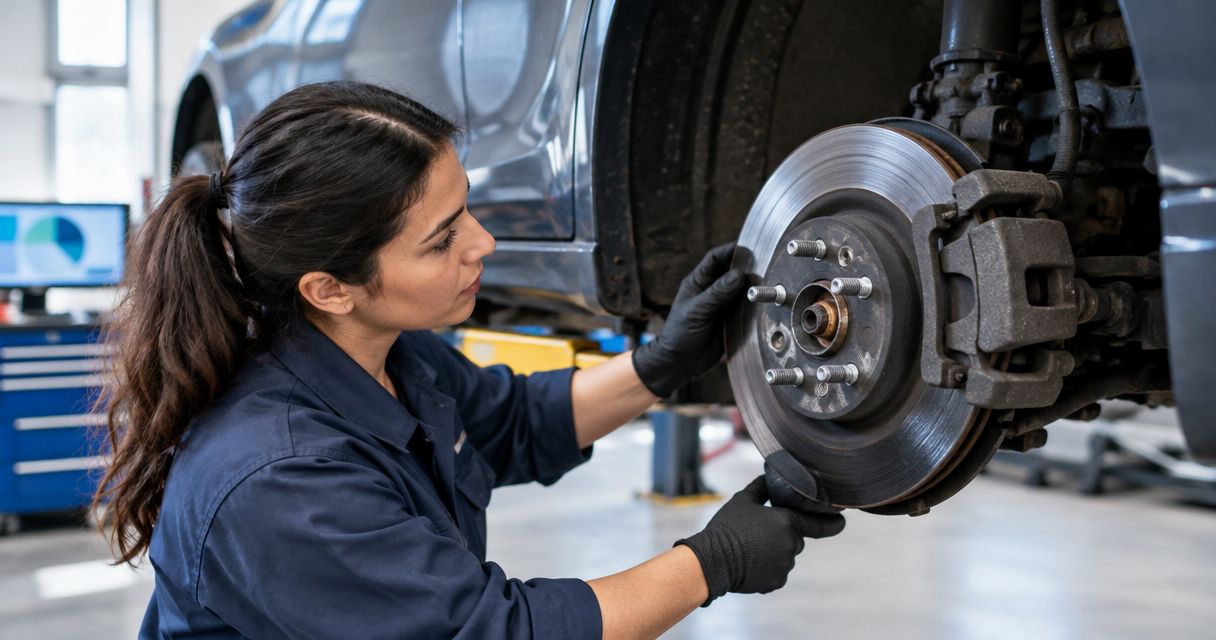
A grinding brake needs an inspection of the pads, rotors, caliper, and associated hardware. Replacing only the most visibly damaged part leaves the original cause unresolved if a caliper or slide mechanism is sticking.
Vibration: check the rotors and the rest of the vehicle
A pedal that pulses during ordinary braking can point to variation in rotor thickness. Steering-wheel vibration while braking can also involve brake components, tires, wheels, or suspension. Describing where you feel the vibration helps direct the inspection.
Do not assume every vibration means the rotors are warped. A technician needs to inspect the surfaces and measure the relevant components against the vehicle's limits.
Anti-lock braking system activation is different. During an emergency stop or low-traction braking, ABS can produce rapid pedal pulsation; follow your owner's manual for proper operation. Pulsation during routine braking on a dry road still deserves attention.
A soft pedal or fluid leak needs urgent attention
A pedal that feels unusually soft, travels farther than normal, or continues sinking under steady pressure can indicate a hydraulic problem. Air in the system, a leak, or a failing hydraulic component requires diagnosis. New pads alone do not resolve those faults.
If the pedal changes suddenly or stopping power drops, pull over safely and arrange roadside assistance. Do not keep driving because pumping the pedal temporarily changes its feel.
Low brake fluid also needs an explanation. Fluid level can change as pads wear, but a leak must be ruled out; topping up the reservoir is not a repair. Use only the fluid specified for the vehicle and follow the manufacturer's instructions.
Pulling, heat, and warning lights need context
A vehicle that pulls during braking can have uneven brake operation, but tire pressure, tire condition, and suspension faults also need consideration. Note whether the pull happens only when braking or continues while cruising. Do not conduct repeated road tests if control feels compromised.
A burning smell or smoke near a wheel can indicate an overheated or dragging brake. Stop safely, keep clear of hot parts, and do not touch the wheel or pour water over the brake assembly. Call emergency services if there is fire.
A brake warning light is not a parts diagnosis. Check the owner's manual for the exact symbol and instructions; a parking-brake indicator, red brake-system warning, and ABS warning do not all mean the same thing. Treat a warning accompanied by reduced braking or an abnormal pedal as urgent.
Why brake wear and symptoms vary
Your 2026 maintenance plan should follow the vehicle's inspection requirements rather than a universal replacement mileage. These factors affect wear or explain why similar symptoms lead to different repairs:
- Braking frequency: Repeated slowing and stopping uses friction material differently from steady-speed travel.
- Vehicle load: Carrying passengers, cargo, or towing changes the braking demand within the vehicle's rated limits.
- Driving conditions: Hills and repeated braking create different heat demands from level-road cruising.
- Component condition: Sticking calipers or restricted movement can cause uneven or accelerated wear.
- Brake design: Pad materials, rotor specifications, and wear-warning systems differ by vehicle.
- Exposure: Moisture, corrosion, and contamination can affect surfaces and hardware.
These factors explain why another driver's replacement interval is not a reliable target for your car. Ask for condition findings from your own vehicle.
What should a brake inspection include?
A useful brake inspection connects your complaint to measured wear, visible damage, and component operation. Bring your symptom notes and ask for an explanation before authorizing replacement parts.
- Describe symptoms. Explain the sound, pedal change, vibration, or warning light and when it happens.
- Check components. Have the pads or shoes, rotors or drums, calipers, hoses, and visible lines inspected as applicable.
- Compare measurements. Request the measured wear and the manufacturer's service limits for the components in question.
- Confirm the repair. Ask which fault caused the symptom and how the proposed work addresses it.
The inspection should account for inner and outer pad wear, not only the surface visible through a wheel. Uneven wear can reveal a movement problem that a quick glance misses.
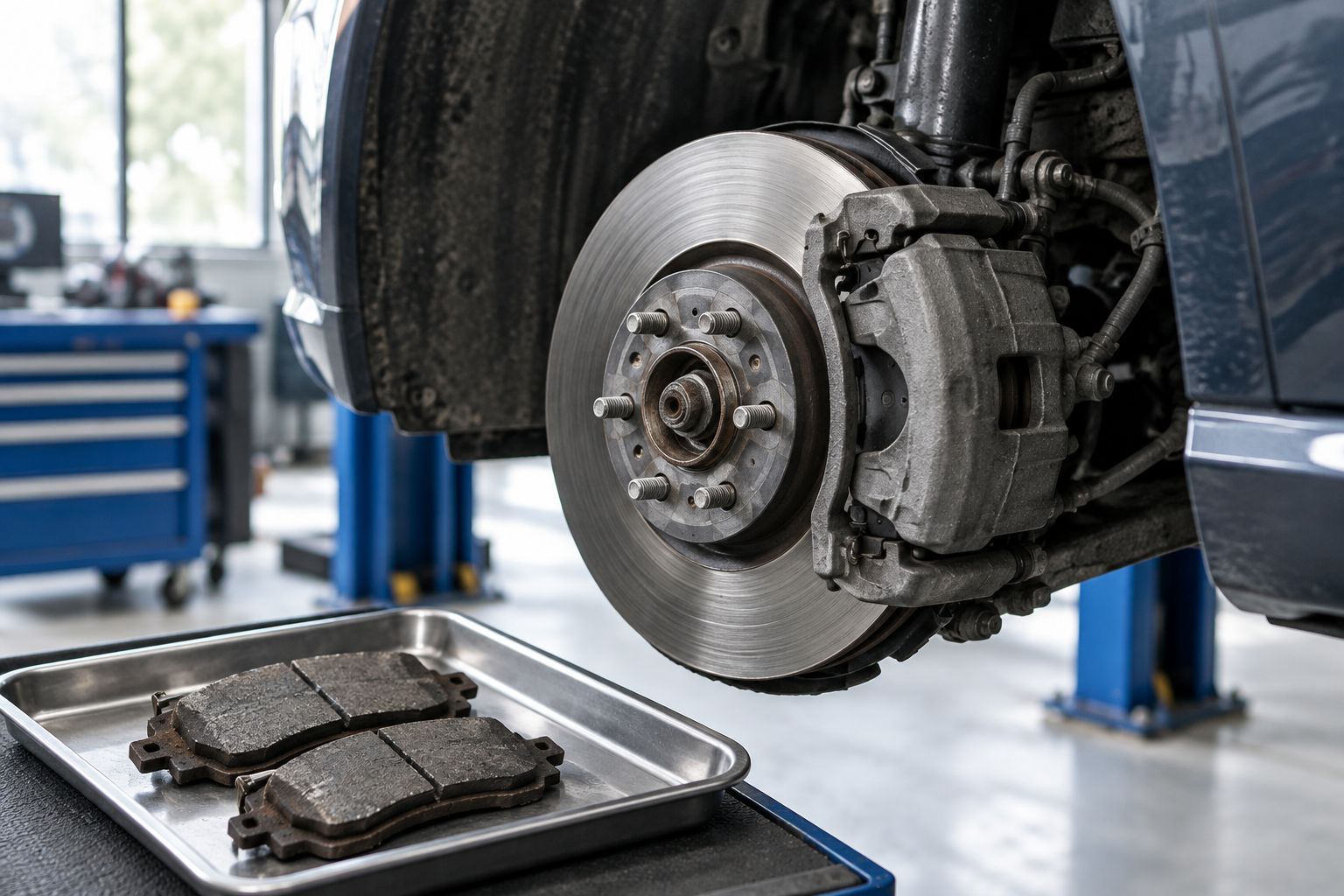
Elite Auto Repair & Service Inc is a local option for Kissimmee drivers who need brake inspections and pad and rotor service. The shop also offers diagnostics and suspension service, which are relevant when a braking complaint overlaps with another vehicle system. A symptom description alone cannot determine the final repair.
You can review Elite Auto Repair & Service Inc before arranging brake service. Describe any loss of braking effectiveness when requesting help so the conversation starts with safety, not just a parts request.
Do I need brake pads, rotors, or a different repair?
The right repair depends on the inspection findings. Use this comparison when reviewing a brake recommendation in 2026; none of these options substitutes for identifying the fault.
| Repair approach | Best for | Benefit | Limitation |
|---|---|---|---|
| Pad replacement | Worn pads with serviceable mating components | Restores friction material | Does not repair a damaged rotor or hydraulic fault |
| Pad and rotor service | Worn pads plus rotors requiring service | Addresses friction material and rotor condition together | Does not correct a sticking caliper by itself |
| Caliper or hardware repair | Confirmed sticking, binding, or uneven application | Addresses a cause of dragging or uneven wear | Other damaged friction parts still need attention |
| Hydraulic repair | Confirmed leaks or hydraulic component faults | Addresses pressure or fluid-loss problems | Does not reverse existing pad or rotor damage |
Ask why each recommended part needs attention. Useful explanations include a measurement outside the manufacturer's limit, a confirmed leak, a seized component, or visible damage—not simply that the vehicle has reached a certain mileage.
Can I keep driving if my brakes squeak?
Squeaking alone does not establish whether your vehicle is safe to drive. A brief sound after moisture exposure differs from persistent squealing, but neither replaces an inspection. Arrange service promptly for recurring noise, and stop driving if it accompanies grinding, reduced braking, smoke, or an abnormal pedal.
Do brake pads and rotors always need replacing together?
Brake pads and rotors do not automatically need replacement together. Rotor condition, measurements, and the vehicle manufacturer's service procedure determine whether reuse or service is appropriate. Installing pads against an unserviceable rotor does not make a complete repair.
FAQ
What are the first signs your brakes need to be replaced?
Persistent squealing, visibly worn pads, grinding, and braking vibration are warning signs that need inspection. A soft pedal or reduced stopping power can indicate a different brake-system fault rather than simple pad wear.
Can my brakes be worn out without making noise?
Yes, brake wear does not always produce an audible warning. Follow the vehicle's inspection schedule and do not use silence as proof that the pads and rotors are serviceable.
Is grinding worse than squeaking brakes?
Grinding is a reason to stop driving and arrange assistance because it can involve metal contact or another serious brake fault. Squeaking has several possible causes, but persistent noise still needs inspection.
How many miles should brake pads last?
There is no single replacement mileage that applies to every vehicle and driving pattern. Use the manufacturer's inspection guidance and measured pad condition rather than another driver's mileage.
Does a brake warning light mean I need new pads?
A brake warning light does not automatically mean you need new pads. Check the owner's manual for the exact warning, and stop driving if the light appears with reduced braking or an abnormal pedal.
Where can I get my brakes inspected in Kissimmee, FL?
Elite Auto Repair & Service Inc offers brake inspections and pad and rotor service in Kissimmee, FL. Explain any grinding, pedal changes, vibration, pulling, or warning lights when requesting service.
One last thing
A visible outer pad can look acceptable while the inner pad has worn much farther. That is why a quick look through the wheel does not replace a proper inspection. For your next brake check in 2026, ask to see the wear findings and the cause of any uneven wear before approving parts.